 From Match to Date
5 First Date Rules That Get You a Second Date
First dates feel high-stakes — but success follows a clear pattern. These 5 first date rules cut through the guesswork and set you up for a second date.
In this article8 sections
- ⚡ The 5 First Date Rules at a Glance
- 🎯 Rule 1: Pick the Right Venue
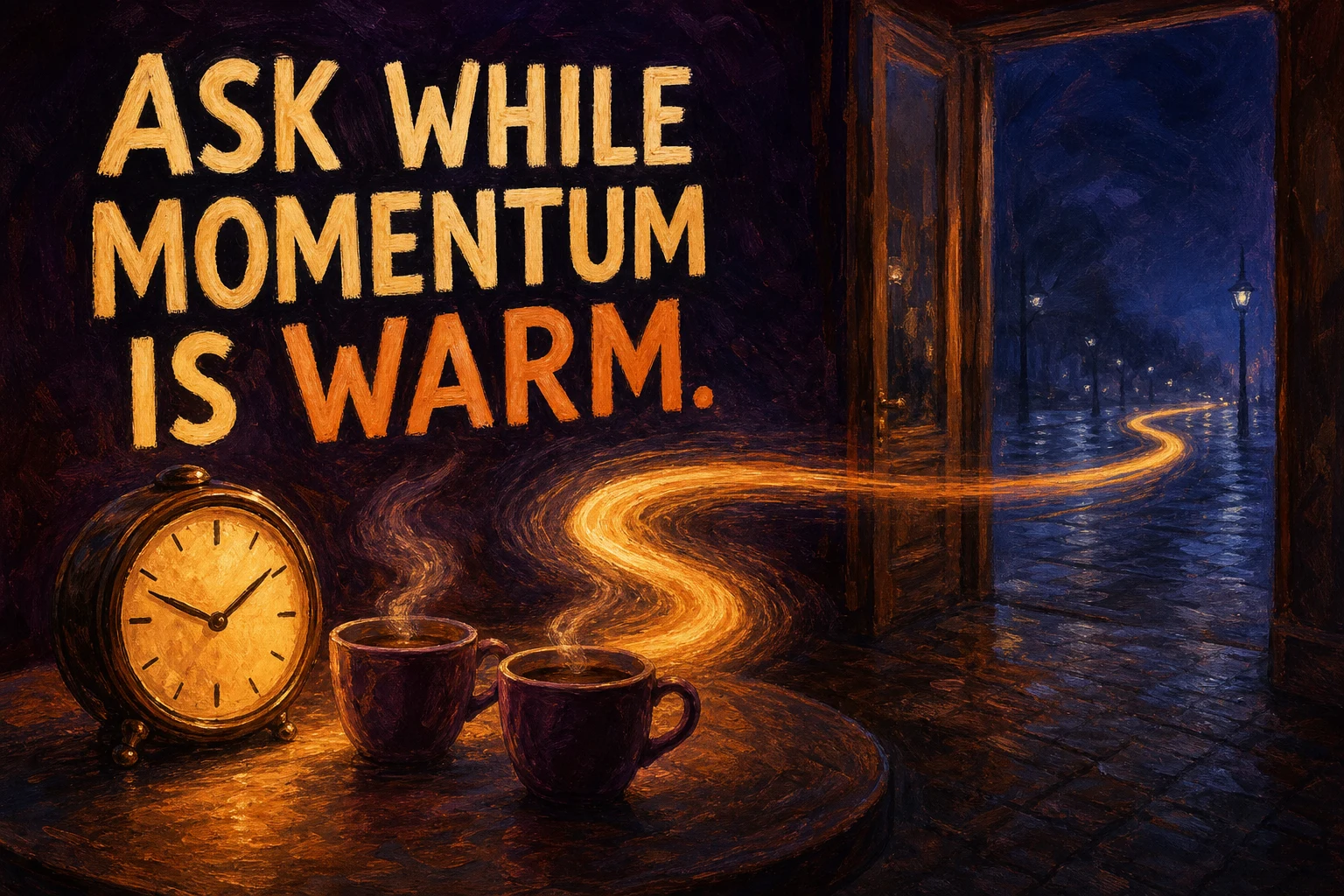
- ⏰ Rule 2: Leave While You're Both Still Having Fun
- 📱 Rule 3: Give Her Your Full Attention
- 💬 Rule 4: Lead the Conversation — Don't Interview
- 🎯 Rule 5: Make a Concrete Plan Before You Leave
- 🎉 How to Plan a First Date That Actually Feels Fun
- ✅ Quick Self-Check: Are You Set Up for a Second Date?
The first date is the highest-stakes low-stakes event in modern dating. It matters enormously — but most of what makes it succeed or fail happens in the planning and framing, not in what you actually say over drinks. Guys who consistently get second dates aren't necessarily more charming or better-looking. They've just internalized a few structural rules that set the conditions for a good interaction, rather than leaving it entirely to in-the-moment chemistry.
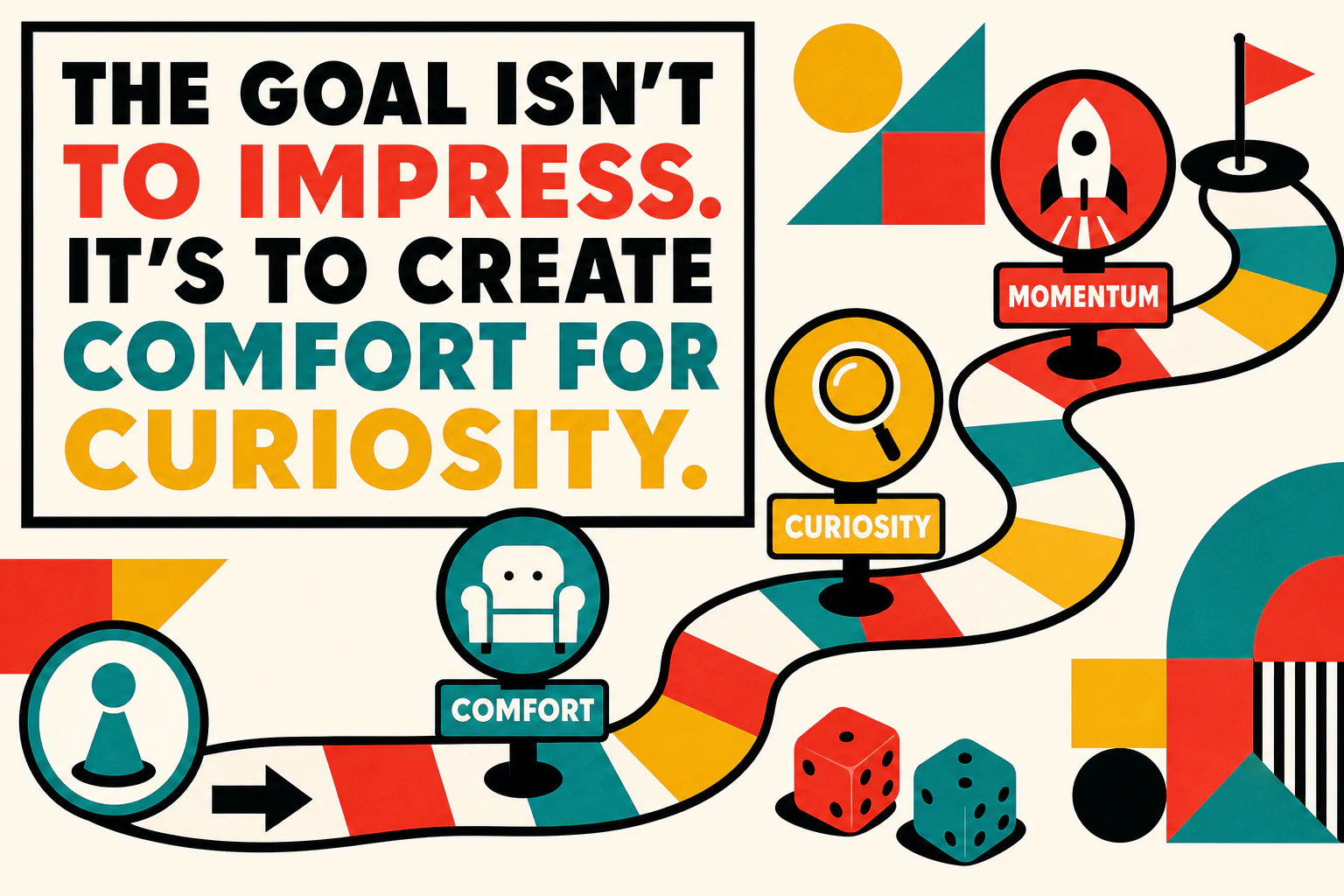
The mistake most people make is treating a first date as a performance — a two-hour window where they need to impress hard enough to earn a callback. First dates that lead to second dates don't feel like performances. They feel like two people genuinely enjoying each other's company in a context that made it easy. The rules below are about creating that context. Chemistry is real, but it needs the right conditions to show up.
⚡ The 5 First Date Rules at a Glance
| Rule | What most guys do | What actually works |
|---|---|---|
| Venue | Long dinner, high-pressure setting | Short, casual, easy to extend or leave |
| Length | Stay until things slow down | Leave while you're both still having fun |
| Attention | Half-present, phone on table | Phone away, full presence |
| Conversation | Interview mode — question after question | Lead, share, and invite — don't interrogate |
| Ending | "We should do this again sometime" | Concrete second date plan before you separate |
Each rule maps to one section below — and every one of them is under your direct control before you step foot on the date.
🎯 First Impressions Start Before the Date
Your profile sets her expectations before she even sits down. SharpScan tells you exactly what yours is communicating.
🎯 Rule 1: Pick the Right Venue
The best first date venue is casual, short by default, and easy to extend.
This eliminates dinner at a sit-down restaurant as a first date. Dinner locks you both in for 90 minutes minimum, creates a high-formality context that makes normal conversation harder, and signals "I'm trying hard" — which subtly raises the stakes for both of you. It also traps you both if the chemistry isn't there.
The ideal first date format:
- Coffee, a casual bar, or a walk-and-coffee combo
- Something that naturally ends in 45–60 minutes
- A setting where it's easy to stay longer if things are going well
The psychological mechanism: shorter formats reduce performance pressure on both sides. She's not committing to a full evening with someone she's never met. You're not under pressure to fill two hours of conversation. When things go well, you can organically extend — suggesting a second drink or a walk costs nothing and signals mutual interest naturally. When things don't click, you both have a clean, non-awkward exit.
Wait, Really? The longer the first date, the better the connection — right? Actually, no. Studies on decision fatigue show that extended low-stakes social interaction creates a diminishing-returns curve. The best first dates end when both people are still in the ascending part of that curve. You want her to leave thinking "I wish that was longer" — not "I'm kind of exhausted."
For more on when to suggest the first date within your app conversation, see our when to ask for a date on dating apps guide.
⏰ Rule 2: Leave While You're Both Still Having Fun
The single most counterintuitive first date rule: end it before the energy peaks.
This means proposing to wrap up — or letting the natural endpoint of the venue do it — while the conversation is still lively and you're both still visibly engaged. Not when things have gone quiet. Not when she's checking her phone. While it's still good.
🔴 The lingering mistake: Staying until the energy naturally dissipates — conversation slows, you both look for things to say, the vibe gets comfortable-but-flat.
🟢 The High Note Exit: Signal the end while momentum is still up. "I've got an early morning but I'm really glad we did this" — said while things are still flowing.
Why it works: The emotional residue of the date is what she carries home, not the average of the whole thing. The last 20 minutes disproportionately define her feeling about the entire evening. If you exit on a high, she goes home thinking "that was really fun." If you stay until things slow, she goes home thinking "it was nice but kind of ran out of steam." Same date, different memory — because you controlled the ending.
📱 Rule 3: Give Her Your Full Attention
Put your phone away. Not face-down on the table — away.
This sounds obvious enough that it barely feels worth saying. But phone-face-down on the table still registers as "I might need to check this" on a subconscious level. It keeps your attention split. The difference between phone-on-table and phone-in-pocket is felt even if it's never noticed.
Why full presence is rare enough to matter: Most people are partially elsewhere during most conversations. Their attention is half-monitoring notifications, half-thinking about what to say next, half-wondering how they're being perceived. When you're actually fully present — fully listening, actually curious, not rehearsing your next line — it's immediately perceptible. It creates a quality of interaction that feels different without her being able to name why.
The practical version:
- Phone in a pocket or bag before you walk in
- When she's talking, don't interrupt — let her finish the thought
- Ask follow-up questions based on what she actually said, not what you were planning to ask
- Make eye contact without staring; it signals genuine interest
Full presence is one of the highest-ROI things you can do on a first date because it's genuinely uncommon and it's entirely free.
💬 Rule 4: Lead the Conversation — Don't Interview
The most common first date conversation mistake is question-after-question interview mode.
"Where are you from?" → "What do you do?" → "Do you have siblings?" → "What do you like to do for fun?" Each question is harmless. Strung together, they feel like a job application. She's answering but there's no warmth, no shared frame, no feeling of genuine connection building — just a data exchange.
🔴 Interview mode:
"So what do you do for work?" → she answers → "Oh cool, how long have you been doing that?" → she answers → "Where did you go to school?"
🟢 The Share-and-Invite:
"I've been trying to find decent [local thing] for months with zero luck — have you found anywhere good?" or "Something happened at work this week that was genuinely absurd — what's your week been like?"
Why it works: The Share-and-Invite structure gives her something of you first, then opens a door for her to walk through. It creates the texture of a conversation between two people, not an intake form. The halo effect from genuine-feeling conversation carries over to her perception of you overall — good conversations make people more attractive.
For a deeper framework on how to lead conversation naturally, see our how to lead the conversation on dating apps guide.
📸 The Conversation Starts With Your Profile
A stronger profile brings you better first dates. SharpScan breaks down exactly what your photos are signaling.
🎯 Rule 5: Make a Concrete Plan Before You Leave
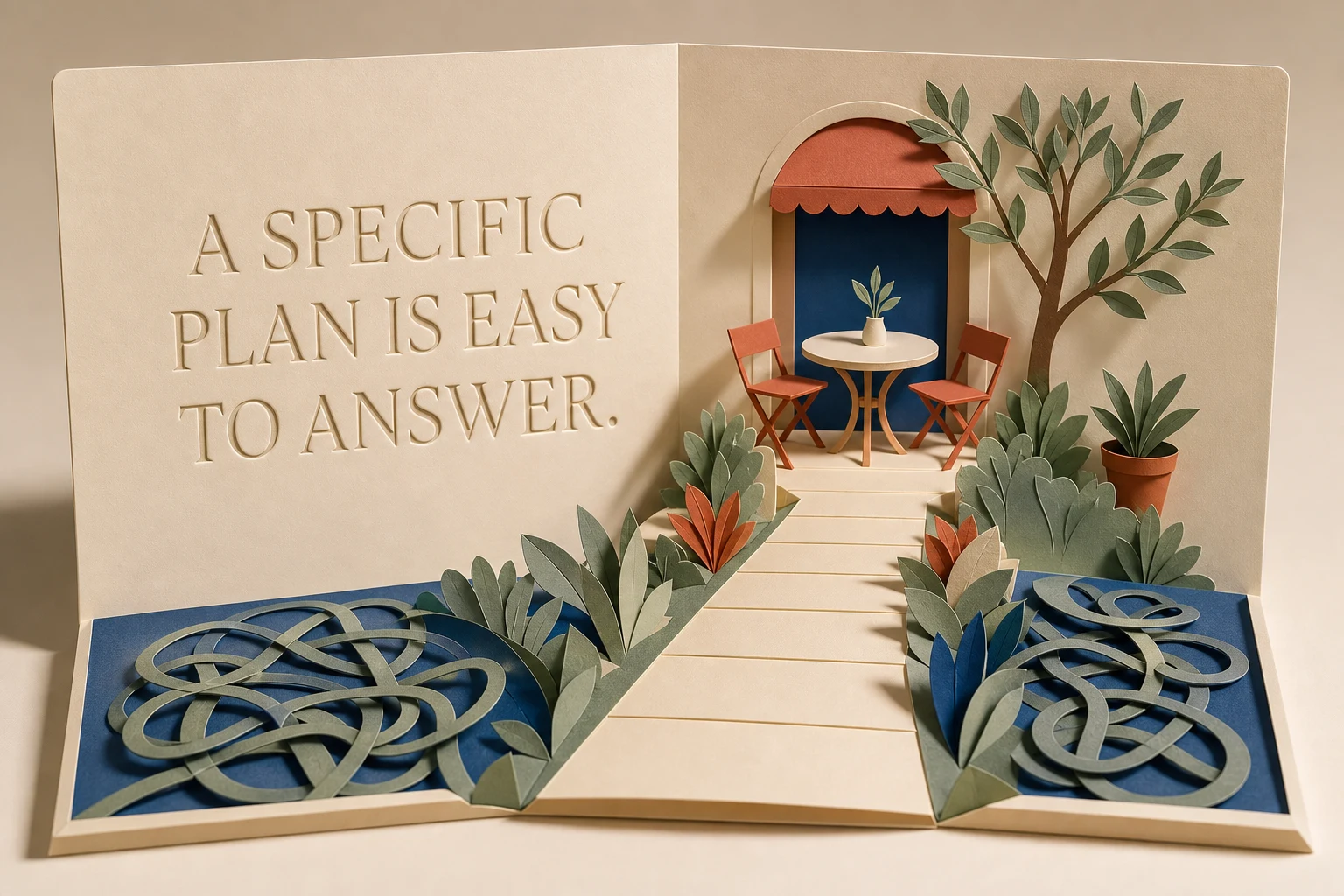
"We should do this again sometime" is not a plan. It's a way of avoiding rejection in real time.
The vague close — "let's hang out again," "we should definitely do something," "I'll message you" — is one of the most common first date endings, and it costs second dates. It creates ambiguity. She goes home uncertain whether you're genuinely interested or just being polite. You go home without having done the thing that most clearly signals intent.
🟢 The Concrete Close: Before you separate, reference something specific from the conversation and use it as the basis for the second date.
Example: "You mentioned you haven't been to [area/thing]. Let's actually do that — are you free [specific day or general window]?"
This does three things simultaneously:
- Shows you were actually listening (callback to something she said)
- Signals clear intent — you're not being polite, you're asking
- Creates a specific next point of contact instead of ambiguous "I'll text you"
The Harsh Truth: If you leave without a concrete plan for next time, you're relying on a text message to do the work that should have happened in person, when momentum was highest. Most "we should do this again" endings fade because neither person wants to be the first to push after the fact.
If the date went well, making the plan in person is almost always better than a "hey, want to hang out again?" text the next day. Do it while you're both still there.
🎉 How to Plan a First Date That Actually Feels Fun
The venue rule above handles the format. But the specific choice within that format matters more than most guys realise.
Hinge's Whimsy guide (March 2026) offers three first-date planning tips from Moe Ari Brown, Hinge's Love & Connection Expert (LMFT), that address a specific failure mode: dates that feel like routine check-boxes rather than an actual good time.
1. Suggest a place you've genuinely been wanting to try.
Make a mental list of spots in your city you've been putting off — a museum, a pop-up, a neighbourhood you haven't explored, a class. Suggest one. The key is explaining why you're excited about it. That enthusiasm is real information about who you are, and it turns a generic coffee into an actual shared plan.
2. Make it a team effort.
A cooking class where you have to figure it out together. Trivia night built around a topic you're both into. A record store where you each pick albums to recommend to the other. Activities that require light collaboration naturally defuse the interview dynamic of a standard first date — you're not just talking about yourselves, you're doing something together. Pressure drops; chemistry has room to surface.
3. Share something you love — or invite her to show you something she's into.
When you're in a space or doing an activity that genuinely brings you joy, it opens different conversations than a coffee-table question session. You don't need to be an expert. As Moe Ari Brown puts it: "Remove any pressure for perfection and try to focus on being present. You don't have to be a pro to share what makes you happy."
The common thread: a date built around something you're actually excited about signals more than the activity itself. It shows up in how you talk, what questions you ask, how present you are — and that's the part that's impossible to fake.
✅ Quick Self-Check: Are You Set Up for a Second Date?
- Venue is casual and short by default — easy to extend if things go well?
- You have an exit plan — not staying until the energy runs flat?
- Phone will be fully away (pocket or bag), not face-down on the table?
- You're leading with Share-and-Invite, not running a question-by-question interview?
- You have at least one callback topic from your pre-date conversation to use as a natural concrete close?
- You're going in with the goal of a genuine good time — not performing to impress?
First dates that lead to second dates aren't the result of flawless performance. They're the result of a setting where genuine connection could emerge and someone who was actually present for it. Run these five rules and you've done everything structurally within your control. The rest is real.