 Messaging & Conversations
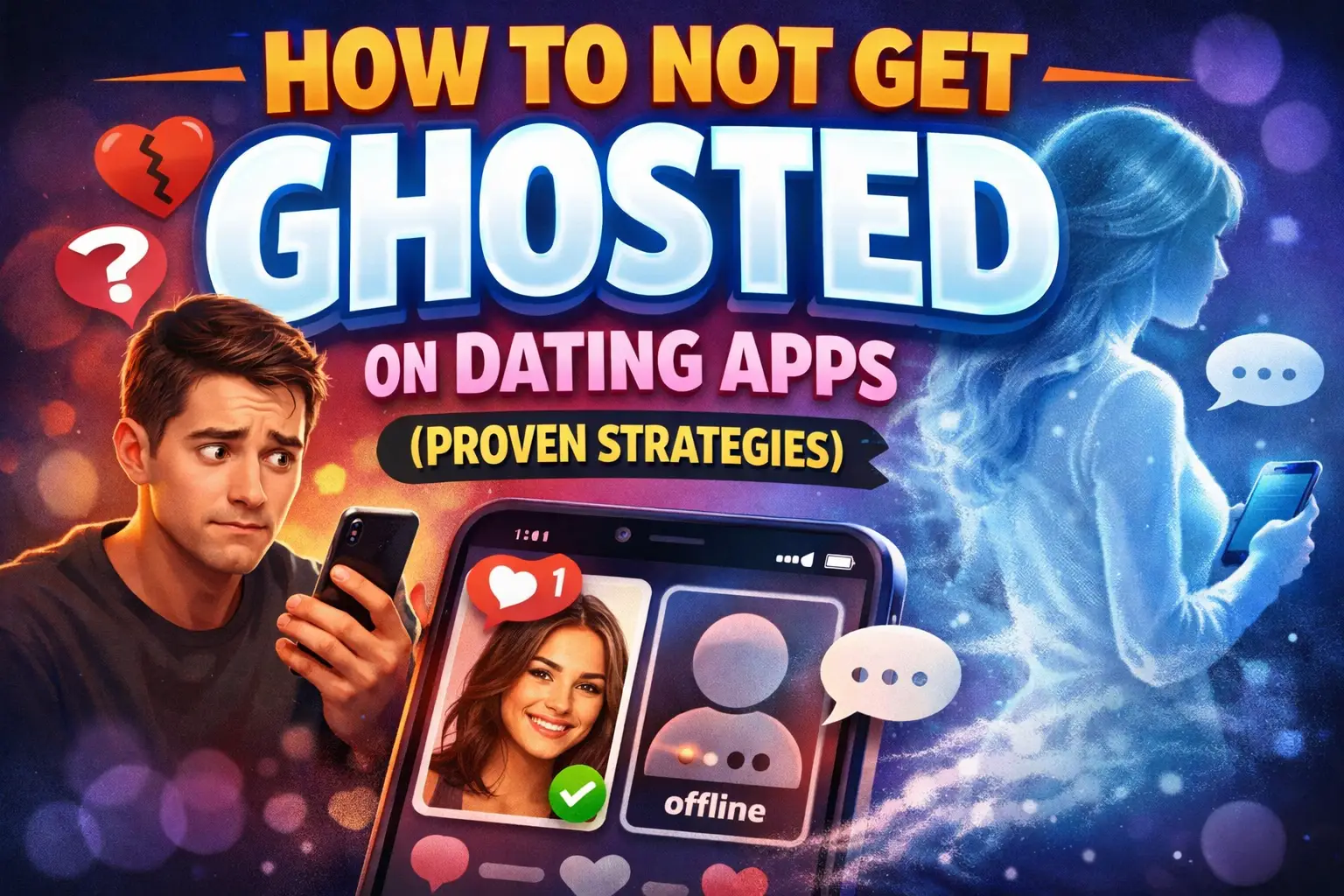
Stop Getting Ghosted on Dating Apps: What Actually Works
Getting ghosted after a good start? Learn what turns people off, what your profile and messages might be doing wrong, and how to build connections that actually stick.
In this article8 sections
- What Is Ghosting (and Why People Do It)
- The Profile Problems That Lead to Ghosting
- The Conversation Mistakes That Cause Ghosting
- Signs You're About to Get Ghosted (and What to Do)
- How to Stop Getting Ghosted: The Core Strategy
- After You Get Ghosted: What Not to Do
- The Bigger Picture: Ghosting Is Part of Online Dating
- Frequently Asked Questions
You matched, you traded a few good messages, you were maybe 24 hours from suggesting a coffee — and then she vanishes. No "sorry, not interested." No "got busy this week." Just a chat that turns into a museum exhibit you check every two days.
It's the most frustrating pattern in modern dating, and it makes you question everything: was it the messages? the photos? the timing? did you come on too strong? not strong enough?
The good news: ghosting is rarely random. It usually follows a small set of patterns — and most of them are completely fixable on your side. Here's exactly why it happens and what to change.
What Is Ghosting (and Why People Do It)
Ghosting is when someone you've been talking to on a dating app — or even been on a date with — suddenly stops responding without any explanation.
It happens at every stage:
- After matching but before the first message
- After a few messages back and forth
- Mid-conversation after things seemed to be progressing
- After a first date that you thought went well
Understanding why people ghost is the first step to preventing it.
The Most Common Reasons People Ghost
1. They're overwhelmed with options
On popular apps like Tinder, Hinge, and Bumble, active users often have dozens of ongoing conversations. When someone newer or more exciting comes along, earlier conversations quietly get abandoned. It's not malicious — it's the reality of choice overload in digital dating.
2. There's no compelling reason to respond
If your conversation has stalled into small talk with nothing interesting on the line, it becomes easy to deprioritize. When responding feels like effort with no clear payoff, people simply don't respond.
3. Your profile didn't hold up under scrutiny
Sometimes people match impulsively, then look at your full profile more carefully. If something creates doubt — inconsistent photos, a vague bio, nothing that builds connection — they disappear before investing more time.
4. The energy felt off
Text-based communication is hard to read. If your messages came across as too intense, too casual, too generic, or socially awkward, the other person may have quietly backed away without wanting a confrontation.
5. They're not serious about dating
Many people use dating apps for entertainment, validation, or casual browsing — not actual relationships. If your match was never truly invested, ghosting was always the likely outcome.
6. They met someone else
This is the most neutral reason. People are often talking to multiple matches simultaneously. If they found better chemistry elsewhere, they simply moved on without a formal exit.
The Profile Problems That Lead to Ghosting
If you're getting ghosted consistently — across many conversations and at different stages — your profile is likely contributing. Here's what to look for:
Misleading or Inconsistent Photos
Your photos are a promise. If your first photo is exceptional but the rest of your lineup is weak, blurry, or tells a completely different story, matches feel deceived — even if unintentionally.
Red flags in your photo lineup:
- First photo is your best by far, while others are mediocre or old
- Group photos with no clear indication of who you are
- Drastic differences in weight, style, or age across photos
- Filters or angles that make you look significantly different from real life
- No clear, natural face shots in everyday settings
When people feel like the person they matched with isn't quite who they thought, ghosting is the path of least resistance.
A Bio That Creates Zero Connection
Your bio is a conversation starter. If it's empty, generic ("I love to travel and laugh"), or gives people nothing to work with, you're making it harder for matches to feel invested enough to keep the conversation going.
Bios that invite ghosting:
- Empty or near-empty bios
- Generic adjectives with no specifics ("fun," "adventurous," "laid-back")
- Lists of basic interests with no personality
- No humor, warmth, or distinctive voice
Bios that hold attention:
- Specific interests with something unexpected ("obsessed with obscure horror films and competitive birdwatching — yes, seriously")
- Something conversational or playful that begs a response
- A clear sense of what you're looking for without being heavy about it
💬 Craft Messages That Actually Get Replies — Free
Wingman is your AI dating coach that helps you write openers, keep conversations going, and never run out of things to say.
Get 3 free messages every day — no credit card needed. Just paste her profile and ask for help.
Photos That Don't Match Your Bio or Energy
Consistency matters. If your photos suggest you're an adventurous outdoor person but your bio says you're a homebody, matches notice the disconnect and pull back. The same applies to tone: serious professional photos paired with an extremely casual, jokey bio creates confusion.
Confusion breeds doubt. Doubt leads to ghosting.
The Conversation Mistakes That Cause Ghosting
Even with a great profile, how you communicate in the early stages determines whether someone stays engaged.
The Generic Opener Trap
"Hey," "How's your week?" and "You're cute!" are conversation killers. They signal that you haven't looked at their profile, require maximum effort from the other person to restart the conversation, and blend into a sea of identical messages.
When someone has to do all the work to keep a conversation alive, they often just don't bother.
What works instead:
- Reference something specific from their profile: a hobby, a travel photo, a funny bio line
- Ask an easy, specific question that shows you actually read what they wrote
- Share something about yourself that creates natural follow-up
Example: Instead of "Hey, how are you?" try "I saw you're into rock climbing — do you have a favorite spot locally? I've been trying to push myself to actually try it instead of just thinking about it."
Moving Too Slow (Or Too Fast)
There's a pace to online dating conversations, and breaking it in either direction causes ghosting.
Moving too slow means dragging out small talk for days or weeks without any forward momentum. The conversation loses energy and it becomes easier to let it fade.
Moving too fast means pushing for a date or personal information before you've established any rapport, or getting too intense too early. This makes people uncomfortable and they disappear.
The right pace: Keep it light and engaging for the first few exchanges, then move toward suggesting a date once you've established some connection — usually after 6-10 quality messages back and forth.
Sending Low-Effort Responses
If someone sends a thoughtful, multi-sentence reply and you respond with one word or a single emoji, you're signaling that you're not invested. People mirror the energy they receive, and low energy from you means they'll stop investing too.
Match the energy and depth of what you receive. If they're writing paragraphs, write paragraphs. If they're keeping it playful and short, do the same.
Letting the Conversation Die on a Flat Note
If every message you send ends in a statement with nothing to respond to, the conversation naturally stalls. Eventually, one of you stops replying.
Conversation enders:
- "Ha, that's funny" (what are they supposed to say to that?)
- "Nice!" (same problem)
- Sharing a story with no question or hook at the end
Conversation continuers:
- Ask a specific follow-up question
- Share something about yourself that gives them something to respond to
- Introduce a new topic if the current one has run its course
Waiting Too Long to Move Toward a Date
Online dating conversations are not meant to run indefinitely. They're an audition for an actual meeting. If you keep a conversation going for weeks without moving toward a real-world interaction, interest naturally fades — and then they ghost.
After you've established comfort and mutual interest (usually about a week of regular messaging), suggest something specific:
"We should grab coffee sometime — there's a great place near downtown that just opened. Are you free this weekend?"
Specific + low-pressure + time-bound = much harder to ignore.

Signs You're About to Get Ghosted (and What to Do)
Sometimes ghosting is coming and you can redirect the conversation before it happens.
Warning signs:
- Responses are getting shorter and less enthusiastic
- They take increasingly long to respond
- Their answers stop including questions back to you
- Conversation topics feel increasingly surface-level
- They've cancelled or postponed plans more than once
What to try:
- Change the topic entirely and bring in something fresh and engaging
- Be direct and low-pressure: "Hey, genuine question — are you still interested in getting together sometime? No pressure either way."
- Suggest a concrete, easy meetup: coffee, a walk, something that requires minimal commitment
Sometimes you can interrupt the fade. Often you can't. But it's worth one honest attempt before walking away. (And once silence has set in for real, see left on read — what to do next.)
🤖 Stuck on What to Say? Ask Wingman
Wingman is an AI chat assistant built specifically for dating app conversations. Get personalized openers, reply ideas, and conversation tips based on the actual profile you're talking to.
3 free messages every day — start using it right now.
How to Stop Getting Ghosted: The Core Strategy
Reducing ghosting comes down to three fundamentals:
1. Build a Profile That Creates Genuine Interest
A profile that holds up under scrutiny — with consistent, high-quality photos and a bio that reveals personality — attracts matches who are actually interested in you, not just your best photo.
When someone is genuinely curious about who you are, they don't let the conversation die.
Actions:
- Audit your photo lineup for consistency and quality
- Replace any photos that show you in a very different way than you look now
- Rewrite your bio to be specific, conversational, and give people things to ask about
- Read our guide on choosing the best photos for dating apps for detailed photo advice
2. Send Messages That Are Easy and Rewarding to Respond To
Your goal is to make responding feel effortless and worth it. That means personalized messages with easy questions, enough personality to be interesting, and the right pace.
Actions:
- Always read the full profile before messaging
- Reference something specific, not something generic
- Ask questions that can be answered in a sentence or two
- Keep first messages under 3-4 sentences
3. Move Toward Something Real
The purpose of an online conversation is to get to an in-person meeting. Keeping things online too long kills momentum. Suggest a date earlier than feels comfortable.
Actions:
- Aim to suggest meeting after 6-10 quality exchanges
- Make the suggestion specific ("coffee on Saturday") not vague ("we should hang sometime")
- If they say they're busy, offer another specific time rather than leaving it open-ended
After You Get Ghosted: What Not to Do
Even when you do everything right, ghosting will still happen sometimes. Here's how to handle it without making things worse:
Don't send a follow-up demanding an explanation. It reads as entitled and won't get you what you want.
Don't send multiple follow-ups. One short, low-pressure message after a few days of silence is acceptable. More than that crosses into desperation.
Do send one optional follow-up if you genuinely felt a connection: "Hey, I know we both got busy — no worries if you've moved on. But if you're still interested in that coffee, I'm game."
That's it. If there's no response, you have your answer. Move on.
Don't take it personally. Most ghosting has nothing to do with you specifically. It reflects the other person's bandwidth, intentions, or circumstances — all of which are out of your control.
Do keep your profile optimized. The best response to consistent ghosting is improving what you can control: your photos, your bio, and your messaging approach.
The Bigger Picture: Ghosting Is Part of Online Dating
Even with a perfect profile and flawless messaging strategy, you will still get ghosted sometimes. It's an inherent reality of digital dating — the ease of not responding is built into how the apps work.
The goal isn't to eliminate ghosting entirely. The goal is to reduce it by:
- Attracting matches who are genuinely interested
- Having conversations that create real connection
- Moving toward actual dates before momentum dies
When you focus on quality over quantity — better photos, more intentional messaging, earlier dates — you naturally filter in people who are more serious, and the ghosting rate drops.
💡 Never Get Ghosted for the Wrong Message Again
Wingman writes dating app messages with you — personalized to the person you're talking to, not generic advice.
Try it free: 3 messages every day, no subscription needed. Paste a profile, describe the situation, and get a message that actually works.
Frequently Asked Questions
Why do people on dating apps ghost instead of just saying they're not interested?
Saying "no thanks" to someone feels socially uncomfortable, especially to strangers online. Ghosting requires zero confrontation or emotional work. It's not kind, but it's the path of least resistance for most people. It's almost never about you personally.
Is it worth sending a message after being ghosted?
One brief, low-pressure follow-up after a few days of silence is acceptable. Something like "Hey, no pressure — but still interested in grabbing that coffee if you are?" That's the maximum. If there's no response to that, respect the silence and move on.
Does getting ghosted mean I did something wrong?
Not necessarily. Ghosting often reflects the other person's circumstances — they met someone else, they're overwhelmed with matches, or they're not serious about dating. That said, if it happens consistently, it's worth examining your profile photos, bio, and messaging approach.
What's the best way to prevent ghosting early in a conversation?
Personalize your opening message (reference something specific from their profile), keep it brief and easy to respond to, and end with a specific question. This shows you're genuinely interested and makes replying feel effortless — which dramatically reduces early-stage ghosting.
How do I know if someone is fading vs. just busy?
Interested people make time. If they were consistently responsive but suddenly go quiet for more than 4-5 days with no explanation, that's fading. If they explain they're going through something busy and circle back — that's someone who's actually interested.
Should I confront someone who's ghosting me?
No. A confrontational message ("Why are you ignoring me?") will not get you the response you're hoping for and often ends any remaining chance. If you want to say something, keep it light and optional — give them an easy re-entry point, not an accusation.
How many conversations go to an actual date on dating apps?
Research suggests around 10-15% of matches ever result in an in-person date. This makes every stage — the profile, the opener, the conversation — important. Small improvements compound into significantly better outcomes.
Do better photos actually reduce ghosting?
Yes. Matches made because of a strong, authentic, consistent photo lineup tend to involve higher-intent people who vetted your profile before swiping. These people are more likely to respond and follow through. Strong photos attract the right matches, which reduces ghosting.
Last updated: April 7, 2026