 App Guides & Trends
Hinge Algorithm in 2026: Why You're Not Getting Likes
How does Hinge decide who sees your profile? Learn what their system actually looks at, what affects your recommendations, and how to use it to your advantage.
In this article16 sections
- TL;DR: What You Need to Know
- What Makes Hinge Different: Recommendation System vs. Algorithm
- The Three Pillars of Hinge's Recommendation System
- How the Deep-Learning System Works
- How to Work With Hinge's Recommendation System
- Profile Quality and the Recommendation System
- How Hinge's "Most Compatible" Feature Works
- Common Myths About the Hinge Algorithm (Debunked)
- How Subscriptions Affect Your Hinge Experience
- Hinge vs. Other Dating Apps: Algorithm Differences
- Red Flags That Hurt Your Hinge Recommendations
- How to Tell If Your Recommendations Are Working
- Hinge Signals Badge: The New Visible Proof of Thoughtful Dating
- The Bottom Line: Working With Hinge's System
- Frequently Asked Questions
- References
TL;DR: What You Need to Know
- It's not just an "algorithm" - Hinge uses a deep-learning recommendation system (introduced in 2025) that combines multiple algorithms
- Three main inputs: Your compatibility settings, your dealbreakers, and your past behavior on the app
- Mutual interest matters: The system considers both who you're likely to like AND who's likely to like you back
- You shape the experience: Being selective (not too picky, not indiscriminate) helps the system learn what you want
- Subscriptions don't boost visibility: Paid features enhance tools but don't give you algorithmic advantages
- Signals badge rewards effort: Launched June 2026, this visible profile badge recognizes daters who consistently spend time on profiles, comment on Likes, respond to matches, and confirm dates — the exact behaviors the recommendation system already rewards
If you've wondered why certain profiles appear in your Hinge feed while others don't, you're not alone. Unlike apps that rely on simple swiping, Hinge approaches matching differently - and they've been refreshingly transparent about how it works.

Spoiler: it's not random, it's not pay-to-win, and your exes being on there is just bad luck.
This guide breaks down Hinge's recommendation system based on their official explanation, what influences your feed, and how you can work with the system to see better matches.
What Makes Hinge Different: Recommendation System vs. Algorithm
First, let's clarify terminology that Hinge emphasizes: they don't use a single "algorithm." They use a recommendation system.
The Traditional Algorithm Approach
A traditional dating app algorithm works like this:
- You set a few filters (age, distance, gender)
- The app shows you everyone within those parameters
- You do most of the sorting yourself by swiping
The problem: Stated preferences alone can't capture the full picture of compatibility. You might say you want X, but consistently match with Y.
Hinge's Recommendation System (2025+)
Instead of one algorithm, Hinge uses multiple algorithms working together in what they call a recommendation system:
- Combines your stated preferences (what you say you want)
- Analyzes your behavior (what you actually do)
- Considers mutual interest (who's likely to like you back)
- Uses deep learning (machine learning that recognizes complex patterns)
In 2025, Hinge introduced a new deep-learning recommendation system that "better understands who you might like - and who's likely to like you too."
The key difference: The system doesn't just match you with people who fit your criteria. It learns from your actions and adapts to your actual preferences, while also considering whether those people are likely to be interested in you.
The Three Pillars of Hinge's Recommendation System
According to Hinge's official explanation, the recommendation system learns from three main sources:
| Pillar | What It Includes | Free? |
|---|---|---|
| Compatibility Settings | Age, distance, gender, ethnicity, religion | ✅ Free |
| Dealbreakers | Kids, relationship type, distance | ✅ Free |
| Advanced Filters | Height, politics, lifestyle habits, family plans | 💳 Paid only |
| Past Behavior | Likes, skips, time spent on profiles, matches | ✅ Auto-tracked |
1. Your Compatibility Settings
Your stated preferences guide who you're most likely to see, including:
Free users can set:
- Age range
- Distance/location
- Ethnicity preferences
- Religion preferences
- Relationship type (short-term, long-term, etc.)
Paid subscribers (Hinge+ and HingeX) can also set:
- Height preferences
- Family plans preferences
- Lifestyle habits (smoking, drinking, etc.)
- Political views
The mutual interest layer: The recommendation system doesn't just look at your preferences. It also considers the preferences of other users, so the suggestions you receive reflect the likelihood of mutual interest.
What this means: If you set your age range to 25-35, you won't just see everyone aged 25-35. You'll primarily see people aged 25-35 who also have you within their age preferences.
2. Your Dealbreakers
Dealbreakers are preferences you've marked as non-negotiable.
How they work:
- Hinge will only show you each other if you both meet the dealbreakers either of you set
- Common dealbreakers: wanting/not wanting kids, distance limits, relationship type
- They're designed to help you focus on people who feel like a real long-term match
Example scenario:
- You set "wants kids" as a dealbreaker
- Someone who marked "doesn't want kids" will never appear in your feed
- You'll never appear in their feed either
- This saves both of you time
Important consideration: Hinge notes that selecting "prefer not to say" on profile questions limits who can see you. You're excluded from being shown to people who've set dealbreakers around those factors (family plans, dating intentions, drinking habits, etc.).
3. Your Past Behavior
Every interaction you have on Hinge teaches the system about your preferences.
What the system tracks:
- Who you like
- Who you skip
- Who you match with
- How long you spend viewing profiles
- Which prompts you engage with
- Profile types you consistently choose (or avoid)
The learning process: According to Hinge, "Every time you like or match with someone, we learn more about what you're drawn to - so your recommendations become more aligned with your preferences over time."
Why behavior matters more than stated preferences: You might say you want one thing but consistently like people who are different. The recommendation system adapts to what you actually do, not just what you say.
How the Deep-Learning System Works
In 2025, Hinge upgraded to a deep-learning recommendation system. While they don't reveal all technical details, we can understand the general approach:
What "Deep Learning" Means for Dating
Deep learning is a type of machine learning that recognizes complex, non-obvious patterns.
In Hinge's context:
- Pattern recognition: Identifies subtle similarities between profiles you like
- Predictive modeling: Anticipates who you're likely to match with
- Mutual interest calculation: Predicts not just who you'll like, but who will like you back
- Continuous learning: Gets better over time as it gathers more data about your preferences
The Mutual Interest Component
This is where Hinge differs significantly from swipe-based apps. The system doesn't just show you people you might like - it prioritizes people where mutual interest is likely.
Why this matters:
- Reduces wasted likes on people who won't like you back
- Increases match rate (you see more people who are actually compatible)
- Creates a better experience (less frustration, more meaningful connections)
How it works: If you consistently like profiles with specific characteristics, and people with those characteristics also tend to like profiles like yours, the system identifies this pattern and surfaces those connections.
How to Work With Hinge's Recommendation System
Hinge explicitly states that "your actions directly influence the people you see." Here's their official guidance on shaping your recommendations:
Strategy #1: Be Selective (But Not Too Selective)
Hinge's guidance: "If you send too many likes, we can't tell what you truly want. At the same time, if you rarely send likes, we don't have enough information to learn from about who excites you."
The sweet spot:
- Don't like every profile (the system can't learn your preferences)
- Don't be overly restrictive (the system needs data to work with)
- Like profiles you're genuinely interested in
Implementation: Take time to actually read profiles. Like people you'd genuinely want to meet, skip those you wouldn't. This teaches the system your actual preferences.
Strategy #2: Don't Just Wait for Likes - Send Likes
Hinge's guidance: "Checking your 'Likes You' tab is great, but if you only explore the people there, we have limited information to learn from."
Why this matters:
- Only viewing "Likes You" gives the system minimal data about your preferences
- Sending likes in your Discover feed teaches the system who you're drawn to
- Active engagement helps the system show your profile to people you're likely to want to match with
The balance: Review your "Likes You," but also actively explore your main feed and send likes to people who interest you.
Strategy #3: Take Time Viewing Profiles
Hinge's guidance: "A person's first photo or Prompt answer might not catch your eye, but their story, humor, or other photos could be exactly your type."
The system's interpretation:
- Skipping a profile too quickly signals disinterest in that profile type
- The system may then filter out similar profiles
- You could be filtering out good matches
Best practice: Spend 15-30 seconds reviewing each profile before deciding. Scroll through all photos, read all prompts, look at the full picture before choosing.
Strategy #4: Keep Preferences Flexible
Hinge's guidance: "Adjust your preferences and dealbreakers if your priorities have shifted. Small tweaks - like adjusting your distance or age range - can open the door to additional matches."
When to adjust:
- You're seeing too few profiles
- Your priorities have changed
- You're open to being surprised
Caution: Don't set dealbreakers you're not actually firm about. Every dealbreaker shrinks your potential match pool significantly.
Strategy #5: Update Your Profile Regularly
Hinge's guidance: "Many people don't update their profile after their first week on the app, but your profile should reflect who you are now."
What to update:
- Photos: Add recent pictures showcasing different sides of your personality
- Prompts: Share your latest interests and stories
- Basic info: Update if your situation has changed (location, job, etc.)
Why it matters: An outdated profile attracts matches based on who you were, not who you are. Regular updates keep your profile authentic and relevant.
Strategy #6: Be Thoughtful About "Prefer Not to Say"
Hinge's explicit warning: "When you select 'prefer not to say,' it limits who can see you. You're excluded from being shown to people who've set dealbreakers around those compatibility factors."
Common "prefer not to say" areas:
- Family plans (wants/doesn't want kids)
- Dating intentions (relationship seeking, casual, figuring it out)
- Drinking habits
- Smoking habits
- Political views
The tradeoff: Choosing "prefer not to say" might feel safer, but it removes you from consideration by anyone with dealbreakers in that area - even if you'd actually meet their criteria.

Profile Quality and the Recommendation System
While Hinge emphasizes preferences and behavior, profile quality still plays a significant role in how the system treats you.
Why Profile Quality Matters to the Algorithm
Engagement signals:
- Profiles with strong photos and prompts get more engagement
- Higher engagement teaches the system you're a desirable match
- The system then prioritizes showing you to others
Profile completeness:
- Hinge requires photos/videos and prompt answers (unlike Tinder's optional bio)
- Complete profiles give the system more data points to work with
- More data = better matching accuracy
What makes a strong Hinge profile:
- 6 high-quality photos showing variety (close-ups, full-body, activity shots)
- Thoughtful prompt answers that reveal personality
- Clear, recent photos where your face is visible
- Prompts that invite conversation
For detailed guidance on photo selection, see our guide on why your dating profile photos aren't working. And if you want platform-specific tips, don't miss Hinge profile tips for guys in 2026.
📸 Not Sure If Your Photos Are Working?
Hinge's algorithm learns from how people engage with your profile.
ProfileSharp analyzes your photos to identify which ones drive the most engagement. Get specific feedback on photo selection, order, and areas to improve.
How Hinge's "Most Compatible" Feature Works
One of Hinge's signature features is "Most Compatible" - the daily profile marked as your best potential match.
What Hinge Says About Most Compatible
According to Hinge research:
- You're 8x more likely to go on a date with your Most Compatible match
- The selection is based on the recommendation system's analysis of compatibility
- It updates daily based on new data and your evolving preferences
How Most Compatible Is Selected
While Hinge doesn't reveal the exact formula, based on their system description, Most Compatible likely considers:
Stated preference alignment:
- You both fit each other's age, distance, and other preference ranges
- No dealbreaker conflicts
Behavioral similarity:
- Similar patterns in who you like and match with
- Comparable engagement styles on the app
Mutual interest prediction:
- High likelihood you'll both be interested
- Compatible profile characteristics
Profile engagement quality:
- Both profiles tend to generate meaningful conversations
- Historical success with similar matches
The key point: Most Compatible isn't random - it's the recommendation system's best prediction of mutual compatibility based on all available data.
Common Myths About the Hinge Algorithm (Debunked)
Myth #1: "Hinge Hides Your Profile If You Don't Pay"
Reality: Hinge explicitly states: "Subscriptions and paid features are intended to enhance your experience, not to limit who you can meet."
Their business model depends on free users having good experiences and telling others, so limiting free user visibility would be counterproductive.
What paid features do:
- Give you additional tools (more likes per day, advanced filters, see who liked you)
- Don't boost your profile visibility or algorithmic ranking
Myth #2: "You Need to Use the App Daily or You'll Be Penalized"
Reality: While Hinge doesn't explicitly address this, their recommendation system is based on learning your preferences, not punishing inactivity.
What likely happens with inactivity:
- Your profile gets shown less often (you're not actively engaging)
- Your recommendations may become less accurate (the system hasn't learned new preferences)
- When you return, the system recalibrates based on new activity
Best practice: Regular use helps the system stay calibrated to your current preferences, but there's no evidence of "penalties" for breaks.
Myth #3: "The Algorithm Shows You Your 'League'"
Reality: Hinge's system is based on mutual interest prediction, not attractiveness rankings.
The actual approach:
- The system looks at who likes profiles similar to yours
- And who profiles like yours tend to like
- Then surfaces those connections
This means: You see people where mutual interest is likely, based on behavioral patterns, not arbitrary "leagues."
Myth #4: "Liking Everyone Will Get You More Matches"
Reality: Hinge explicitly warns against this: "If you send too many likes, we can't tell what you truly want."
What happens when you like everyone:
- The recommendation system can't identify your preferences
- Your feed becomes less tailored
- You likely get fewer quality matches (lower mutual interest)
Better approach: Be selective. Like profiles you're genuinely interested in so the system can learn and improve recommendations.
Myth #5: "The Algorithm Prioritizes New Users"
Reality: Hinge doesn't mention a "new user boost" in their explanation.
What they do say: The system learns from behavior over time, which suggests that established profiles with clear preference patterns might actually get better recommendations than brand new profiles.
Likely truth: New profiles may get initial visibility to gather data, but established profiles with active engagement and clear preferences probably perform better long-term.
How Subscriptions Affect Your Hinge Experience
Hinge offers two paid tiers: Hinge+ and HingeX. Here's what they say about how subscriptions impact the experience:
What Hinge Says About Paid Features
Their official stance:
- "Subscriptions and paid features are intended to enhance your experience, not to limit who you can meet."
- "Ultimately, great dates on Hinge come from the effort and intention you put into building connections - rather than how much you spend."
What Paid Features Actually Do
Hinge+ includes:
- Unlimited likes (vs. limited daily likes on free)
- See everyone who liked you
- Advanced preference filters (height, family plans, politics, etc.)
- Custom dealbreakers
HingeX adds:
- Priority likes (your likes are seen first)
- Free weekly roses (to send to standout profiles)
Do Paid Features Help?
Not directly through algorithmic boost: Hinge states paid features don't give you visibility advantages in the recommendation system.
Indirectly helpful:
- Unlimited likes = more data for the system to learn from
- Advanced filters = more refined match pool
- See who liked you = faster matching (but doesn't teach the system your preferences)
The ROI question: Paid features give you tools, but don't replace profile quality or thoughtful engagement. A bad profile with Hinge+ will still perform poorly.
Hinge vs. Other Dating Apps: Algorithm Differences
Understanding how Hinge differs from competitors helps explain why their approach works differently:
Hinge vs. Tinder
Tinder:
- Swipe-based, binary decisions
- Primarily photo-focused
- No required prompts or detailed profile
- Algorithm reportedly prioritizes activity and selectivity
Hinge:
- "Designed to be deleted" - relationship-focused
- In-depth profiles required (photos + prompts)
- Recommendation system based on mutual interest prediction
- Emphasizes profile depth over volume
As detailed in our guide on how the Tinder algorithm works, Tinder's system is more activity-driven, while Hinge focuses on compatibility prediction. For a full side-by-side comparison, see Tinder vs Hinge vs Bumble in 2026.
| Feature | Hinge | Tinder | Bumble |
|---|---|---|---|
| Algorithm type | Deep-learning recommendation system | Activity + photo matching | Swipe-based filter system |
| Profile depth | Required (photos + prompts) | Optional bio | Optional bio |
| Who starts chats | Anyone | Anyone | Women first |
| Matching philosophy | Mutual compatibility prediction | Volume + activity | Volume + empowerment |
| Paid features boost ranking? | No | No | No |
| New user boost? | Not confirmed | Yes (widely observed) | Not confirmed |
Hinge vs. Bumble
Bumble:
- Women message first
- Similar swipe-based mechanics to Tinder
- Beeline feature shows who liked you (paid)
Hinge:
- Either person can message first
- Recommendation system instead of simple filtering
- Encourages commenting on specific photos/prompts
- More transparency about how the system works
Why Hinge's Approach Is Different
The core philosophy:
- Tinder: Maximize matches through volume
- Bumble: Empower women to initiate
- Hinge: Predict mutual compatibility and reduce wasted effort
This explains why Hinge emphasizes being selective and taking time with profiles - it aligns with their system's design.
Red Flags That Hurt Your Hinge Recommendations
Certain behaviors can negatively impact your experience on Hinge:
Behavior Red Flags
Liking everyone:
- Confuses the recommendation system
- Results in poor quality suggestions
- Wastes your limited daily likes (on free version)
Only checking "Likes You":
- Gives the system minimal data about your preferences
- Limits the system's ability to show you to compatible matches
- Creates a passive experience
Skipping profiles too fast:
- Signals disinterest in profile types
- Can cause the system to filter out potentially good matches
- Doesn't give you full picture of compatibility
Setting too many dealbreakers:
- Shrinks your match pool dramatically
- Especially impactful if you choose "prefer not to say" on your own profile
- Can exclude otherwise compatible matches
Profile Red Flags
Outdated photos:
- Attracts matches based on how you used to look
- Creates mismatched expectations
- Reduces post-match engagement
Vague or empty prompts:
- Gives the system less data to work with
- Reduces engagement (people don't know what to say)
- Makes you seem low-effort
Too many group photos:
- People can't identify you
- Reduces profile engagement
- System can't learn what about you attracts matches
- Your first photo should always be a clear solo shot (learn more about the #1 first photo mistake)
"Prefer not to say" on key questions:
- Removes you from consideration by users with dealbreakers in those areas
- Even if you'd actually be compatible
How to Tell If Your Recommendations Are Working
While Hinge doesn't show you metrics, certain indicators reveal how well the system is working for you:
Signs of Good Recommendations
✅ Regular mutual matches (not just likes, but likes that convert to matches)
✅ Matches you're excited about (profiles you genuinely want to meet)
✅ Conversations that flow (not just "hey" and dead ends)
✅ Most Compatible often feels accurate (you're interested in that profile)
✅ Profile variety in your feed (not seeing the same types repeatedly)
✅ Dates that happen (matches converting to real meetups)
Signs of Poor Recommendations
❌ Rarely matching (lots of likes sent, few reciprocated)
❌ Matches you're not interested in (people far from your actual preferences)
❌ Conversations don't start (matches but no engagement)
❌ Most Compatible feels random (you have zero interest in them)
❌ Same profile types constantly (system stuck in a loop)
❌ Limited profiles shown (small pool, frequent "we're out of people")
How to Recalibrate
If your recommendations aren't working well:
- Review your stated preferences - Are they actually what you want?
- Check your dealbreakers - Are you being too restrictive?
- Audit your liking patterns - Are you being consistent or random?
- Update your profile - Is it current and complete?
- Engage more actively - Send more intentional likes in Discover
- Give it time - The system needs data to recalibrate
Hinge Signals Badge: The New Visible Proof of Thoughtful Dating
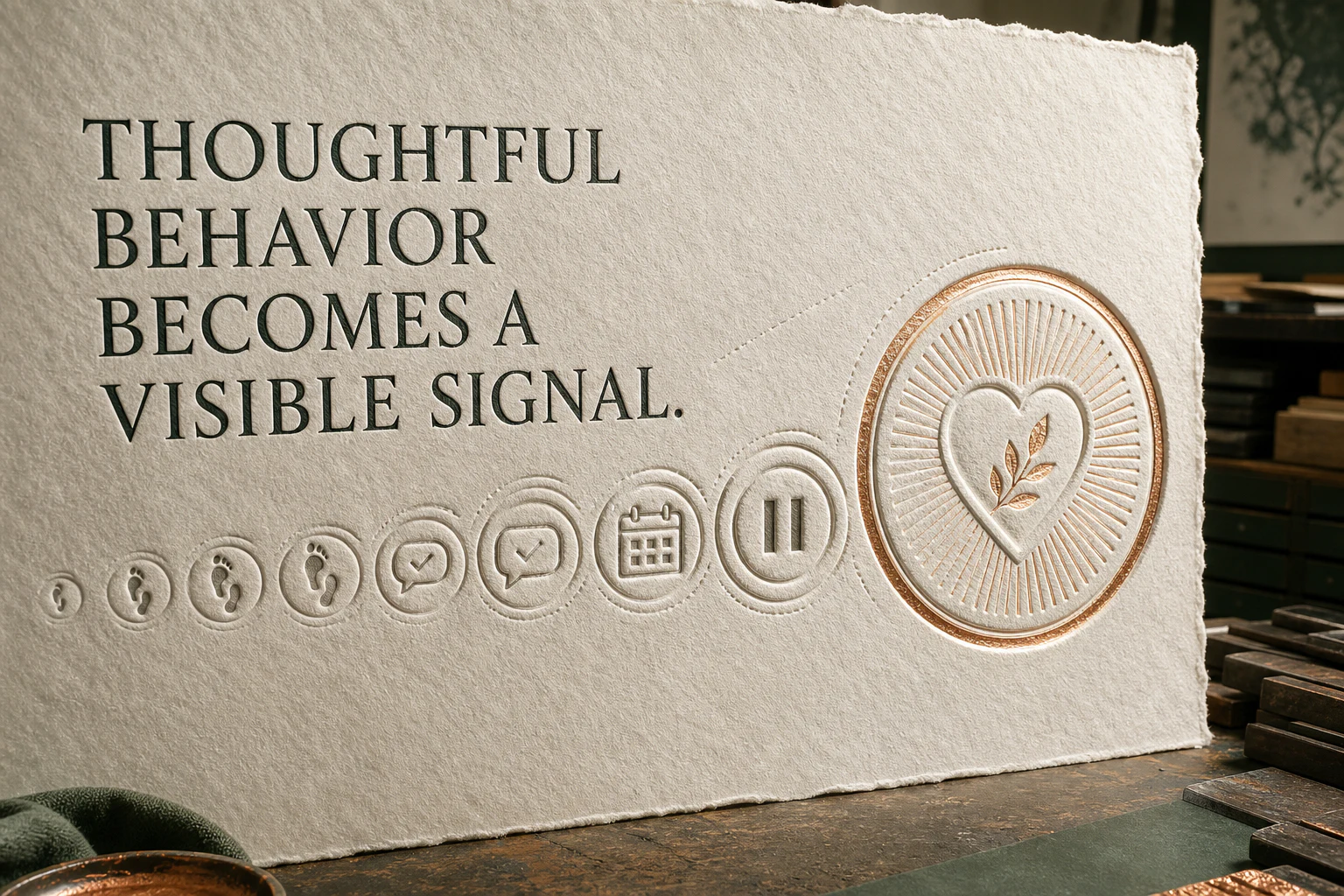
In June 2026, Hinge launched a new profile feature called Signals — a badge that appears on your profile in other users' Discover feeds, showing that you've been showing up with care and consistency on the app.
This isn't just a cosmetic feature. The behaviors Signals tracks are the same behaviors Hinge's recommendation system already uses to learn your preferences and predict mutual compatibility. Earning the badge is essentially the app certifying that you're doing everything right.
As Hinge's Chief Product and Technology Officer Ben Celebicic put it:
"A profile can tell you a lot about someone, but it doesn't always show how they actually show up when it comes to dating. We built Signals to give people more context by making thoughtful behavior easier to recognize. It is designed to help daters feel more confident recognizing the small actions that often lead to better conversations and real dates."
The 5 Behaviors That Earn a Signals Badge
To earn a Signals badge, Hinge requires recent activity across at least 3 of these 5 behaviors:
| Behavior | Why It Matters |
|---|---|
| ⏱️ Spending time on profiles before liking | Genuine interest starts with actually reading who someone is |
| 💬 Commenting when sending a Like | A specific comment builds momentum toward real conversation |
| 👀 Reviewing incoming Likes | Responding to others moves everyone closer to a match or closure |
| 📩 Messaging your matches | Early conversations are what lead to actually meeting off the app |
| 📅 Confirming a date | Sharing whether a match led to a real first date closes the loop |
Eligibility Requirements
Beyond the 5 behaviors, you also need:
- A complete profile
- An account in good standing
- Selfie Verification completed
- An account at least 7 days old
The badge reflects your last 30 days of activity and refreshes daily. It's visible to other daters when they view your profile in Discover.
🏅 Signals Badge Availability
Signals is currently available globally, excluding the UK and EU.
Why Signals Matters for Your Recommendation System Performance
Notice anything familiar about those 5 behaviors? They map directly onto Hinge's own strategy recommendations:
- Spending time on profiles = Strategy #3 (Take Time Viewing Profiles)
- Commenting when liking = what Hinge calls a "thoughtful" like
- Reviewing incoming Likes = Strategy #2 (Don't Just Wait — Send Likes)
- Messaging matches = generating the post-match engagement the system tracks
- Confirming a date = the ultimate signal to the system that a connection worked
Logan Ury, Hinge's Lead Relationship Scientist, connects the dots:
"People are tired of games. Tired of waiting six hours to text back, decoding mixed signals, and pretending not to care. Our research shows daters are ready for something more honest, where effort is celebrated. Signals makes that thoughtfulness visible — so it's easier to find the people who are already showing up that way on Hinge."
If you're already following the strategies in this article, you'll likely qualify for the badge automatically. Think of it as the algorithm publicly acknowledging the behavior it was already quietly rewarding.
The Bottom Line: Working With Hinge's System
Hinge's recommendation system is sophisticated, but it requires your participation to work effectively.
What you can control:
- Profile quality - Strong photos, thoughtful prompts, complete information
- Preference accuracy - Set filters that match what you actually want
- Engagement consistency - Like profiles you're genuinely interested in
- Active exploration - Don't just rely on "Likes You," explore Discover
- Regular updates - Keep your profile current and reflective of who you are
- Thoughtful interaction - Take time reviewing profiles before deciding
What you can't control:
- The exact algorithmic formula
- Who else is using the app in your area
- Other users' preferences and behaviors
- How quickly the system learns your preferences
The key insight from Hinge: "Great dates on Hinge come from the effort and intention you put into building connections - rather than how much you spend."
The recommendation system is a tool. It works best when you're clear about what you want, consistent in your choices, and genuine in your profile presentation.
🎯 Want to Optimize Your Hinge Profile?
See how your profile performs against what Hinge's system evaluates.
ProfileSharp analyzes your complete Hinge profile - photos and prompts - to identify what's working and what could improve. Get actionable recommendations based on how the recommendation system learns.
Once you're getting matches, the next challenge is starting conversations that actually go somewhere. Check our guide on how to start a conversation on Hinge for openers that get replies.
Frequently Asked Questions
How does Hinge's algorithm work in 2026?
Hinge uses a deep-learning recommendation system (not a single algorithm) that combines your stated preferences, dealbreakers, and past behavior to predict mutual compatibility. Introduced in 2025, the system learns who you're likely to like and who's likely to like you back.
Does Hinge show you people who liked you?
Yes, but only with a paid subscription (Hinge+ or HingeX). Free users can see that they have likes but can't see who liked them until they match naturally.
How does Most Compatible work on Hinge?
Most Compatible is selected daily by Hinge's recommendation system based on mutual compatibility prediction. You're 8x more likely to go on a date with your Most Compatible match according to Hinge's research.
Does paying for Hinge get you more matches?
Not directly. Paid features don't boost your algorithmic visibility. However, unlimited likes and advanced filters can indirectly help by giving you more opportunities to connect and refine your match pool.
How can I reset the Hinge algorithm?
You can't reset it, but you can recalibrate it by: adjusting your preferences, changing your liking patterns (be more selective), updating your profile, and actively engaging with your Discover feed instead of just "Likes You."
Why am I not getting matches on Hinge?
Common reasons include: profile quality issues, being too restrictive with preferences/dealbreakers, inconsistent liking patterns (too many or too few likes), only using "Likes You" tab, or having "prefer not to say" on key profile questions.
How long does it take for Hinge to learn my preferences?
Hinge doesn't specify, but as a machine learning system, it continuously learns from each interaction. You'll likely see better recommendations after 1-2 weeks of consistent, intentional use.
Does the Hinge algorithm favor new users?
Hinge doesn't mention a new user boost in their official explanation. The system learns from behavior, so established profiles with clear patterns may actually get better recommendations than brand new ones.
References
This analysis is based on Hinge's official article "How We Connect Daters on Hinge" published on their website, and Hinge's June 2026 announcement "Hinge Launches New 'Signals' Badge to Celebrate Daters Who Show Consistent Effort".
Disclaimer: This analysis is based on Hinge's official article about their recommendation system, along with publicly observable behavior and industry-standard machine learning practices. Hinge does not disclose full technical details of their system. This article reflects independent analysis and is not affiliated with or endorsed by Hinge.
Last updated: June 7, 2026