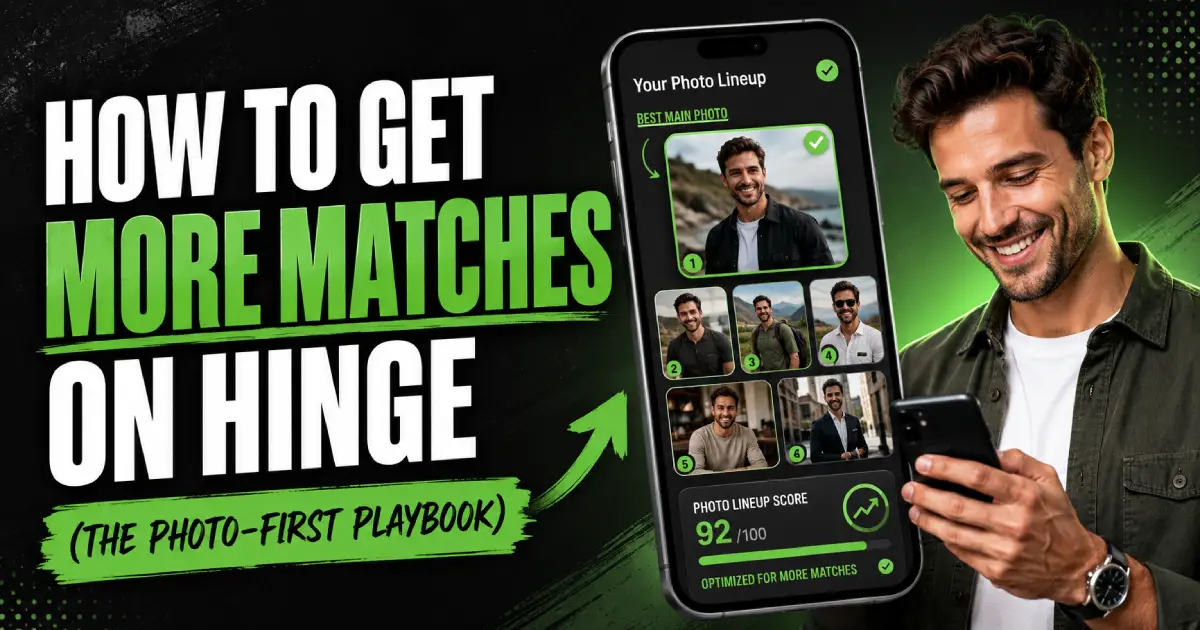
 Getting More Matches
How to Get More Matches on Hinge (The Photo-First Playbook)
Not getting enough Hinge matches? Your photos are doing 90% of the work. Here's the exact photo lineup strategy that gets more likes and conversations.
In this article5 sections
You've filled in all the Hinge prompts. Your answers are decent. Maybe even a little funny. And yet the likes are trickling in slowly, the matches are thin, and the ones you do get don't seem to go anywhere. It feels like the app just doesn't like you.
Here's what's actually happening: Hinge's recommendation algorithm — which the company calls a "machine learning system" — is learning from how people react to your profile, especially your photos. If your photos aren't generating engagement, the algorithm starts showing your profile to fewer people. Your prompts and bio are secondary. Photos are doing the heavy lifting before any of the words get read.
⚡ Photos vs. Everything Else on Hinge
| Profile element | Swipe decision weight | Can you fix it today? |
|---|---|---|
| Main photo (first impression) | ~60% | Yes |
| Other photos | ~25% | Yes |
| Prompts | ~10% | Yes |
| Bio / basic info | ~5% | Yes |
The distribution tells the story. Improving your photos is the highest-leverage thing you can do to get more Hinge matches. Rewriting your prompts while leaving weak photos in place is rearranging deck chairs.
📸 Find Out What Your Photos Are Actually Signaling
SharpScan analyzes your Hinge photos and tells you which ones are helping, which are hurting, and how to reorder your lineup for maximum impact. See your photo scores in 60 seconds — free.
📸 The 6-Photo Lineup That Gets Hinge Results
Hinge allows up to 6 photos. Here's the strategy for each slot:
Photo 1 — Conversation starter (solo, face clear, smiling): Your main photo needs to accomplish one thing: make her want to tap in and see more. A direct, genuine, smiling face shot in natural light accomplishes this. Avoid sunglasses, group shots, or anything that makes her work to understand who you are.
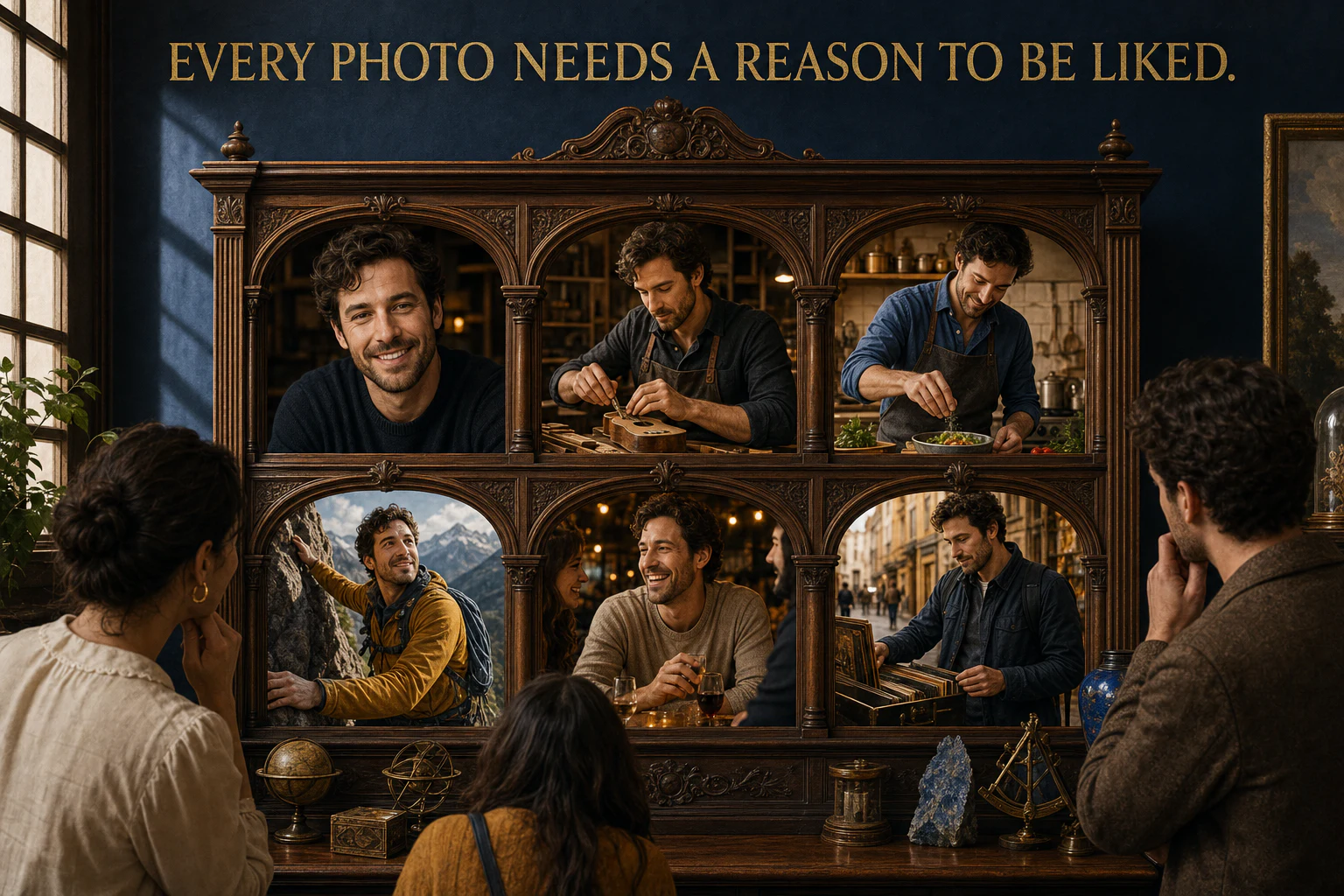
Photo 2 — Life context shot: Show yourself in an environment that signals your lifestyle. Coffee shop, hiking trail, beach, city street. Something that says "I have a life worth sharing." This photo builds the picture that your main photo started.
Photo 3 — Social proof: A natural shot with friends or in a group. It signals: people like being around you. Crucial for women evaluating whether you're socially calibrated. One rule: make sure it's immediately clear which person you are — blurring others or positioning yourself clearly helps.
Photo 4 — Full-body context shot: Not a posed mirror selfie. A candid full-body shot — hiking, playing a sport, standing at an event — where your physique is visible without being the point.
Photo 5 — Personality/passion shot: The most underused slot. Doing something you actually love — performing, cooking, building something, traveling. This is what gives her an opener and shows depth.
Photo 6 — Smile/warmth closer: End with a photo that makes you look like a genuinely fun person to spend time with. A close-up laughing, a candid where you look relaxed and happy. Closes the profile on a high note.
Wait, Really? Most guys put their "best" photo first — which is actually a photo they think makes them look most attractive. But Hinge's own data shows that photos showing personality and context generate more engagement than pure attractiveness shots. The photo that looks most like an interesting person often outperforms the one that looks most like a model.
🚫 Hinge Photo Mistakes That Tank Your Match Rate
Mistake 1 — All indoor photos. Hinge is used by people looking for a lifestyle partner. Indoor-only profiles signal a small, uninteresting life. You don't need to have gone to Bali — your neighborhood park in good light works.
Mistake 2 — No variation in expression. Same stare-into-distance look in every photo reads as either trying too hard to look cool, or genuinely not very warm. Mix confident and approachable.
Mistake 3 — Group photo in slot 1. She shouldn't have to hunt for you. One second of confusion is enough to swipe left.
Mistake 4 — Photos that look heavily filtered or edited. Hinge's audience skews toward people looking for real connections. Heavy editing signals insecurity and creates a disconnect when you meet in person.
Mistake 5 — Leading with a gym/shirtless photo. Unless your entire brand is physical fitness, this reads as one-dimensional and try-hard. Save it for slot 4 or 5, in context.
For the full breakdown of photo mistakes to avoid, see photo mistakes that make her swipe left and 7 Tinder photo mistakes that kill matches (same principles apply on Hinge).
🎯 The Hinge Algorithm Signal You're Missing
Hinge's algorithm pays attention to engagement patterns — not just swipes, but specifically how people interact with your profile. When someone likes a specific photo or prompt, that's a stronger signal than a general like. This means:
Photos that generate specific likes are more valuable. If one of your photos keeps getting liked (not just your general profile), the algorithm treats it as a strong positive signal.
The more prompts you answer, the more surfaces for engagement. Fill all 3 prompt slots. Each one is a chance for someone to like that specific element, which boosts your profile's algorithmic standing.
Daily logins signal activity. The algorithm gives a "recency boost" to active users. Opening the app daily — even briefly — keeps your profile fresher in the recommendation stack.
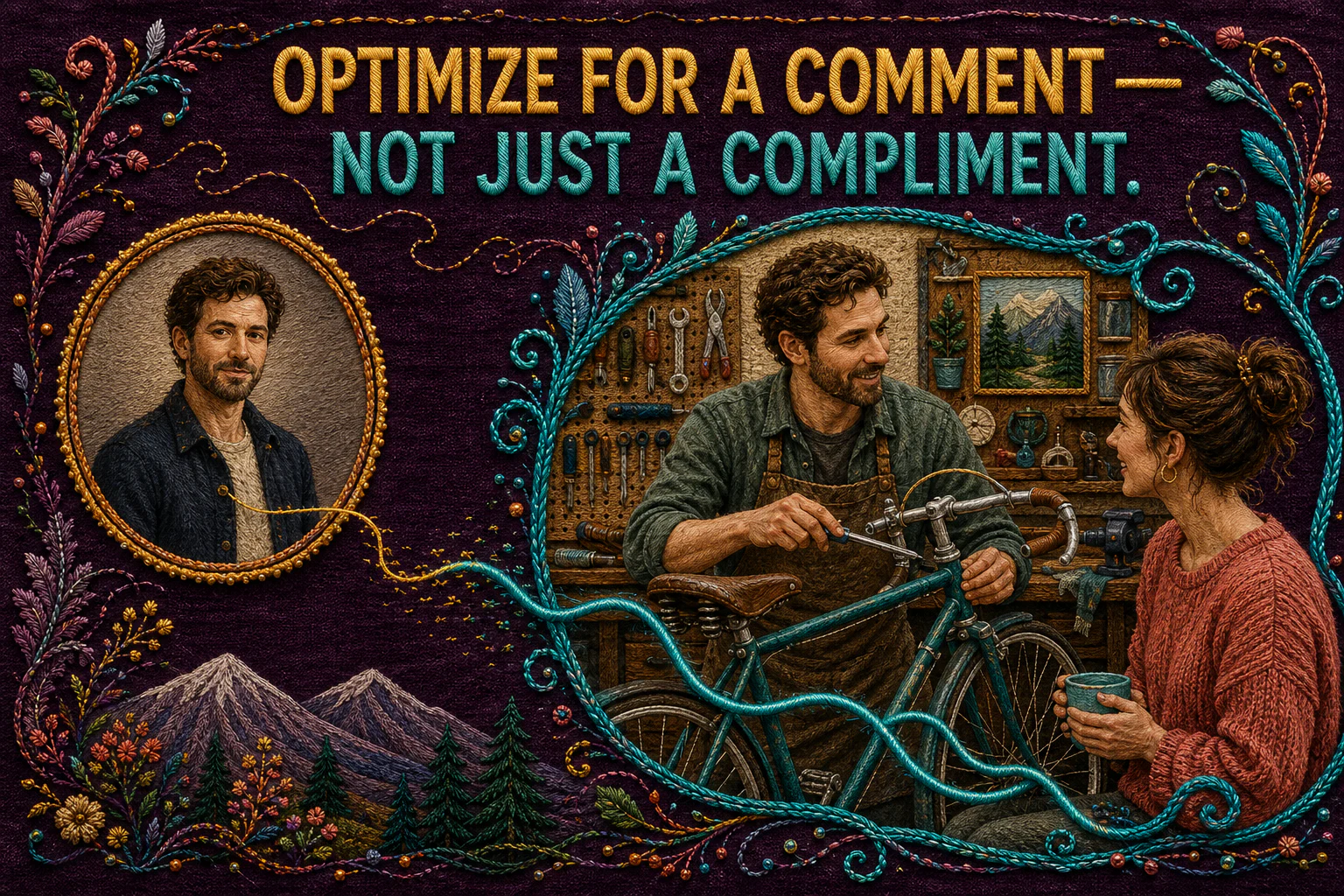
The practical takeaway: Optimize your photos for engagement, not just initial attractiveness. A photo that makes someone want to comment or reply to specifically is better than a photo that simply looks good.
Better photos get you matches — but conversations are what turn matches into dates. For the full conversation side of Hinge, see Hinge conversation tips: from first like to actual date.
✅ Quick Self-Check
- My first photo is a solo, clear-face shot with a genuine smile
- I have at least one outdoor photo in natural light
- I have a social context photo (with other people)
- My photos show at least 3 different aspects of my life
- No photo is blurry, dark, or dominated by a distracting background
- I have at least one photo that would make someone want to ask me a question
- I've filled all 3 Hinge prompt slots
If your match rate still isn't where you want it after fixing these, the issue might be subtle — lighting that's slightly off, a background that reads poorly, an expression that doesn't land. SharpScan breaks it down photo-by-photo so you're not guessing.