 From Match to Date
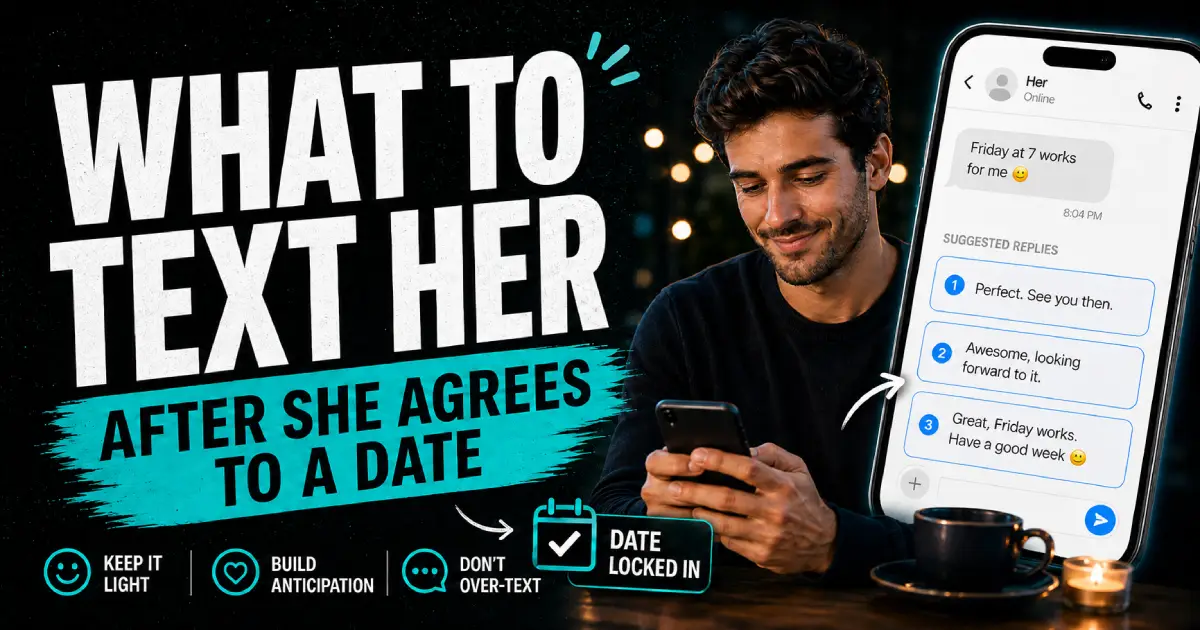
What to Text Her After She Agrees to a Date
She said yes — now don't blow it over text. Here's exactly what to text before the date, what to avoid, and how to keep the momentum without overdoing it.
In this article7 sections
She said yes. You've got a date locked in. And now the instinct kicks in — should you text her to keep things warm? What do you say? How often? The window between "yes" and the actual date is one of the most mismanaged phases in dating app conversations, and the mistakes made here quietly kill dates that should have been great.
The trap is thinking that pre-date texting is neutral — that whatever you send doesn't really matter, and the date itself is what counts. It does matter. The tone you set between the "yes" and the meetup shapes how she feels walking in. Done right, a small amount of well-timed pre-date texting keeps momentum and builds low-key anticipation. Done wrong, it either over-invests (killing mystery) or goes so silent that the date feels like meeting a stranger all over again.

⚡ Pre-Date Texting: What Works vs. What Kills Momentum
| What most guys do | What actually works |
|---|---|
| Text daily to "keep things warm" | Keep it minimal — 1–2 touchpoints max |
| Long conversations before the date | Short, punchy exchanges that leave things open |
| Confirm the date formally: "Still on for Friday?" | Casual logistics confirmation the day before |
| Day-of silence until you see her | One short, relaxed day-of text |
| Ask what she's looking forward to / heavy emotional investment | Light, specific, forward-looking |
The pattern: pre-date texting should maintain warmth without substituting for the date itself.
💬 A Great Profile Earns the Date — Before the Texting Starts
The quality of your match determines the quality of your date. SharpScan tells you exactly what your profile is communicating.
🤔 Why Less Is More Before the Date
The psychology of anticipation works in your favor if you let it. When someone agrees to meet you and you immediately dial up the text volume, two things happen:
- You burn through the conversation energy that should be saved for in person. By the time you meet, you've already covered everything and the date has an "I feel like I know you already" flatness to it.
- You signal anxiety. Constant texting reads as over-investment — you need the date to go well more than she does. That imbalance subtly undermines the dynamic before you've even sat down.
The optimal pre-date texting window is purposeful and sparse. Two well-timed messages between the "yes" and the date outperform a running dialogue every time. Keep the best stuff for when you're face-to-face.
📝 The Confirmation Text (Night Before)
Send this the evening before the date — not the morning of, not three days before. The night before is the sweet spot: close enough to feel current, early enough that she's not rushing to read it.
🔴 The Formal Confirmation:
"Hey, just wanted to confirm we're still on for tomorrow at 7?"
Why it backfires: "Just wanted to confirm" is anxious phrasing. It makes it easy for her to cancel because you've framed it as a question she needs to answer honestly. It also has zero warmth or personality.
🟢 The Casual Lock-In:
"Still on for [place] tomorrow — see you at 7."
Why it works: It assumes the plan is happening (confident framing), mentions the specific place (practical), and has a natural ending that doesn't demand a response — she'll reply "yes, see you then" without feeling interrogated. The tone is relaxed and forward-moving.
Optional addition: One brief, light line that references something from your earlier conversation:
"Still on for [place] tomorrow — see you at 7. Also still thinking about your [thing she said] take."
This shows you were paying attention without making it a big deal. It creates a tiny callback that makes her smile going into the date.

🚫 What NOT to Do Between Now and the Date
Over-texting kills more pre-date momentum than almost anything else. Here are the specific patterns to avoid:
🔴 The Daily Check-In:
"Hey! How's your day going?"
This is what people text friends, not someone they're building romantic tension with. Mundane daily check-ins flatten the dynamic and burn through conversational surface area you need for the date.
🔴 The Emotional Investment Test:
"Are you excited for tomorrow? I've been looking forward to it all week."
Telling her you've been thinking about it all week signals that the date outcome matters a lot to you — which is true, but saying it removes the attractive ambiguity. Let the anticipation live in the subtext, not the text.
🔴 The Long Conversation: Any exchange that goes 15+ messages before the date is too much. If a conversation naturally starts and runs long, find a clean place to exit it: "This is a better in-person conversation — see you tomorrow." That line alone builds more anticipation than continuing the thread.
The Harsh Truth: Every text you send before the date either builds or depletes anticipation. There's no neutral. Silence between the confirmation and the date-of text is not awkward — it's productive.
⏰ The Day-Of Text
Send one short, warm text on the day of the date — ideally in the afternoon, not the morning. It's not a reminder; it's a small signal that you're present and looking forward to it.
🟢 "The Calm Arrival Signal":
"See you tonight."
Three words. That's it. It's confident, warm without being gushing, and requires nothing back from her. She'll almost certainly reply with something short and positive, and that small exchange sets a relaxed, assured tone before you've even met.
A slightly fuller version if you want to add one thing:
"Heading out soon — see you at [time]."
This works because it signals you're on track without demanding confirmation. It's the verbal equivalent of showing up on time.
What to avoid on the day of:
- Long messages reviewing the plan
- "Can't wait!" energy that raises the emotional stakes
- Questions that require decisions ("Does [place] still work for you?")
If you have a genuine logistics question — parking, exact table location — keep it purely practical and short. One sentence, nothing more.
💬 Not Sure How to Word the Follow-Up?
Wingman writes the exact message to send after she says yes — confident, natural, no overthinking. Paste your situation and get a message that fits your specific dynamic.
🎯 One Bonus Move: The Specific Detail
If there's a natural moment between the "yes" and the date to send something — and it genuinely fits, not forced — make it a specific detail rather than a general message.
🔴 General:
"Looking forward to tomorrow!"
🟢 The Specific Detail:
"Found out [place] has [specific thing] on Fridays — works out perfectly."
Why it works: It's about the date, not about your feelings about the date. It signals you actually thought about where you're taking her — not just that you're excited. That's a subtle but meaningful difference in the signal it sends.
For more on how to lead conversations from match to date, see our how to lead the conversation on dating apps guide. And for what to do once you're actually there, the 5 first date rules covers the whole in-person playbook.
✅ Quick Self-Check: Pre-Date Texting Done Right
- Keeping it to 1–2 touchpoints between "yes" and the date?
- Confirmation sent the night before — not anxious phrasing, casual lock-in?
- Avoiding daily check-ins and long pre-date conversations?
- No "I've been so excited about this all week" emotional over-investment?
- Day-of text is short, warm, and doesn't demand a response?
- Any specific detail you include is about the date — not your feelings about it?
The gap between yes and the date is not a problem to fill with conversation. It's a pause that builds anticipation. A confirmation the night before, one clean day-of message, and you walk in with momentum intact and something worth talking about.