 Getting More Matches
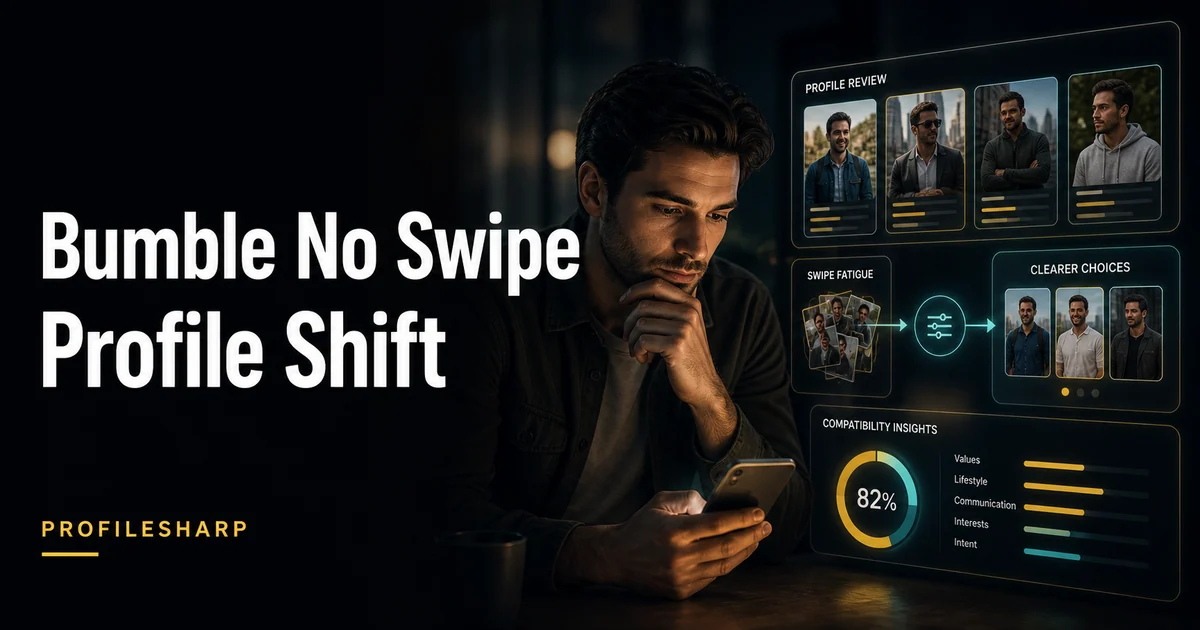
Bumble No Swipe: What It Means for Your Profile
Bumble may move beyond swiping. Learn how a no-swipe dating app changes your photos, prompts, trust signals, and profile strategy before the app shifts.
In this article9 sections
Swiping made dating apps fast.
It also made them shallow, repetitive, and easy to resent.
That is why Bumble's reported move away from the swipe matters. It is not just a product detail. It is part of a bigger shift in dating apps: less endless volume, more deliberate choice.
For your profile, that changes the job.
A swipe-era profile can sometimes survive on one strong photo and a vague bio. A slower dating experience asks for more. People may spend longer checking whether you seem real, whether your photos match, whether your prompts are worth answering, and whether messaging you feels like it will lead somewhere.
That does not mean your profile needs to become serious or overbuilt.
It means the profile has to be easier to choose.
What Did Bumble Announce
Axios reported that Bumble CEO Whitney Wolfe Herd said the app would move away from the swipe in select markets starting later in 2026. The exact replacement was not fully detailed, so this should be treated as an announced direction rather than a complete user guide.
The timing fits a larger problem. Business Insider reported that major dating apps have been trying to fight swipe fatigue through product changes, limits, conversation updates, and more intentional ways to meet.
The user takeaway is simple: if apps reduce mindless swiping, your profile has to carry more meaning per view.
Why No-Swipe Dating Changes the Profile
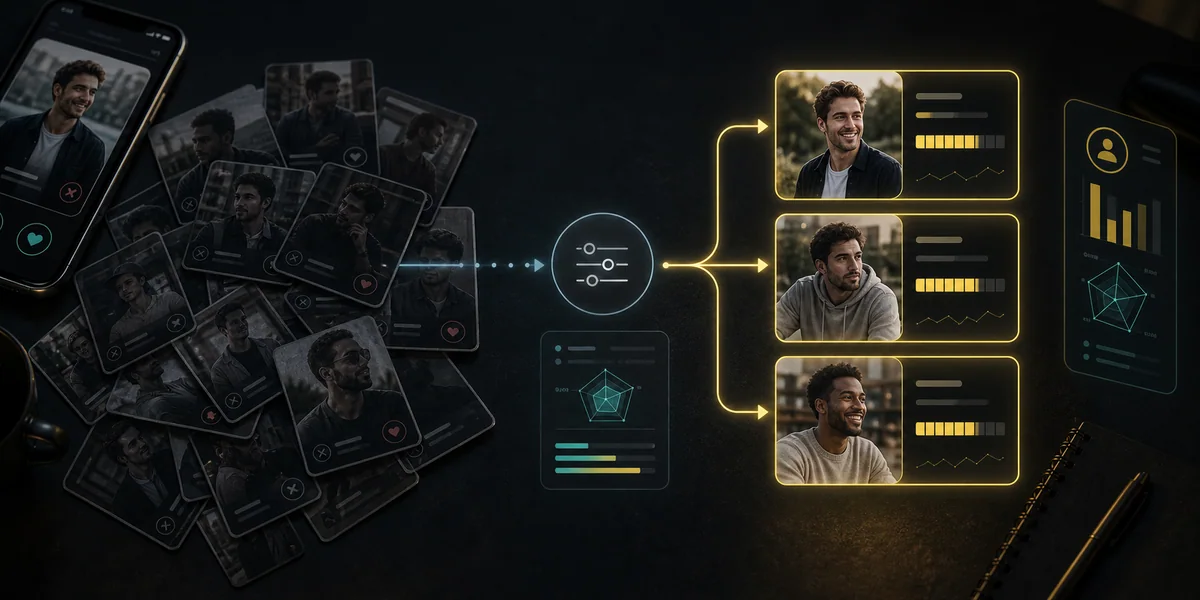
Swiping rewards interruption.
You want a photo strong enough to stop the thumb. The rest of the profile can be weak and still get some attention if the first image is good enough.
No-swipe discovery is different. If the app slows people down, they are more likely to inspect the whole profile.
That means they may ask:
- Does he look like his photos are recent?
- Is there anything to respond to?
- Does his life feel real?
- Does the profile seem low-effort?
- Is he actually interested in meeting someone, or just collecting attention?
Those are not deep questions. They happen fast. But they are different from a one-second swipe reaction.
Your First Photo Still Matters
Moving away from swiping does not make the first photo less important.
It may make it more important.
The first photo sets the emotional temperature of the profile. If it feels cold, distant, or hard to read, the rest of the profile has to work harder.
A strong Bumble first photo should be:
- Clear
- Recent
- Well lit
- Warm enough to approach
- Easy to identify
- Free of sunglasses or group confusion
The mistake is choosing the photo where you look most intense, most polished, or most impressive.
That can work in some contexts. On Bumble, it often creates friction. Someone may think you look good and still not want to start the conversation.
Warmth matters because Bumble is not only about attraction. It is also about whether messaging you feels low-risk.
For more first-photo psychology, read Best Main Tinder Photo: What Actually Works. The same principle applies here.
Make Your Bumble Profile Easier to Choose
ProfileSharp reviews your photos for trust, attractiveness, clarity, and first-photo strength.
The Bio Has to Give Her a Handle
If Bumble becomes less swipe-heavy, the bio and prompts matter more because they help someone decide what to do next.
Weak profiles make replying feel like work.
Examples:
- "Food, travel, gym, music."
- "Just ask."
- "Fluent in sarcasm."
- "Looking for someone fun."
None of those are offensive. That is the problem. They are too neutral to create momentum.
Better:
"I will always say yes to dumplings, live music, and a coffee walk that accidentally becomes three miles."
Better:
"Green flag: you can turn a normal errand into a mini adventure."
Better:
"Best first meet: something public, simple, and good enough that we both pretend we discovered the place."
These lines work because they give the other person something to grab. They create a picture. They make the first message easier.
That matters more when people are not blindly swiping through volume.
Trust Signals Become More Important
When users slow down, doubt gets louder.
A profile can lose someone for small reasons:
- You look different in every photo
- Your first photo is great but the rest are weak
- Every photo looks staged
- There is no full-body or style photo
- There is no social context
- The bio sounds disconnected from the photos
- The profile feels like it was built to impress strangers, not meet one
This is where many Bumble profiles fail. They try to look attractive but forget to look believable.
Attraction gets attention. Trust keeps the profile alive.
Show Intent Without Making It Heavy
Bumble users may become more selective if the app reduces swipe volume. That makes unclear intent more expensive.
You do not need to write a relationship manifesto. You do need to avoid sounding checked out.
Weak intent:
"Just seeing what's out there."
"Don't know why I'm here."
"Convince me to delete this."
Those lines can feel funny when you write them. On the receiving end, they often sound disengaged.
Better:
"Looking for something easygoing that can become real."
"Good conversation, clear plans, no mystery games."
"Best first meet: coffee walk, casual dinner, or anything with live music."
That is enough. It signals that you are present without turning the profile into an interview.
Build a No-Swipe-Ready Lineup
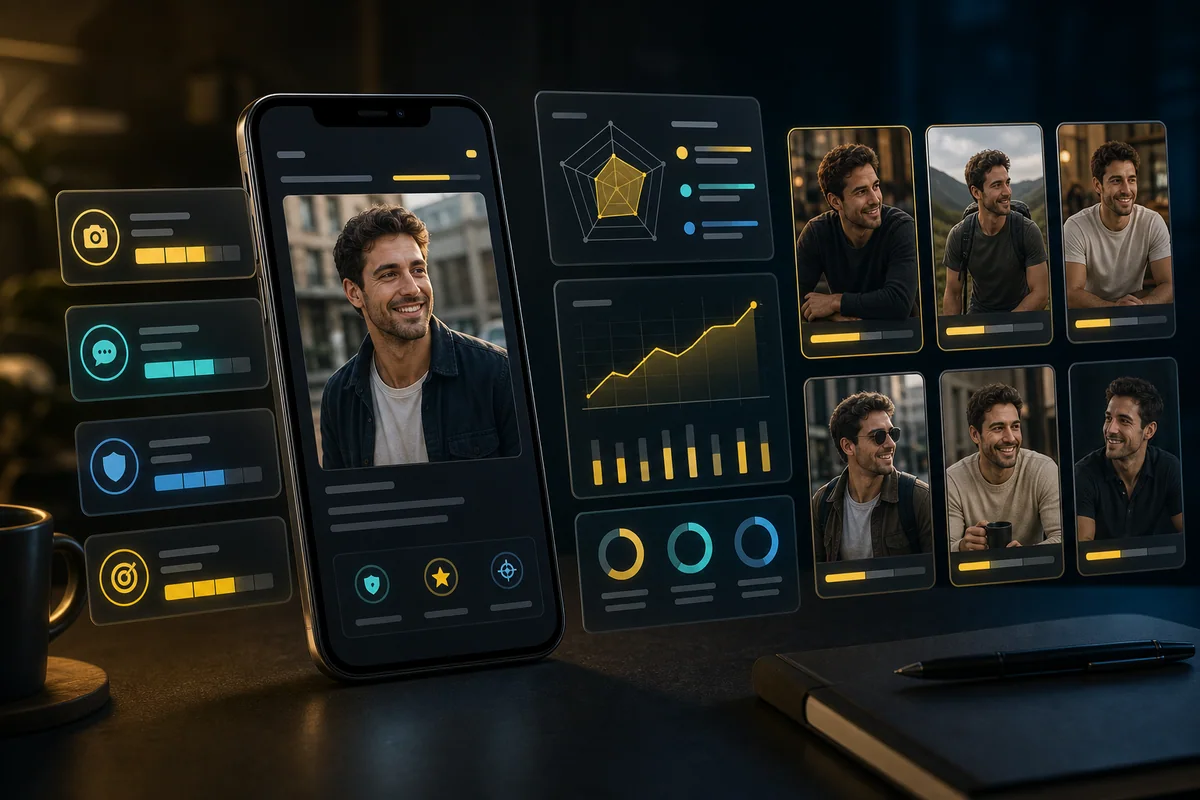
If you want your Bumble profile to survive a slower, more deliberate format, build the photos like a sequence.
Use:
- A clear first photo with warmth
- A full-body or style photo
- A social-context photo where you are easy to identify
- A lifestyle or activity photo
- A candid photo that feels natural
- One optional personality photo that adds texture
Cut:
- Duplicate selfies
- Old photos
- Sunglasses in multiple slots
- Group shots where you are hard to find
- Photos that look like a fake lifestyle
- Anything that makes your profile less clear
The goal is not to be more polished. It is to be easier to understand.
Your Photos Should Match Your Intent
ProfileSharp helps you see whether your photos signal casual, serious, trustworthy, confident, or confusing.
Quick Self-Check
Before Bumble changes anything in your market, ask:
- Does my first photo feel clear and approachable?
- Does my profile have at least one easy conversation hook?
- Do my photos look current and consistent?
- Is there one real lifestyle signal?
- Would the profile still work if someone read all of it slowly?
- Does my bio make me easier or harder to message?
Bumble may keep changing the interface. The profile problem stays the same.
If the app gives you fewer but more intentional chances, your profile has to make those chances count.
References
Disclaimer: This article is an independent analysis based on public reporting. ProfileSharp is not affiliated with or endorsed by Bumble.