 Profile Photos
Dog Photos on Dating Apps: When They Help or Hurt You
Use a dog photo in your dating profile without looking staged, misleading pet lovers, hiding your face, or wasting a slot that needs a stronger job.
In this article10 sections
A dog photo can make a profile feel warmer, more active, and easier to message. It can also look like a borrowed prop, hide your face, or imply a pet-centered lifestyle you do not actually live.
The dog is not the strategy. The moment around the dog is what matters.
Bumble's official profile media guide includes a pet—if it is yours—among the kinds of authentic life details a photo can show. That small condition is useful. The image should reveal something true, not manufacture warmth.
What a Good Dog Photo Communicates
The strongest pet photos can show:
- relaxed body language;
- care and responsibility;
- an outdoor or daily routine;
- playfulness and warmth;
- a specific, easy conversation hook.
But none of those signals are automatic. A blurry photo of a dog taking up the whole frame tells the viewer almost nothing about you.
Use Your Dog—or Tell the Truth
Borrowing a friend's dog for a photo can seem harmless, but many viewers read a dog photo as evidence that you own or regularly care for that dog. If that assumption is false, the conversation starts with a correction.
If the dog is not yours but genuinely part of your life, add context in a caption or prompt:
- “My sister's dog, who has assigned me weekend walking duty.”
- “Not my dog, but apparently I am his emergency contact.”
The detail keeps the warmth while removing a misleading implication.
Keep Yourself Easy to See
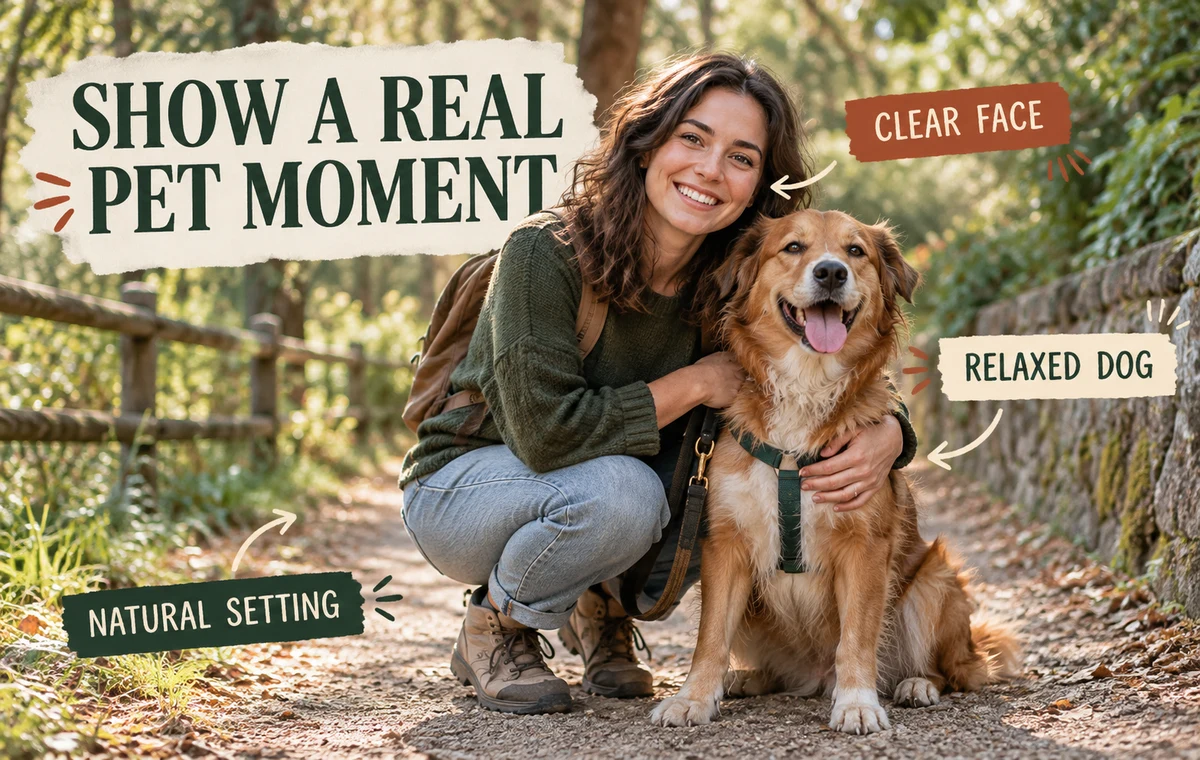
Your dating profile is still about you. Choose a frame where:
- your face is visible and reasonably close;
- the dog is not blocking your features;
- the interaction looks natural;
- the background is not distracting;
- the image still works at phone size.
A dog portrait with your hand entering the frame belongs in a pet album, not necessarily a dating profile.
Make Sure Every Photo Has a Distinct Job
A pet image may add warmth, but your lineup still needs recognition, full-body context, lifestyle variety, and a clear first photo. ProfileSharp can identify the missing role.
Choose Interaction Over Posing
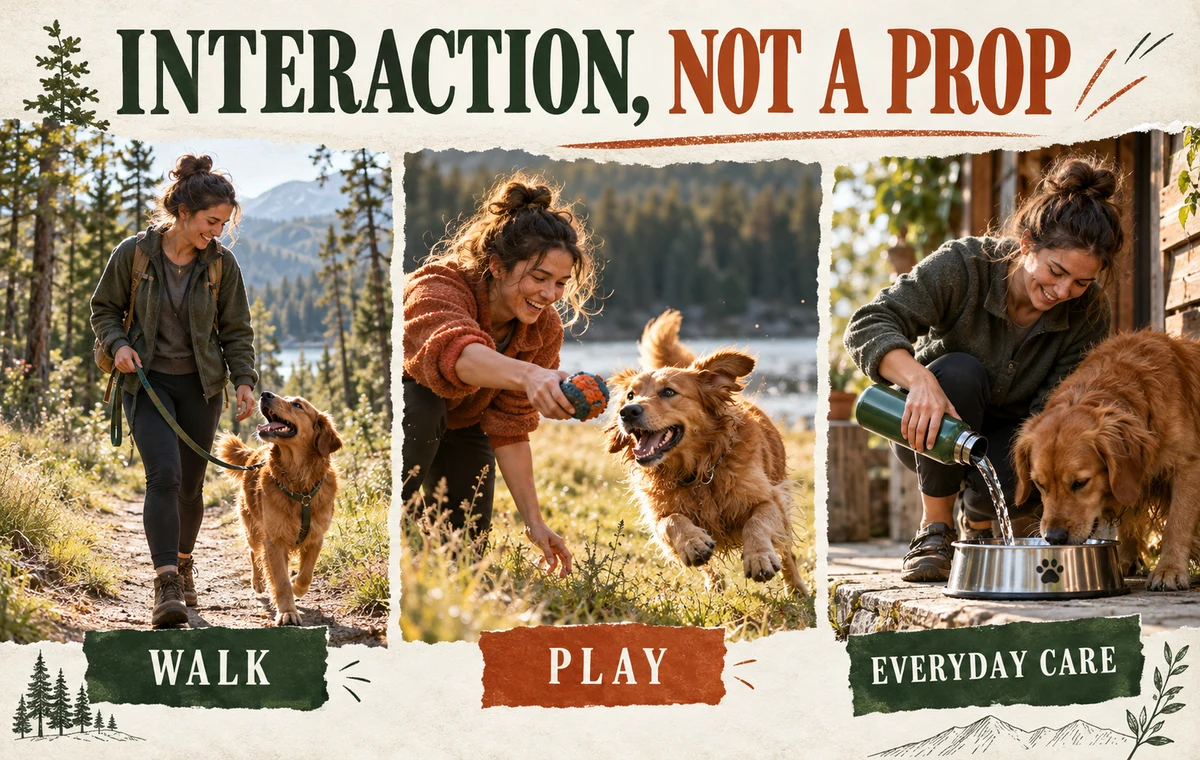
A candid walk, play moment, or calm interaction usually says more than kneeling beside a dog and staring at the camera. Interaction creates a small story.
Useful scenes include:
- fastening the leash before a walk;
- sitting together at an outdoor café;
- playing in a park where both faces remain visible;
- resting after a hike;
- teaching or practicing a simple command.
Avoid staging unsafe or uncomfortable behavior for the photo. The dog should look relaxed too.
Where the Dog Photo Belongs
It is rarely the best first image. Your lead photo should make recognition immediate without a competing subject. A dog photo usually works better in the middle of the lineup, after the viewer already knows what you look like.
A practical sequence might be:
- clear solo first photo;
- full-body or environmental portrait;
- genuine activity;
- dog or pet interaction;
- social context;
- another distinct side of your life.
If the dog is central to your daily routine or relationship expectations, the image can appear earlier—but your face must still win the frame.
For broader lineup planning, use the dating photo selection guide.
When a Dog Photo Hurts
Replace it when:
- the dog is not yours and the image implies otherwise;
- your face is hidden or tiny;
- the image is low quality;
- the pose feels like obvious engagement bait;
- the dog looks stressed;
- the setting is messy or unsafe;
- several other photos already communicate the same outdoor or casual energy;
- you do not actually want pets to be part of a future relationship.
The last point matters. A cute dog image attracts pet-related conversation and may influence compatibility assumptions.
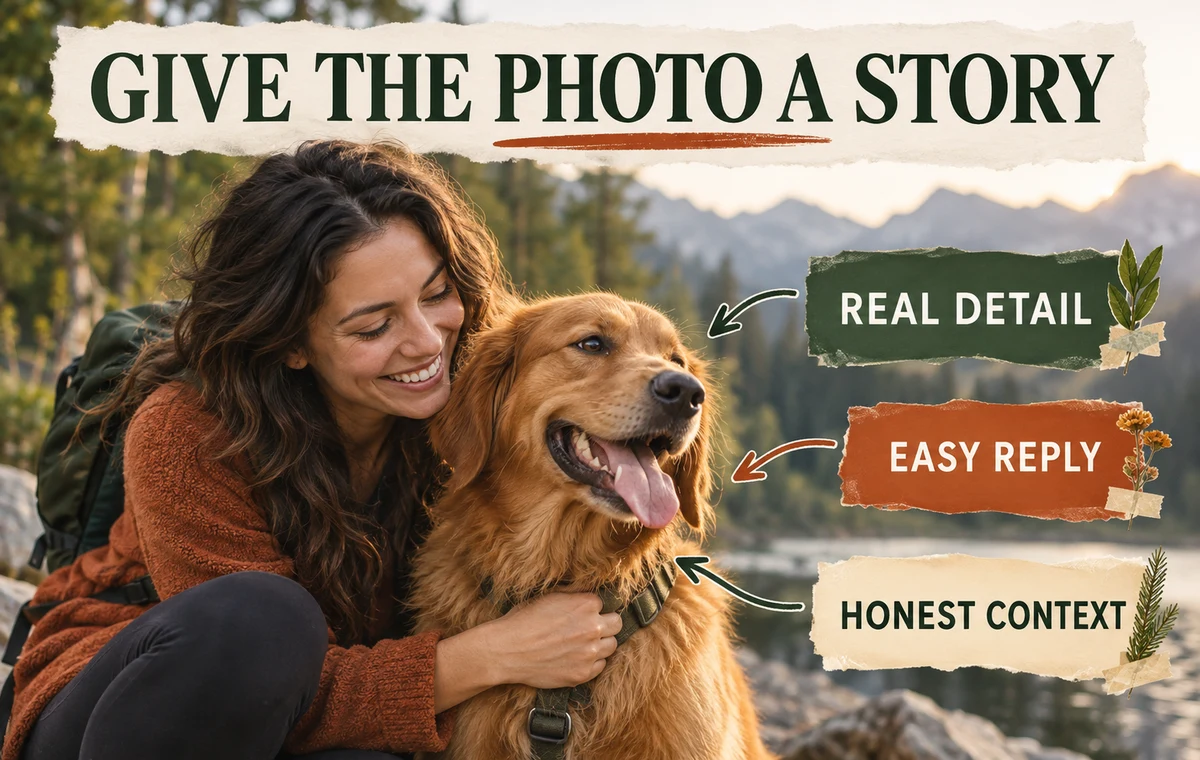
Turn the Photo Into a Conversation Hook
If your app supports photo captions or comments, add one detail rather than a generic joke.
Weak:
Dog person.
Stronger:
Milo believes every walk should include the bakery. I have stopped arguing.
The second line gives the dog a role, shows your tone, and makes a reply easy. It also connects with the broader principle in the dating app opener guide: specificity reduces the work of starting a conversation.
Respect Privacy and Safety
Check the background before uploading. Pet tags can display phone numbers or addresses. A familiar walking route, home entrance, or veterinary paperwork may reveal more location information than intended.
Crop or retake the image if private details are visible. The dating app privacy guide covers a fuller profile check.
Test the Signal, Not Just the Cuteness
A dog photo should strengthen the story of your real life. ProfileSharp can compare it with the rest of the lineup and show whether it adds warmth or just repeats another slot.
Frequently Asked Questions
Should I use a dog photo if the dog is not mine?
Only if the dog is genuinely part of your life and you make the relationship clear. Do not imply ownership for attention.
Can a dog photo be my first dating profile picture?
Usually a solo first photo is clearer. If you lead with a pet image, your face must remain the immediate focal point.
What is the best kind of dog photo?
A recent, well-lit image showing a natural interaction where both you and the dog look comfortable.
Should I include the dog's name?
It can create an easy conversation hook. Avoid showing tags or documents with private information.
What if someone dislikes dogs?
That may be useful compatibility information if dogs are truly part of your life. Do not hide an important lifestyle reality to appeal to everyone.