 Messaging & Conversations
How to End Things After a Few Dates Without Ghosting
Learn how to end things after a few dates with a clear, kind message that matches the connection, avoids false hope, and respects both people.
In this article11 sections
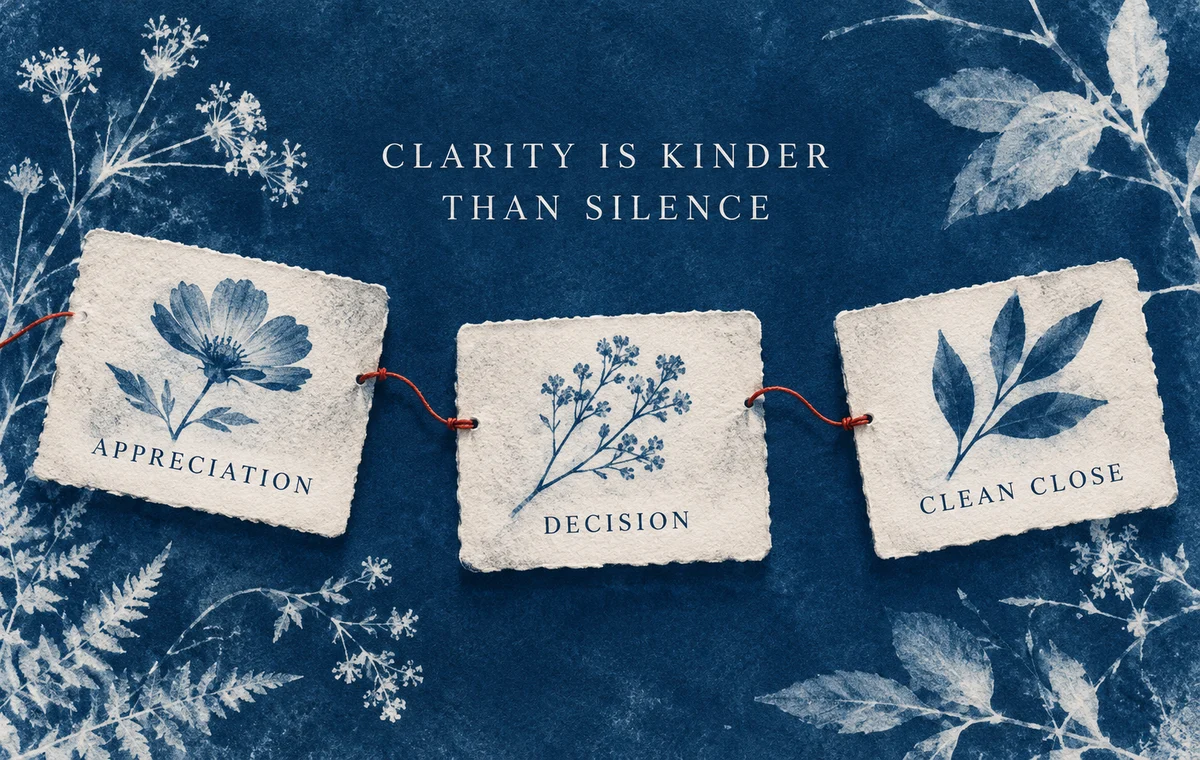
After a few dates, the kindest ending is usually a short message with three parts: appreciation, a clear decision, and a clean close.
You do not need to present a case. You do need to stop inviting hope you no longer share.
A Message You Can Use
“I’ve enjoyed getting to know you, but I’m not feeling the connection I need to keep dating. I wanted to be honest rather than disappear. I wish you the best.”
This works because it is warm, definite, and does not ask the recipient to persuade you.
Match the Message to the Connection
After one brief date, a text is normally enough. After several dates, regular contact, sex, or emotional intimacy, a more personal message—or a call—may be appropriate.
The more trust someone gave the connection, the more care the ending deserves. That does not mean a long explanation.

Write It Clearly Without Sounding Cruel
Wingman can help you remove mixed signals and keep the message human, direct, and proportionate to the connection.
What to Say—and What to Leave Out
Useful language:
- “I don’t see this becoming the relationship I’m looking for.”
- “I enjoyed meeting you, but I don’t want to continue romantically.”
- “Our goals do not feel aligned, so I’m going to step back.”
Avoid critiques about appearance, chemistry rankings, or comparisons with another date. Avoid “I’m too busy” if you know the real answer is no.
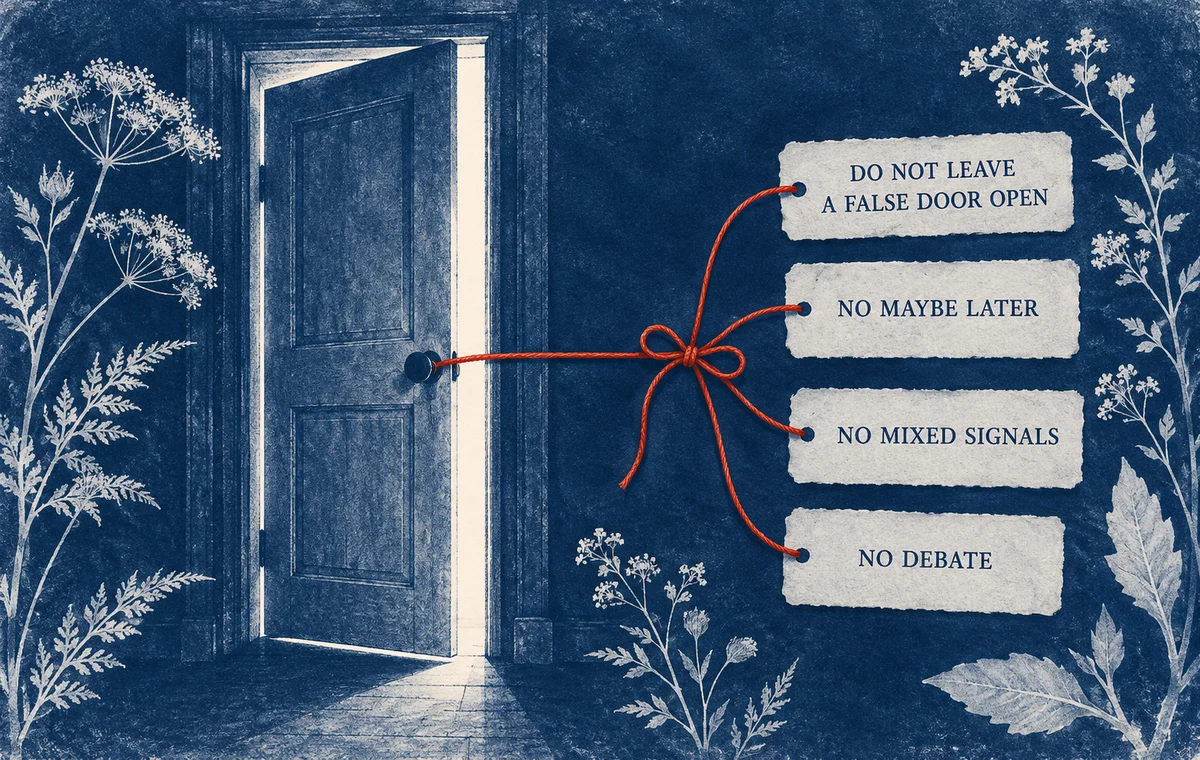
Do Not Leave a False Door Open
Phrases such as “maybe later,” “right person, wrong time,” or “let’s see what happens” can soften your discomfort while extending theirs.
Do not offer friendship automatically. Offer it only if you genuinely want it and can respect that the other person may need distance.
If They Ask Why
You can give one honest, non-cruel answer: “I did not feel the romantic compatibility I’m looking for.” You are not required to debate your experience.
If the mismatch is concrete—different intentions, distance, children, or relationship structure—you can name it. This guide explains why different dating intentions matter.
If They React Badly
You can end the exchange: “I understand this is disappointing. My decision is final, and I’m going to step away now.”
Insults, pressure, threats, or repeated contact remove any obligation to continue engaging. Block and seek support if safety becomes a concern.
When Silence May Be Safer
Direct communication is ideal only when it is safe. If the person has threatened you, ignored boundaries, stalked, or frightened you, prioritize safety over etiquette. You do not owe a closing conversation that increases risk.
After You Send It
Do not keep checking in to manage your guilt. Do not flirt, send late-night messages, or return for attention unless you genuinely want to rebuild and are prepared to say so clearly.
If the problem was scheduling rather than interest, do not end it—send a real alternative using this guide to rescheduling a date over text.
Build Connections With Better Alignment From the Start
A clear profile cannot prevent every mismatch, but it can communicate personality, intentions, and lifestyle before the first date.
The Ten-Minute Rule Before Sending
Draft the message, leave it alone for ten minutes, and read it once as if you were receiving it. Remove any detailed critique that would only sting, any apology so large that it invites the other person to comfort you, and any phrase that sounds like a future possibility when you mean no. Keep the appreciation, the decision, and the close. Then send it at a reasonable hour rather than immediately before a known work shift, important event, or late at night. Thoughtful timing cannot make rejection painless, but it can prevent unnecessary confusion. Once sent, do not follow it with casual flirting or check-ins that reopen the connection.
Frequently Asked Questions
Is it okay to end things by text after three dates?
Usually yes, especially if most communication has been by text. A call may be kinder after deeper intimacy or a longer connection.
Should I mention that I met someone else?
Only if it is necessary and relevant. “I do not want to continue” is enough; comparison usually adds pain without clarity.
What if they never reply?
No reply is required. Your job was to communicate clearly, not obtain approval.
Can I change my mind later?
You can, but the other person owes no second chance. Do not leave the door open merely to preserve an option.
Final Takeaway
Ending a short connection kindly means tolerating a little discomfort so the other person does not have to decode silence. Appreciate the time, state the decision, close cleanly, and let both people move forward.