 Safety, Privacy & Wellbeing
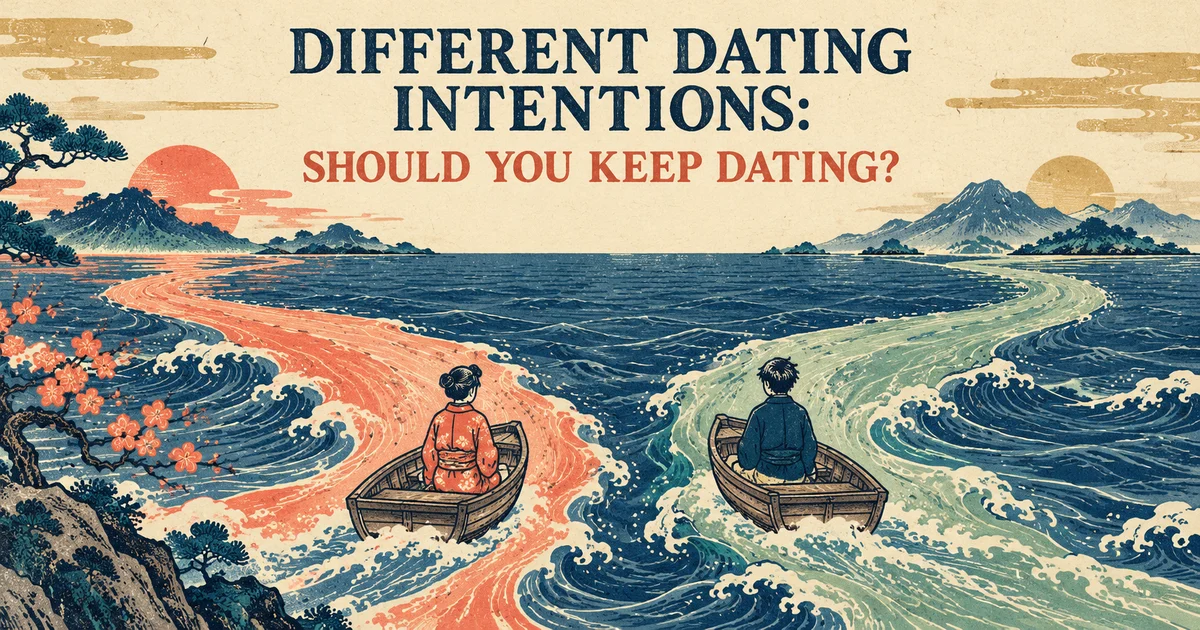
Different Dating Intentions: Should You Keep Dating?
When one person wants serious and the other wants casual, chemistry is not enough. Learn which differences can flex and when it is kinder to leave.
In this article9 sections
If you want a committed relationship and the other person clearly wants something casual, continuing usually creates more pain than possibility. Chemistry can make the mismatch feel negotiable. It does not make the directions the same.
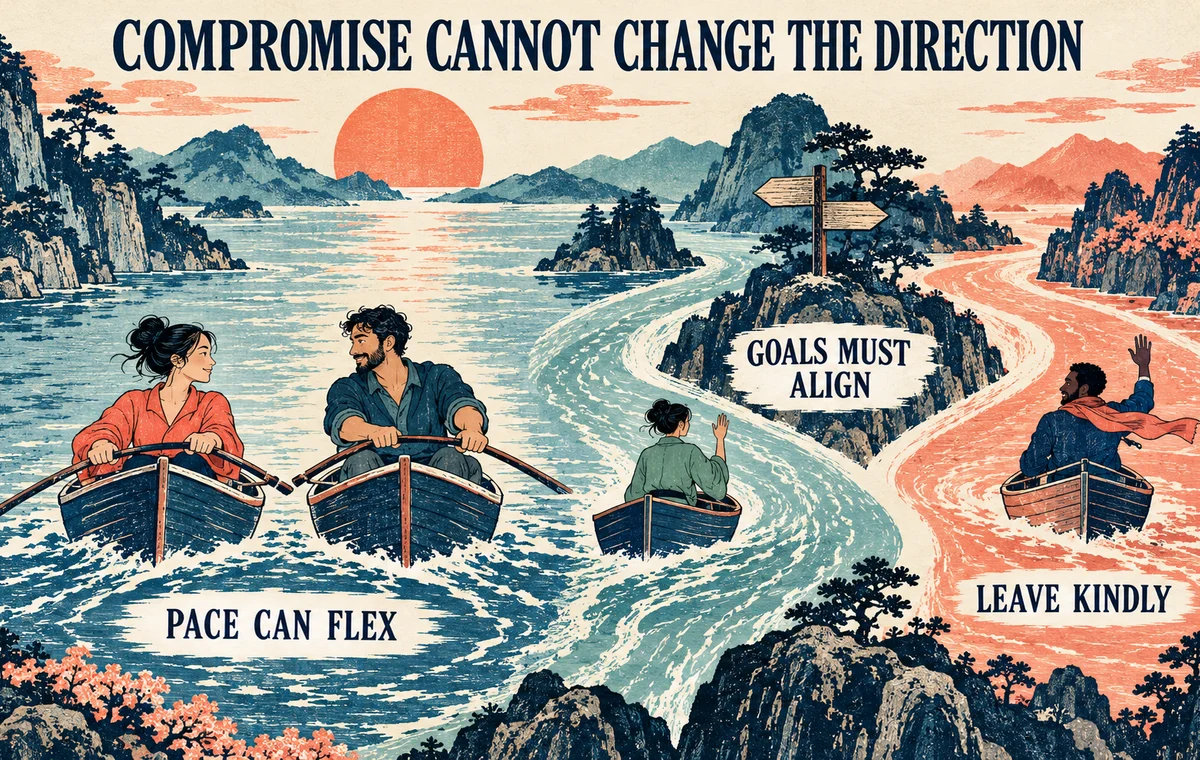
Some differences concern pace and can flex. Others concern the destination and should be taken seriously. Your task is not to persuade someone into wanting your future; it is to believe the information both of you are giving.

First Separate Pace From Direction
Pace answers: “How quickly do we want to move?” Direction answers: “What are we hoping this could become?”
These pace differences may be negotiable:
- one person wants to text daily and the other prefers a few times a week;
- one person needs more time before exclusivity;
- schedules allow different amounts of time together;
- one person introduces friends or family later.
These direction differences are much harder to compromise:
- committed relationship versus casual connection;
- monogamy versus non-monogamy;
- children versus no children;
- local future versus an incompatible relocation plan;
- actively building a partnership versus avoiding any defined relationship.
You can move more slowly toward the same destination. You cannot meet halfway between opposite destinations without someone abandoning a core need.
Believe the Clear Answer
When someone says, “I’m not looking for anything serious,” do not translate it into “not yet, but perhaps with me.” When someone says they want commitment, do not assume they will become comfortable with an undefined arrangement because the chemistry is strong.
People can change, but dating their possible future is a gamble made with your present emotional life.
Ask the Question Clearly Before You Guess
A direct intentions conversation does not need to sound like an ultimatum or a job interview.
Wingman helps you phrase the question naturally and respond to the answer without hiding what you need.
Do Not Date the Potential
Evaluate three things together:
- What they say: their stated relationship goal.
- What they do: whether their behavior supports closeness, consistency, and responsibility.
- What you need: the relationship structure and future you can genuinely live with.
One good category cannot erase the others. Someone may behave affectionately while repeatedly stating they do not want commitment. The affection is real, and the limit may also be real.

Questions to Ask Before Continuing
Use specifics instead of relying on labels:
- “When you say casual, what does that look like week to week?”
- “Are you open to exclusivity if the connection grows?”
- “What does a serious relationship mean to you?”
- “Are you undecided, or do you know you do not want commitment?”
- “What would make either of us end this kindly?”
If you have not had the first conversation yet, use this guide to ask what someone wants over text. Your dating profile can also reduce mismatches when it states intentions clearly; see how to show dating intentions on your profile.
When Continuing Can Make Sense
Continuing briefly may make sense when both people are genuinely unsure, no one is pretending to offer more than they can, and you agree on a near-term check-in. For example: “Let’s keep getting to know each other for three weeks, stay honest about other dates, and talk again then.”
That is different from an open-ended waiting room where one person quietly hopes to be chosen.
It can also make sense when the apparent mismatch is about vocabulary. Two people may use “casual” and “serious” differently but want similar behavior. Specific questions reveal that quickly.
When You Should Leave
Leave when:
- their clear intention conflicts with a core need;
- you are agreeing to casual while secretly hoping to convert them;
- they enjoy relationship benefits but refuse any responsibility or clarity;
- the uncertainty is consistently damaging your self-respect or mental health;
- the conversation keeps getting postponed;
- you would advise a close friend not to accept the same arrangement.
Leaving is not punishment. It is accepting that two good people can be wrong for each other now.
How to End It Kindly
Be warm, direct, and final:
“I like you, and I believe you when you say you want something casual. I’m looking for a committed relationship, so continuing would ask one of us to ignore what we need. I’m going to step back. I wish you well.”
Avoid arguing the case, offering friendship immediately to soften the boundary, or leaving a romantic door open. Clarity now prevents repeated hurt later.
Let Your Profile State the Direction Early
Photos cannot replace an intentions conversation, but a coherent profile can attract people whose lifestyle and relationship energy fit yours.
ProfileSharp reviews whether your photo set communicates trust, consistency, and the person you are ready to be in a relationship.
Frequently Asked Questions
Can casual dating turn into a serious relationship?
Yes, sometimes. But possibility is not a plan. Continue only if the current arrangement is acceptable even if the other person never changes.
What if they say they are “open to anything”?
Ask what they are actively available for now. “Open” can mean genuine flexibility, uncertainty, or avoidance. Their behavior and willingness to define boundaries matter.
How early should we discuss dating intentions?
Early enough that nobody makes major emotional or sexual decisions based on a false assumption. It can be a light profile or first-date topic, followed by a more specific conversation as interest grows.
Am I asking for too much by wanting clarity?
No. They are allowed not to offer the relationship you want, and you are allowed not to participate in an arrangement that harms you.
Final Takeaway
Different dating intentions are not a challenge to overcome through better chemistry. They are compatibility information. Flex on pace when the destination is shared. When the destinations conflict, believe the difference and leave kindly enough for both people to find what they actually want.