 Messaging & Conversations
How to Reschedule a Date Over Text Without Losing It
Learn how to reschedule a date over text with a clear alternative, warm tone, and simple plan that protects trust without overexplaining.
In this article9 sections
Plans change. Work runs late, someone gets sick, family needs you, or the day simply stops being realistic. Rescheduling is not the problem. The uncertainty created by a vague cancellation is.
A good reschedule text does three things quickly: it owns the change, offers a real alternative, and keeps enough warmth in the message to show that your interest did not disappear with the original plan.
The goal is not to write a perfect excuse. It is to make the next step easy to trust and easy to answer.
The Three Parts of a Good Reschedule Text
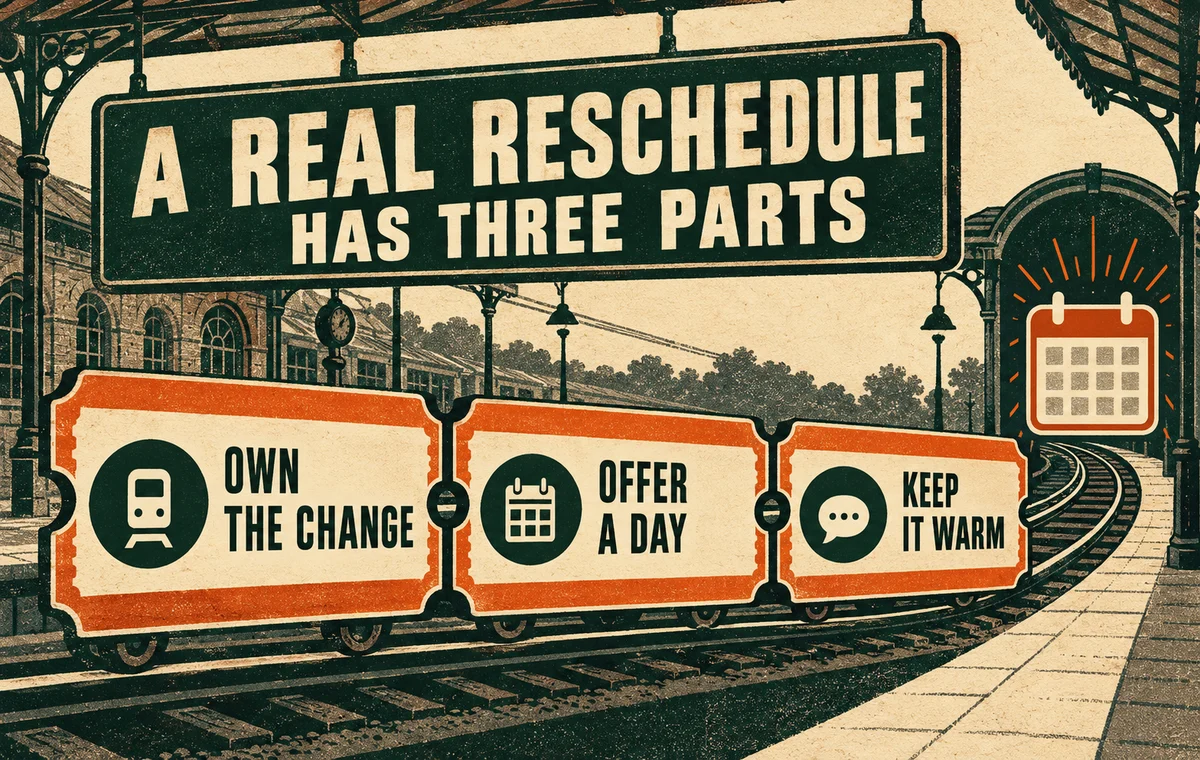
Use this simple structure:
- Own the change: Say clearly that you need to move the date.
- Offer a specific alternative: Suggest a day or two you can actually keep.
- Keep it warm: Make it clear that you still want to meet.
That can be as short as:
“I need to move Thursday because work just changed on me. I’m still up for that drink—would Saturday evening work instead?”
The message is effective because the other person does not have to guess whether “something came up” means “I am no longer interested.” Your alternative answers that question without a long speech.
When to Send the Message
Send it as soon as you know the original plan is unlikely to happen. Early notice communicates respect; waiting until the last possible minute turns a normal schedule problem into a reliability problem.
If the date is several days away, a direct message is enough. If it is happening in a few hours, acknowledge the inconvenience more clearly:
“I’m sorry for the short notice. I’m not going to make tonight, and I know that is inconvenient. Could I make it up to you Thursday at 7?”
Do not wait because you are searching for a better excuse. A timely, honest message usually lands better than a polished explanation sent too late.
Canceling and Rescheduling Are Different
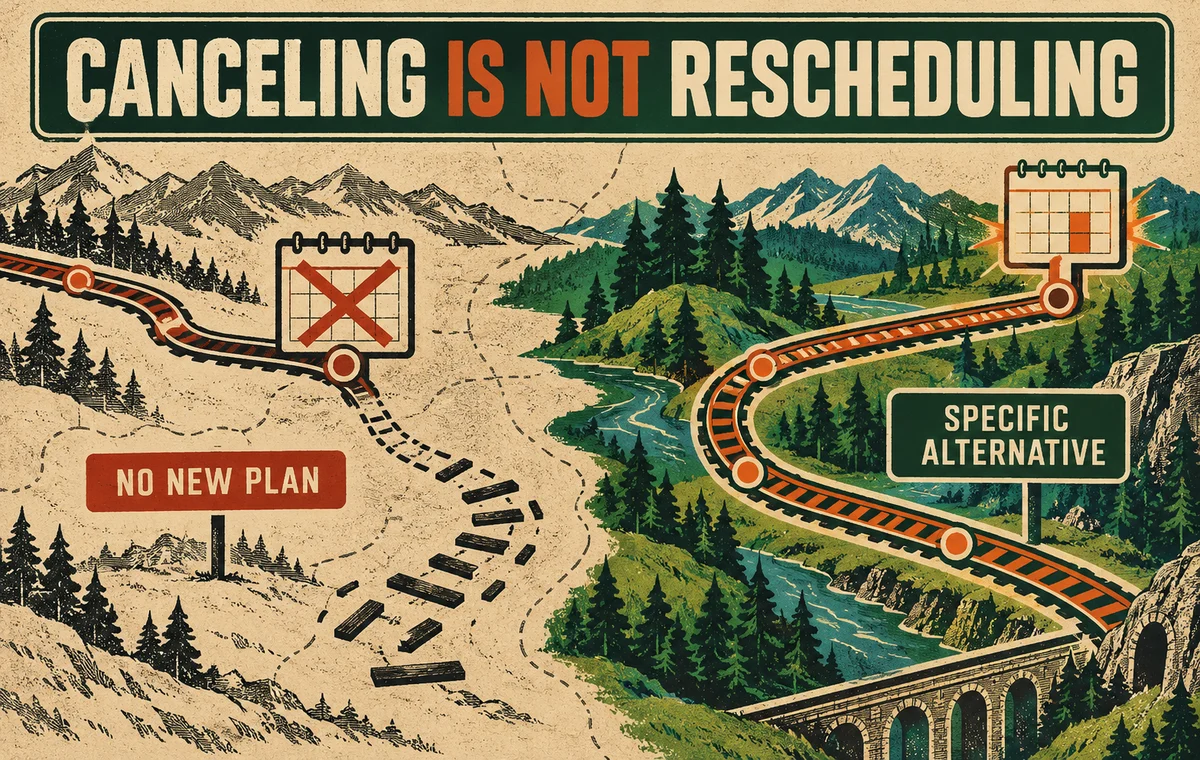
“Can’t tonight, maybe another time” is a cancellation. It removes the plan and hands all the work to the other person.
“I can’t tonight, but I can do Wednesday or Friday” is a reschedule. It shows intent through action.
This distinction matters most when you have not met yet. The other person has little history with you, so they cannot automatically separate a busy day from low interest. A concrete alternative becomes the evidence that you mean what you say.
If you genuinely do not know your availability, give a clear checkpoint:
“My week just became unpredictable. I still want to meet, but I will not know my schedule until Tuesday afternoon. Can I message you then with two real options?”
Then follow through when you said you would.
Need a Reschedule Text That Fits the Conversation?
Wingman 2.0 can read the context and help you draft a clear, warm message without inventing an excuse or overexplaining.
Make the New Plan Easy to Answer

A useful alternative contains enough detail for a simple yes, no, or counteroffer:
- Day: “Saturday” is better than “sometime this weekend.”
- Time: “Around 7” is better than “later.”
- Place or format: Keep the original venue or suggest one simple replacement.
You do not need to rebuild the entire date in one message. You do need to show that you are moving a real plan, not sending a polite delay.
If you are still deciding how much to text before meeting, the guide to what to text after someone agrees to a date covers the period between making the plan and showing up.
Reschedule Text Examples for Different Situations
Work changed your schedule
“I just got pulled into a late Thursday meeting. I still want to see you—could we move our drink to Friday at 7?”
You are sick
“I woke up feeling rough and do not want to bring that to our date. Could we move it to next Tuesday? I was looking forward to meeting you.”
A family responsibility came up
“I need to help my family tonight, so I cannot make our plan. Are you free Sunday afternoon instead?”
You need to move the date a second time
Be especially direct. Repeated changes reduce trust even when every reason is real.
“I know this is the second change, and I understand if it is frustrating. I can definitely do Saturday at 6. If that no longer works for you, I understand.”
Do not pressure them to reassure you. Give them a real plan and room to decide.
What Not to Put in the Message
Avoid:
- A detailed timeline designed to prove your excuse.
- Multiple apologies that make them manage your guilt.
- “Maybe,” “we’ll see,” or other language that keeps them waiting.
- A joke that hides whether you still want the date.
- Asking them to choose every new detail after you changed the plan.
Tone still matters. If your message sounds colder or more dramatic than the situation requires, compare the four directions in the dating texting tone guide.
What If They Seem Annoyed?
Do not argue that your reason is valid. Their inconvenience can be real even when your reason is also real.
Try:
“That is fair. I know the late change is inconvenient. Friday at 7 is solid on my side if you still want to meet.”
One acknowledgment is enough. After that, let the clarity of your next action rebuild confidence.
If they cannot do your alternative, trade one or two practical options. If neither person proposes a workable time, the issue is no longer wording; the plan may simply not be a priority.
Turn a Schedule Change Into a Clear Next Step
Share the conversation with Wingman 2.0 and get reply options that match your tone, timing, and actual availability.
Quick Reschedule Checklist
Before you send, ask:
- Did I communicate as soon as I knew?
- Did I plainly say the original plan needs to move?
- Did I offer a day I can actually keep?
- Does the message still sound interested?
- Did I avoid a long defense or invented detail?
- Is the next step easy to answer?
If yes, send it. Reliability is not never changing a plan. It is handling a change in a way that respects the other person’s time.
Frequently Asked Questions
Is it rude to reschedule a first date?
Not automatically. Early notice, a concise acknowledgment, and a specific alternative usually communicate respect. Repeated or last-minute changes without a new plan are more likely to damage trust.
Should I explain why I need to reschedule?
Give the honest category—work, illness, family, or another commitment—without turning the message into a case file. The new plan matters more than excessive detail.
What if I do not know when I am free?
Say when you will know and promise only that checkpoint. Then return with concrete options at the time you named.
How many times can I reschedule?
There is no universal number, but a second change deserves more acknowledgment and a plan you are certain you can keep. After repeated changes, the other person may reasonably step back.
What if they do not reply to the reschedule?
Give them room. You can send one short follow-up if the proposed day is approaching, but do not keep negotiating with silence. The guide on when to ask for a date explains how concrete plans reveal real availability.