 Bios & Prompts
Hinge Voice Prompts: What to Say in Your 30 Seconds
Record a Hinge Voice Prompt that sounds natural, adds what photos cannot show, and gives potential matches an easy reason to start a conversation.
In this article8 sections
A Hinge Voice Prompt gives you up to 30 seconds to add something photos and text cannot fully carry: your pace, warmth, timing, accent, laugh, or the way you tell a small story.
That does not mean you need a radio voice or a perfect performance. The strongest recordings sound like a real person leaving a good voice note. They reveal one useful piece of personality and end with something a match can easily respond to.
The goal is not to explain your whole life. It is to make the rest of your profile feel more human.
What a Voice Prompt Should Add
When Hinge introduced Voice Prompts, it framed them as a way to show personality beyond photos and text. Hinge's more recent Profile Refresh Guide still recommends using the feature to add authenticity and notes the 30-second format.
Use the recording to contribute information that is missing elsewhere. If your photos already show that you travel and your written prompts already list destinations, another travel monologue is repetition. Your voice could instead reveal your dry humor, an oddly specific enthusiasm, or the story behind a small ritual.
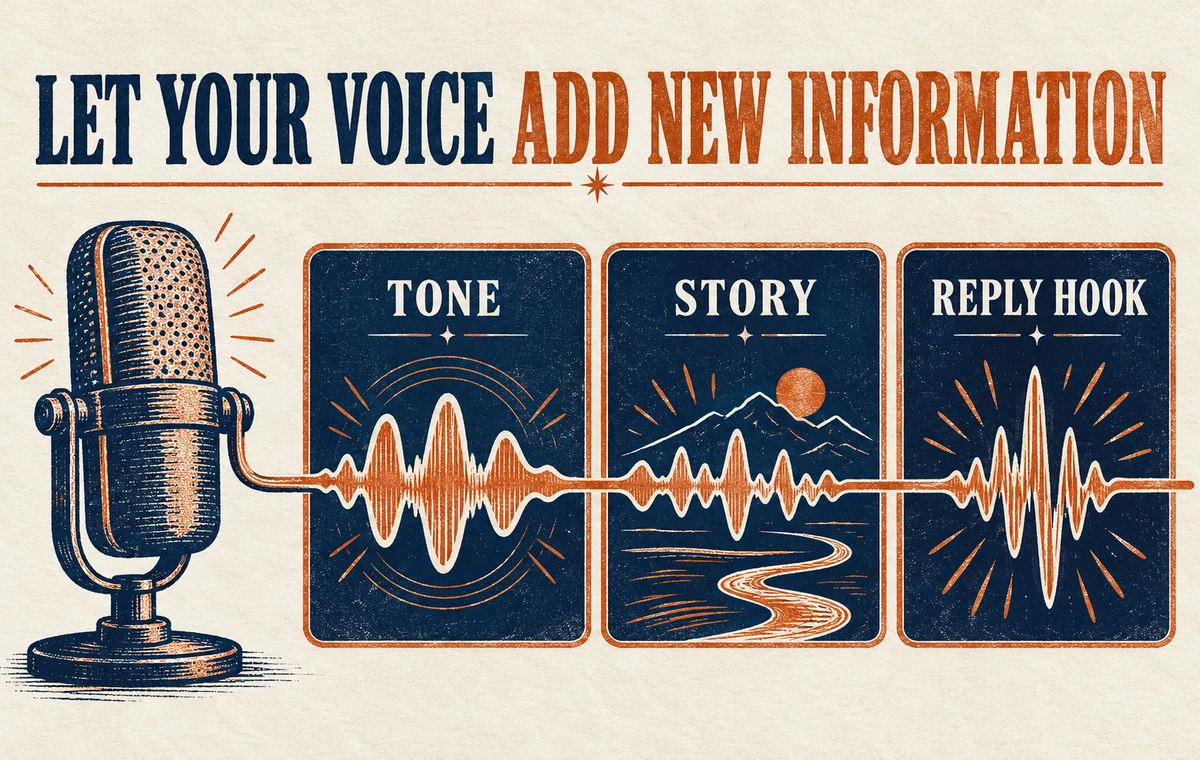
A useful Voice Prompt usually adds at least two of these three signals:
- Tone: warm, playful, calm, animated, thoughtful, or confidently nerdy.
- Story: one concrete detail rather than a list of adjectives.
- Reply hook: a question, choice, or opinion someone can answer without inventing a subject.
Choose a Topic You Can Say Naturally
Pick a prompt that sounds like something you would genuinely tell a friend. The right topic has a small amount of energy behind it; you should not need to manufacture enthusiasm.
Good source material includes:
- A harmless opinion you can defend with a smile.
- A short story with a clean ending.
- A sensory detail from something you love doing.
- A two-option debate that reveals taste.
- A tiny habit that makes everyday life with you imaginable.
Avoid material that requires a long setup, names several people a stranger does not know, or depends on sarcasm that could sound hostile without context. Also avoid reading your written bio aloud. The audio slot is most valuable when it expands the profile.
Use a Three-Beat Structure
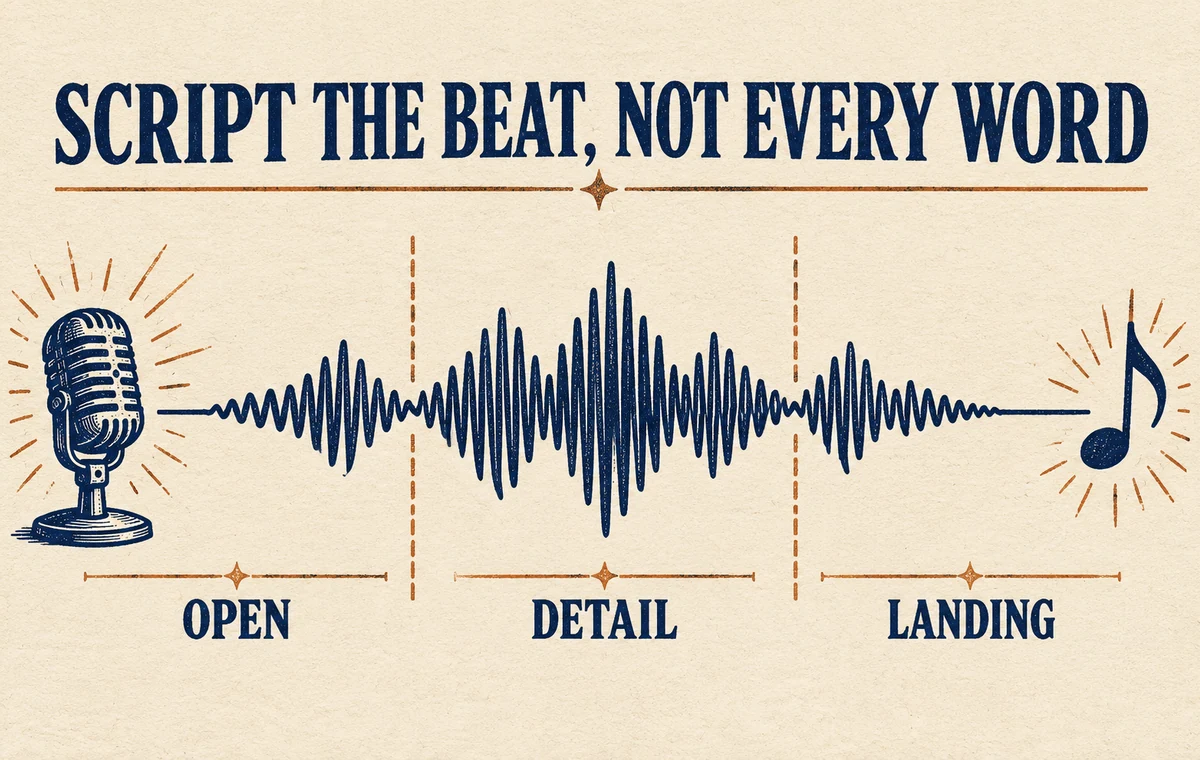
Thirty seconds feels long when you improvise without a destination and very short when you try to include everything. A three-beat structure keeps the recording focused:
- Open: begin with the interesting claim, not an introduction.
- Detail: add one image, example, or quick turn in the story.
- Landing: finish with a response hook or a memorable final line.
Here is the difference:
Loose version: “Hi, I never know what to put in these, but I like cooking and I make pasta sometimes, and my friends say it is pretty good.”
Three-beat version: “My most competitive trait is hand-rolling pasta. I once brought a ruler to settle a tagliatelle argument. Tell me: precision or generous chaos?”
The second version has a point of view, a visual detail, and an easy answer. It also sounds specific without demanding that the listener share the hobby.
Make the Rest of the Profile Match the Voice
A warm recording cannot rescue a confusing photo lineup. Check whether your photos and written prompts support the same personality people hear.
Voice Prompt Templates That Do Not Sound Scripted
Use these as structures, not lines to copy word for word.
The specific enthusiasm
“I could give an unnecessary five-minute talk about [small subject]. The short version is [surprising detail]. What topic brings that out in you?”
The everyday scene
“My ideal [morning/evening/Sunday] starts with [concrete detail], includes [activity], and ends with [small payoff]. You can change one part—what goes?”
The friendly debate
“I need a ruling: [option A] or [option B]? I am firmly on team [choice] because [brief reason], but I am open to a persuasive case.”
The mini story
“The quickest summary of my last adventure: [setup in one sentence], [unexpected turn], and somehow [ending]. Next time I am bringing [playful lesson].”
The templates work because they organize a thought while leaving room for your normal vocabulary. If you would never say “I need a ruling,” replace it with language you actually use.
For more written-prompt structures, see the best Hinge prompts guide. To make the reply hook flow into a real exchange, use the Hinge conversation guide.
Record for Easy Listening
Content matters, but a good idea can disappear under poor audio. Record in a quiet, soft-furnished room rather than a windy street, tiled bathroom, or loud car. Hold the phone at a normal conversational distance and speak a little more slowly than you think you need to.
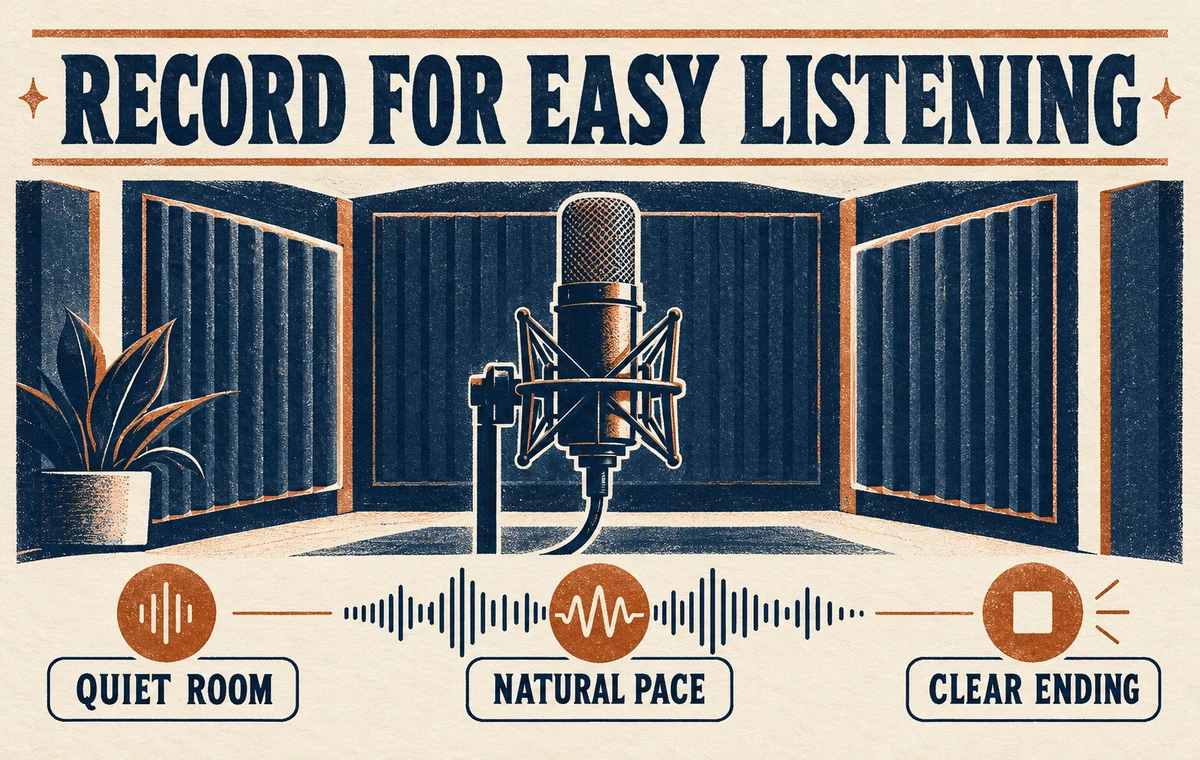
Before saving, check four things:
- Can every word be understood without turning the volume all the way up?
- Does the first sentence begin immediately, without a long sigh or disclaimer?
- Does your pace sound conversational rather than memorized?
- Does the recording stop on a complete thought?
Write three bullets if you need them, but do not script every breath. A small pause or natural laugh often helps. Ten imperfect takes usually sound stiffer than a second or third take made while the idea still feels alive.
Common Voice Prompt Mistakes
Starting with an apology. “I hate my voice” asks the listener to judge the exact thing you want them to enjoy.
Doing a character voice for the entire clip. A quick impression can be funny, but the listener also wants to hear you.
Using an inside joke with no context. Mystery is not the same as a missing setup.
Packing in several stories. One clear moment is more memorable than four compressed facts.
Ending without a landing. A trailing “so, yeah” makes even a good story feel unfinished.
Making the listener prove themselves. A playful hook invites; a list of standards creates an audition.
Turn 30 Seconds Into a Clearer First Impression
The best Voice Prompt adds one vivid signal to a profile that already feels consistent, current, and easy to understand.
Frequently Asked Questions
How long can a Hinge Voice Prompt be?
Hinge describes Voice Prompts as 30-second recordings. You do not need to use every second; a complete 15- to 25-second answer can feel stronger than a padded one.
Should I write a script first?
Write an opening, one detail, and an ending if structure helps. Then speak from those beats rather than reading a full paragraph. The result will usually sound more natural.
What if I dislike the sound of my voice?
Many people find recordings of their own voice unfamiliar. Focus on clarity, warmth, and content rather than trying to imitate a broadcaster. A recognizable, relaxed voice is the point.
Should the Voice Prompt be funny?
Only if humor is natural for you. Curiosity, enthusiasm, calm confidence, and storytelling can be equally attractive. Forced comedy usually reveals less than a sincere specific detail.
Can I use the same answer as a written prompt?
You can, but it wastes an opportunity. Use the voice recording to add a new side of you or deepen a written answer with tone and one new detail.