 Messaging & Conversations
Bumble Opening Moves: Write Questions That Get Replies
Learn how Bumble Opening Moves work, choose questions that reveal personality, avoid dead-end prompts, and make every match easier to start naturally.
In this article8 sections
A Bumble Opening Move is not just a question sitting on your profile. It is the doorway through which some of your matches will enter the conversation.
If the question is broad, generic, or difficult, the first reply will often be broad, generic, or absent. If it reveals something about you and gives the other person an easy angle, it can make the opening feel less like a cold start.
Bumble's current Opening Moves guide says members can choose a suggested question, write their own, or use a photo with a caption. You can set up to three Opening Moves. Bumble also notes that availability and conversation rules vary by market.
The best strategy is to treat each Opening Move as a small invitation, not an interview prompt.
How Bumble Opening Moves Work
When an Opening Move appears, a match can respond to it to begin the conversation. Bumble's reply guide explains that women can set one and wait for a response or send the first message themselves; men can answer a match's Opening Move; and either person can start in same-gender or nonbinary connections.
Bumble's June 2026 setup guide says you can add up to three. The available experience is not identical everywhere. For example, Bumble currently says Opening Moves are unavailable in several listed markets, and California users must have one set.
Because the feature changes how a chat begins, the question should create reply space for different personalities—not force everyone into the same clever performance.
What Makes an Opening Move Easy to Answer
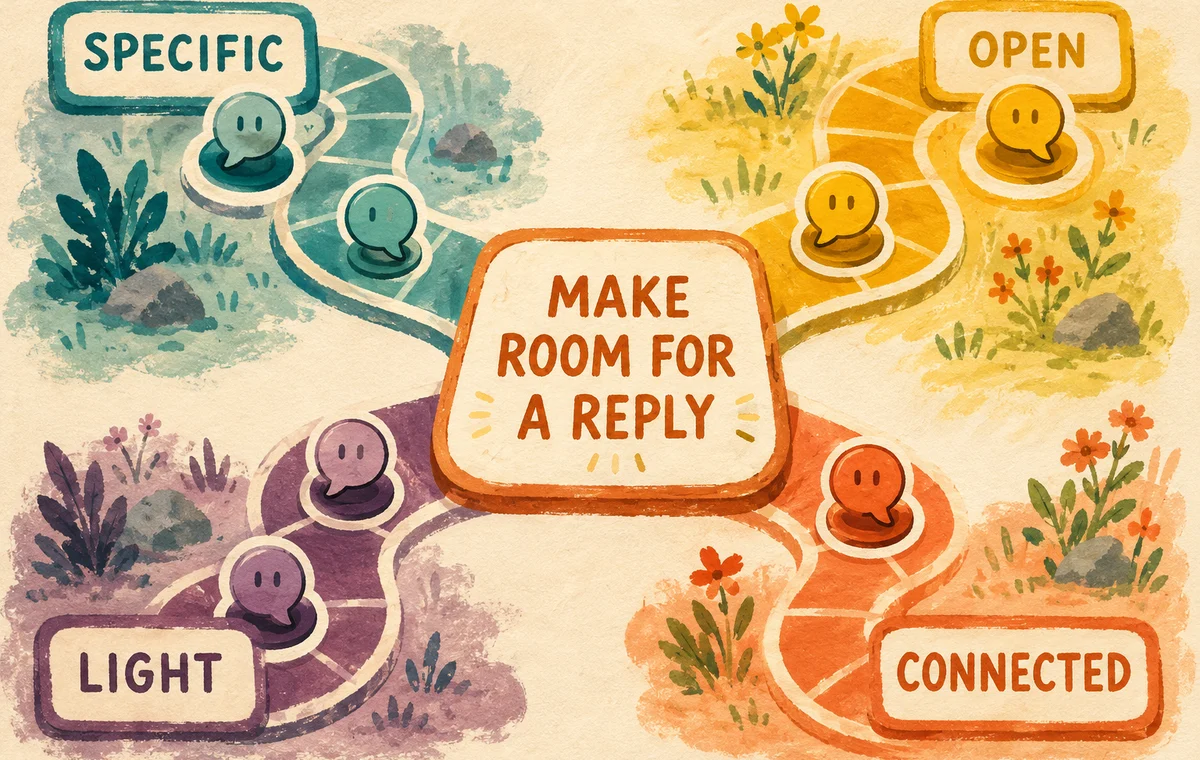
A strong Opening Move usually passes four tests.
Specific enough to picture
“What do you do for fun?” is too broad. “What is your ideal low-effort Sunday?” creates a scene and narrows the mental search.
Open enough for personality
A yes-or-no question ends quickly. A good question leaves room for taste, humor, a story, or a harmless opinion.
Light enough for a first exchange
Avoid asking strangers to explain their deepest fear, relationship history, or political worldview before basic rapport exists. Meaningful does not have to mean heavy.
Connected to your profile
The prompt should sound as if it belongs to the person in your photos and bio. A cooking question works better when food, hosting, or markets appear elsewhere. This creates a coherent profile rather than a random conversation game.
The Best Formula: Scene + Choice + Easy Why
Use a three-part structure:
A concrete scene + two or three valid choices + an optional reason
Examples:
- “Free Saturday: beach walk, used-book shop, or cooking something ambitious?”
- “You get the café table for an hour: people-watching, reading, or planning a trip?”
- “Pick our harmless debate: sweet breakfast, window seat, or arriving early.”
- “What is one tiny upgrade that makes a weeknight better?”
The options reduce effort, while the explanation leaves room for personality. Avoid choices with an obvious “correct” answer or a hidden judgment.

The same principles apply to direct messages. The dating app opener guide shows how specificity lowers the effort required to reply.
Make the Question Match the Person Asking It
An Opening Move works better when your photos, bio, and interests support the same tone. ProfileSharp helps find mismatched signals before the conversation begins.
Seven Opening Moves You Can Adapt
Do not copy these blindly. Choose the structure that fits your real life and replace the details.
For everyday personality
“What is your perfect no-plans evening?”
This is easy, non-performative, and useful for lifestyle compatibility.
For food without the tired restaurant question
“Which meal do you make when you want to impress yourself?”
It invites a concrete answer without asking someone to plan a date immediately.
For local knowledge
“What place in this city deserves more attention?”
The response can become a story or future-date idea, but it does not force either.
For playful judgment
“Which harmless opinion will you defend for far too long?”
This works only if your profile tone already feels warm. Avoid topics likely to turn hostile.
For active profiles
“A free morning appears: trail, market, or slow coffee?”
The question gives choices while revealing how someone likes to use time.
For cultural taste
“What have you watched, read, or heard lately that stayed with you?”
It is broader than a favorite-ever question and easier to answer from recent memory.
For photo-based Opening Moves
Pair a real profile photo with a caption such as: “Choose the next stop: mountains, coast, or a city with excellent bakeries?”
The photo should add context. Do not use a random attractive image that makes the question harder to understand.
Opening Moves That Quietly Kill Momentum
Avoid prompts that create work or pressure.
| Weak Opening Move | Why it stalls | Better direction |
|---|---|---|
| “Tell me something interesting” | The match must invent the entire topic | Offer a scene or category |
| “Make me laugh” | Turns the reply into an audition | Invite shared playfulness |
| “Why are you still single?” | Feels suspicious and judgmental | Ask about what they enjoy now |
| “What are your red flags?” | Starts with threat scanning | Ask about a green flag in daily life |
| “Where should we go on our first date?” | Assumes interest before rapport | Ask for a favorite local place |
| “Hey” | Provides no direction | Point to a specific choice or story |
The Bumble conversation guide can help turn the first reply into a natural back-and-forth.
How to Use All Three Opening Moves
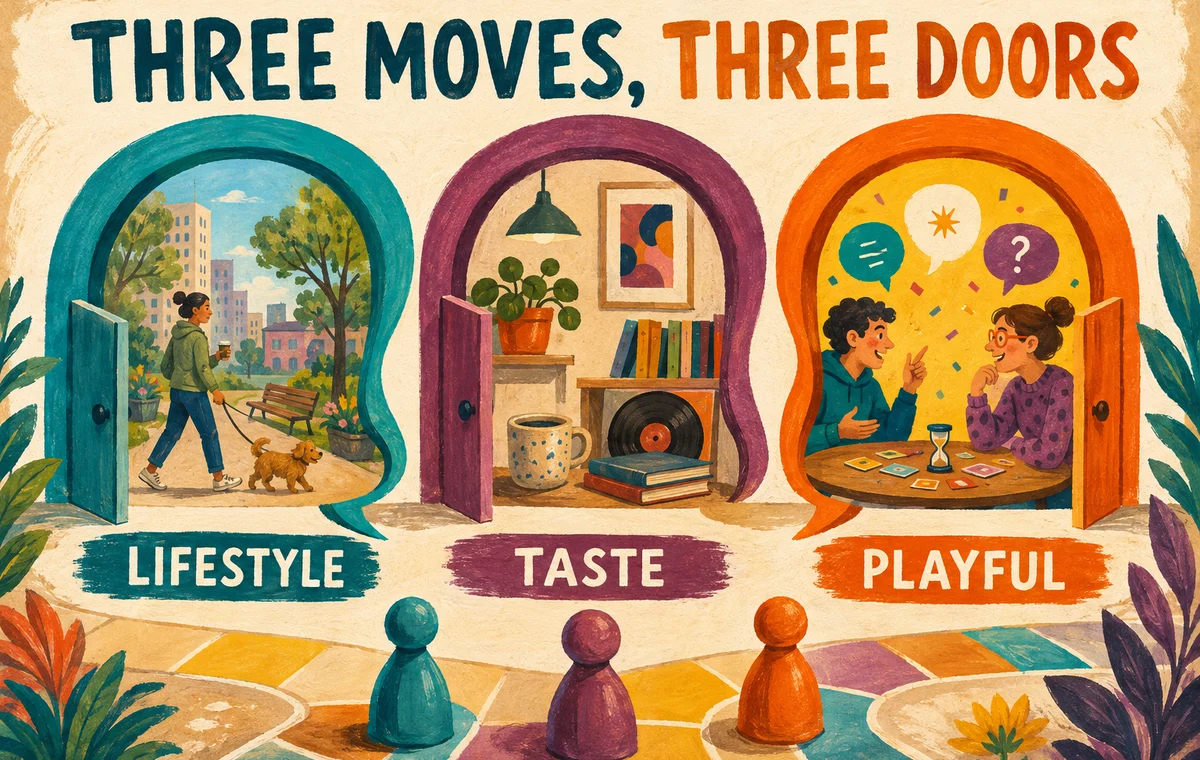
If the feature offers you three slots, do not write three versions of the same question. Build a small range:
- Lifestyle: reveals how someone spends ordinary time.
- Taste: gives room for a recommendation or opinion.
- Playful: opens a low-stakes debate or choice.
This gives different matches a route that suits them. One person may answer the café question; another may prefer the local recommendation.
Refresh a Move when every response is identical, nobody has enough context, or it attracts a topic you do not enjoy discussing. Keep it when replies vary naturally and give you something easy to continue.
Turn the First Reply Into a Real Conversation
Wingman can help you read the detail inside a match's answer and shape a natural next message without copying a canned script.
Frequently Asked Questions
How many Opening Moves can you set on Bumble?
Bumble's current support guide says you can set up to three Opening Moves.
Can an Opening Move use a photo?
Yes. Bumble says you can choose a suggested question, write your own, or use a photo with a caption as an Opening Move.
Who can reply to a Bumble Opening Move?
The rules depend on the connection type and market. Bumble says a man can respond to a woman's Opening Move, while either person can initiate in same-gender and nonbinary connections.
Are Bumble Opening Moves available everywhere?
No. Bumble's support pages list markets where the feature is not currently available, so check the current in-app experience for your location.
What is the best Bumble Opening Move?
The best one fits your profile, creates a concrete scene, and allows several easy answers. It should start a conversation you would genuinely enjoy continuing.