 Getting More Matches
Dating App Age Range: How Wide Should Your Filter Be?
Set a dating app age range that fits your life stage, goals, and local pool, then test it without confusing flexibility with a lack of standards.
In this article9 sections
An age filter looks like a simple slider, but it quietly shapes the size, variety, and life stage of your dating pool. Set it too narrowly and you may eliminate people who fit your life. Set it too broadly and you may spend time on matches whose plans, schedules, or expectations are incompatible.
There is no universal ideal range. The useful range is wide enough to test real compatibility and narrow enough that you would genuinely consider meeting anyone inside it.
Tinder, Hinge, and Bumble all offer age preferences in some form. Tinder's Discovery guide notes that users may sometimes see people slightly outside the selected range unless age is marked as a dealbreaker. Bumble's People tab guide lists age range among adjustable preferences.
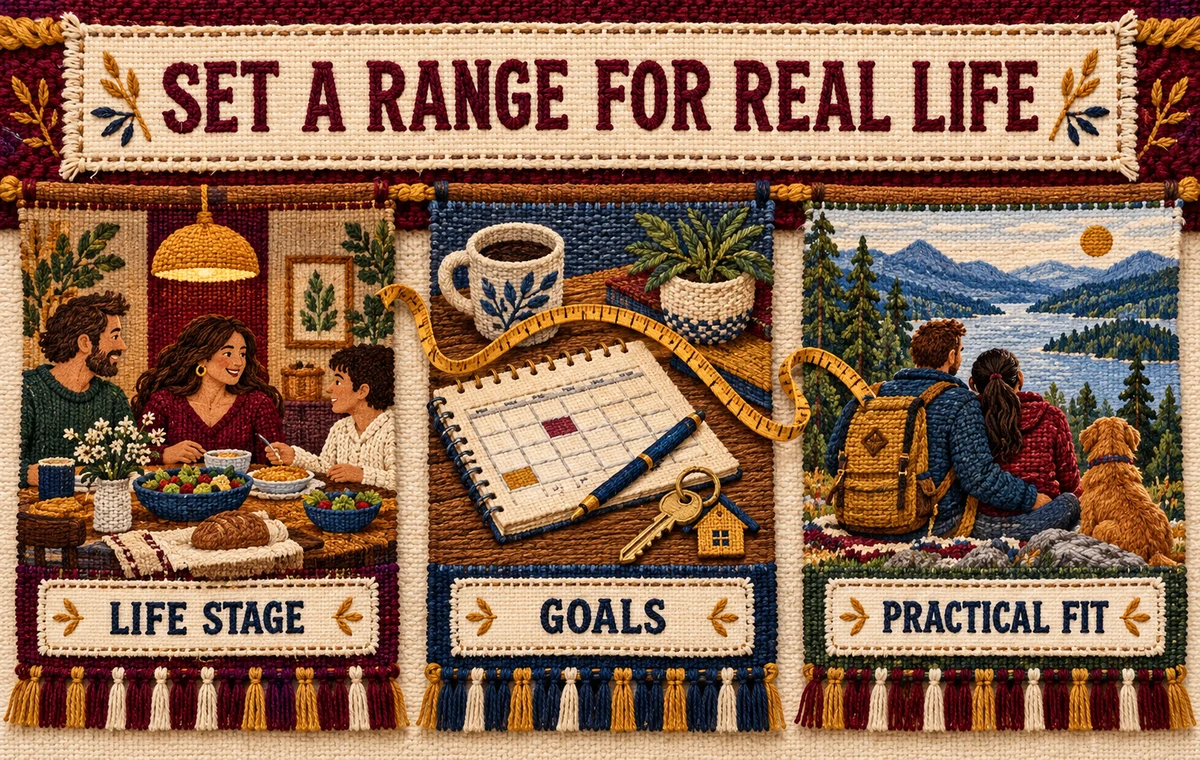
Start With Life Stage, Not a Formula
Rules such as “half your age plus seven” are cultural shortcuts, not compatibility tests. Start with practical questions:
- Are both people likely to want a similar pace of commitment?
- Do work, family, and social schedules overlap?
- Are expectations around children aligned?
- Would differences in finances or independence create a power imbalance?
- Would you feel comfortable introducing this person to your real life?
Age can correlate with life stage, but it does not define it perfectly.
Define a Core Range and a Test Range
Instead of choosing one permanent setting, use two bands.
Core range
The ages you would confidently consider based on your current goal and experience.
Test range
A modest expansion on one or both sides that you are genuinely open to exploring.
Run the core range long enough to understand match quality. Then widen by a small amount for a defined period. Compare conversations and actual interest, not just the number of profiles shown.
This prevents two common errors: keeping a narrow habit forever and swinging to a range so broad that most recommendations feel irrelevant.
A Wider Filter Cannot Fix a Weak Profile
If suitable people see the profile but do not engage, expanding age range only creates more impressions of the same unclear story. ProfileSharp helps identify that bottleneck first.
Match the Range to Your Relationship Goal
For a long-term relationship, alignment around future plans may matter more than maximizing variety. For casual dating, schedule, communication expectations, and honest intent still matter even if long-term milestones do not.
Ask what a meaningful age difference could change for your goal:
| Goal | Questions to test |
|---|---|
| long-term partnership | timelines, children, location, financial independence |
| casual dating | clarity, consent, social comfort, expectations |
| dating after divorce | family structure, availability, pace |
| dating with children | schedules, privacy, readiness for family context |
If your intentions are unclear, work through the dating intentions profile guide before optimizing filters.
Account for the Local Dating Pool
A five-year range in a dense city may show plenty of compatible profiles. The same range in a smaller area may empty quickly. Age and distance settings interact.
Before widening dramatically:
- Check whether your distance radius is practical.
- Decide which setting is a real dealbreaker.
- Change only one variable at a time.
- Keep the test long enough to see more than one session's feed.
The distance-radius guide explains how to test geography without collecting matches you cannot realistically meet.

Avoid Treating the Boundary as a Verdict
The difference between someone at the top of your range and one year outside it is not automatically meaningful. Boundaries are necessary for manageable discovery, but they are not scientific lines between compatible and incompatible people.
At the same time, do not turn flexibility into pressure. You are allowed to set an age boundary for comfort, experience, safety, or life-stage reasons. You do not owe the app a wider pool.
Use dealbreaker settings intentionally. Tinder says it may show profiles slightly outside age and distance preferences when recommendations inside them run out, depending on those settings.
Test With Outcomes That Matter
Do not judge a wider range only by Likes. Track:
- profiles you sincerely wanted to meet;
- matches with aligned intentions;
- conversations that felt easy and respectful;
- practical availability for a date;
- whether the new range improved quality or only volume.

After the test, keep the expansion only if it introduced people you would realistically date.
Watch for Power and Safety Concerns
Large age gaps are not automatically unhealthy, but they deserve clearer attention to power, experience, money, and boundaries. Meet in public, keep control of transportation, and notice whether the other person respects your pace.
No filter setting replaces judgment. An age inside your selected range is not evidence of safety or compatibility.
Align the Profile With the People You Want to Meet
If you broaden your range, make sure your photos and bio still communicate the life stage, energy, and intention you actually offer.
Frequently Asked Questions
What is the best dating app age range?
There is no universal best range. Start with ages you would genuinely date based on life stage and goals, then test a modest expansion.
Why do I see people outside my age preference?
Tinder says it may show recommendations slightly outside the selected age or distance range when profiles inside it run out, unless the preference is treated as a dealbreaker.
Should I widen age or distance first?
Change the variable that is least important to your real constraints, and change only one at a time so you can understand the effect.
Does a wider range improve match quality?
It increases the possible pool, not guaranteed compatibility. Judge it by aligned matches and conversations rather than volume.
How long should I test a new range?
Long enough to see multiple sessions and a reasonable sample in your area. Avoid changing filters every day.