 App Guides & Trends
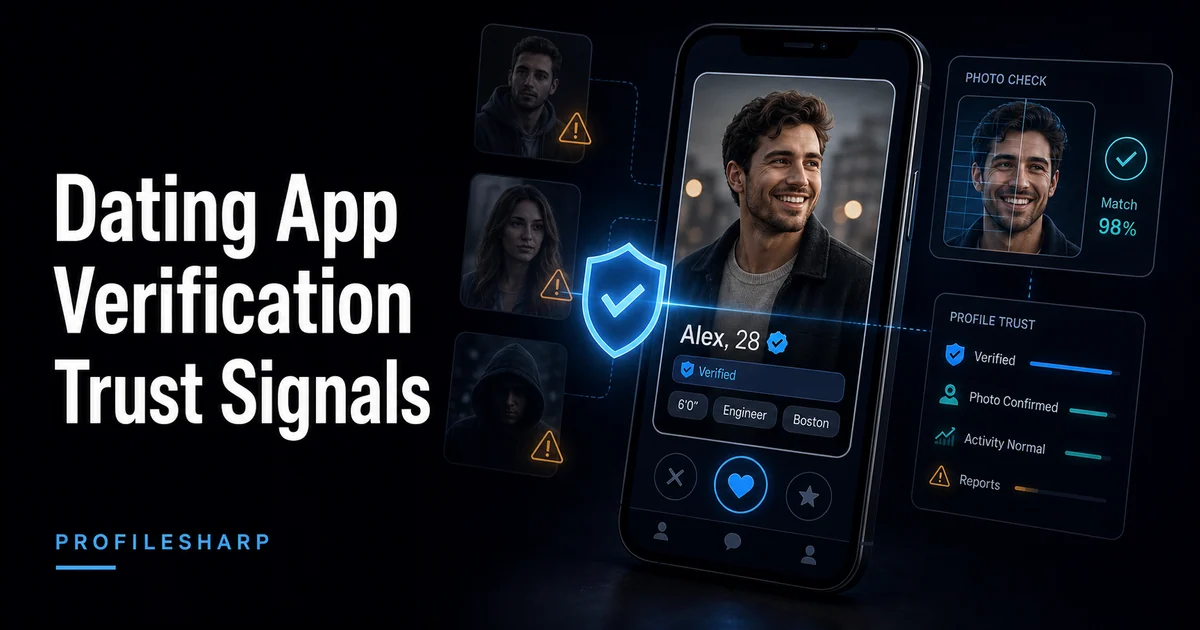
Dating App Verification: Does the Badge Help Matches
Dating app verification can increase trust, but it will not fix weak photos. Learn what badges prove, what they miss, and how to look real online today.
In this article8 sections
A verification badge makes a dating profile feel a little safer.
That matters.
Dating apps have a trust problem: fake accounts, old photos, heavy filters, AI images, scams, and people who simply do not look like their profile anymore. In that environment, a badge can reduce hesitation.
But verification has limits.
It can help prove that an account is more likely to belong to a real person. It cannot make the person seem warm. It cannot make bad photos attractive. It cannot make a generic profile interesting. It cannot prove someone is emotionally available, honest, safe, or worth meeting.
Verification lowers suspicion.
Your profile still has to create interest.
What Dating App Verification Usually Means
Verification varies by app and market. It may involve a selfie, a short video, photo matching, face checks, or ID verification.
Wired reported on Tinder's Face Check rollout for new users in parts of the United States, describing it as a tool to reduce bots, fake profiles, and duplicate accounts. The Verge reported that Bumble added optional ID verification in several markets, along with safety features like Share Date.
The exact process changes by platform, country, and product update. Always check the current help page in the app you use.
The practical point is simple: verification is a trust layer. It is not a complete dating strategy.
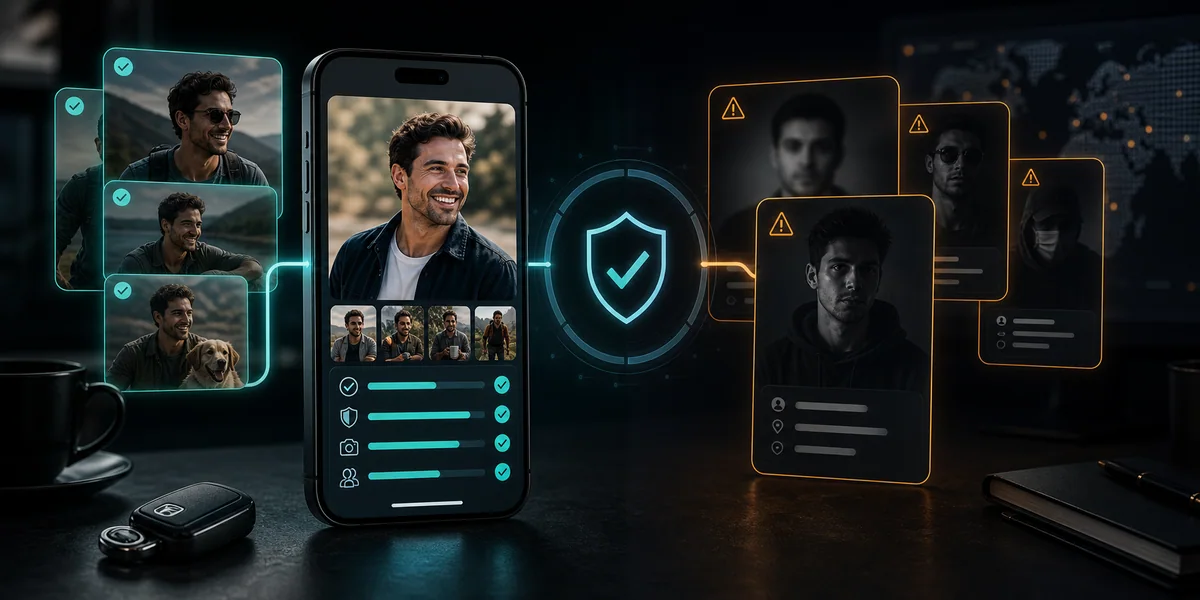
Does Verification Help You Get More Matches
It can help indirectly.
If someone is already interested, a badge may remove one reason to hesitate. It can make replying feel safer. It can make a date feel slightly less risky. It can help your profile look less suspicious in a feed where people are tired of fake accounts.
But a badge will not fix:
- Bad lighting
- Old photos
- No clear face photo
- Too many sunglasses
- Over-edited images
- No full-body photo
- No personality
- A bitter or empty bio
If the profile is weak, verification only proves that the weak profile belongs to you.
That sounds harsh, but it is useful. Do not expect a badge to do the work that photos and prompts are supposed to do.
Look Real Before You Ask for Trust
ProfileSharp reviews whether your photos look trustworthy, current, attractive, and consistent.
Why Trust Signals Matter
Dating profiles are judged through uncertainty.
A person viewing your profile is quietly asking:
- Is this person real?
- Do they look like their photos?
- Would I feel safe meeting them?
- Are they hiding something?
- Does this feel too good to be true?
- Does the profile match itself?
Attraction has to work through those questions.
If your profile creates too much doubt, people do not usually pause to analyze it. They just move on.
That is why clear, normal photos often beat photos that are technically more impressive but less believable. A natural smile in a real setting can do more for trust than a polished portrait that looks like an ad.
For related photo trust issues, read Are You Catfishing? 5 Signs Your Photos Look Misleading.
What Verification Does Not Prove
This is the part people forget.
A verified badge does not prove someone is:
- Kind
- Honest
- Single
- Emotionally available
- Safe to meet privately
- Accurate in every photo
- Serious about dating
It proves a narrower thing, depending on the app's process.
That is still useful. It is just not enough.
Tinder's safety tips still recommend protecting personal information, staying on-platform early, meeting in public, and telling friends or family about plans.
Verification should support judgment. It should not replace it.
How to Make Your Profile Look More Real
If you want verification to help, give it a profile worth supporting.
Use a lineup like this:
- Clear first photo with your face visible
- Full-body or style photo
- Social-context photo where you are easy to identify
- Activity or hobby photo
- Candid photo with warmth
- Optional travel or personality photo
That mix answers the basic trust questions. It shows what you look like, whether the photos are current, whether you have a real life, and whether meeting you feels plausible.
Avoid:
- All selfies
- All professional-looking shots
- Photos from only one day
- Heavy filters
- Old hair, beard, or body changes
- Crops that hide context
- AI-generated images pretending to be real
If you use AI dating photos, be careful. Read AI Dating Photos: Do They Actually Work in 2026? before using anything that could damage trust.
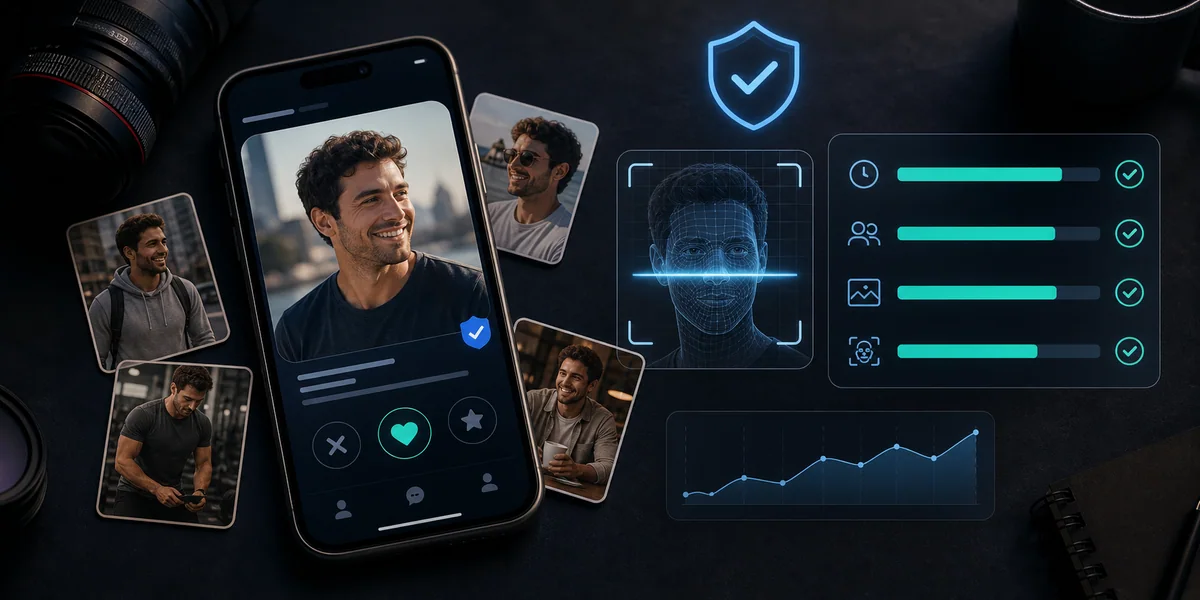
The Badge Works Best When Everything Else Matches
Verification is strongest when the rest of the profile feels consistent.
That means:
- Your photos look like the same person
- The age of the photos feels current
- Your bio matches your visual vibe
- You are not hiding your face
- You have at least one real-world context photo
- Nothing looks overly edited or fake
When those signals line up, the badge becomes a useful extra nudge.
When they do not line up, the badge can even make the profile feel stranger. A verified account with confusing photos still creates doubt.
Audit the Trust Signal
ProfileSharp helps you spot photos that look outdated, misleading, unclear, or low-trust.
Quick Self-Check
Before relying on a badge, ask:
- Is verification available, and am I comfortable using it?
- Does my first photo clearly show my face?
- Do my photos look current and consistent?
- Am I relying on filters or heavy edits?
- Do I have at least one real social or lifestyle photo?
- Would this profile still feel trustworthy without the badge?
Dating app verification can help people believe you are real.
Your photos decide whether they want to know more.
References
Disclaimer: This article is an independent analysis based on public reporting and app safety resources. ProfileSharp is not affiliated with or endorsed by Tinder, Bumble, Hinge, or Match Group.