 Safety, Privacy & Wellbeing
Dating Multiple People: Pros, Cons, and When to Stop
Dating multiple people can widen your options, but divided attention and unequal expectations carry real costs. Learn when it is time to choose.
In this article8 sections
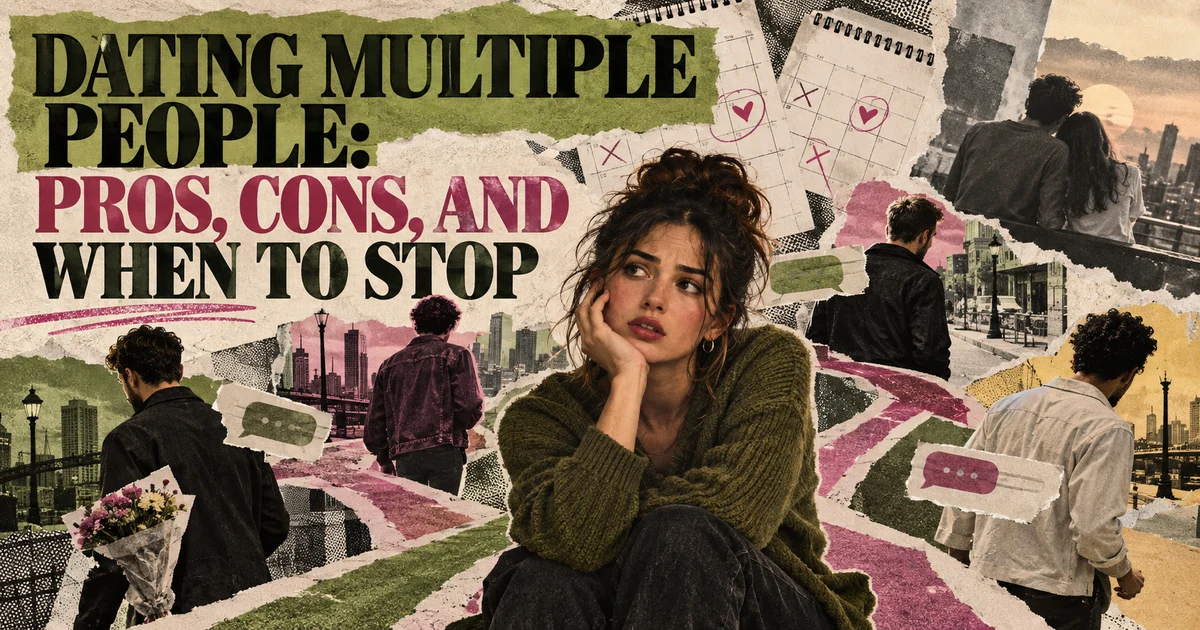
It can be okay to date more than one person before exclusivity—if nobody has been misled and you can manage the situation honestly. But “technically allowed” does not mean emotionally wise.
Multi-dating can reduce premature commitment. It can also divide the exact attention required to discover whether one connection could become meaningful. The longer ambiguity continues, the more likely someone forms expectations that another person does not share.

The Real Pros of Dating Multiple People
There are legitimate advantages in the earliest stage:
- Less premature attachment: one enjoyable date does not have to carry the weight of your entire romantic future.
- Clearer preferences: meeting different people may show which values and communication styles actually suit you.
- Less scarcity: you may evaluate behavior more calmly when one match is not treated as your only chance.
- No false commitment: both people can decide whether to deepen the connection before promising exclusivity.
These benefits are strongest during a few initial, low-investment dates. They shrink once a particular connection begins asking for vulnerability, consistency, and real space in your life.
The Cons Are Larger Than They First Appear
You Start Comparing Instead of Connecting
When several people are active candidates, a date can feel like an audition. One person is funnier, another replies faster, another shares your hobbies. Human compatibility becomes a feature comparison, even though emotional safety and long-term fit reveal themselves slowly.
Your Attention Is Divided
Learning one person requires remembering their world, following conversations, noticing patterns, and being present. With several parallel threads, dates become repetitions of the same biography. You may miss depth not because the connection lacked it, but because you never gave it sustained attention.
Ambiguity Usually Has a Human Cost
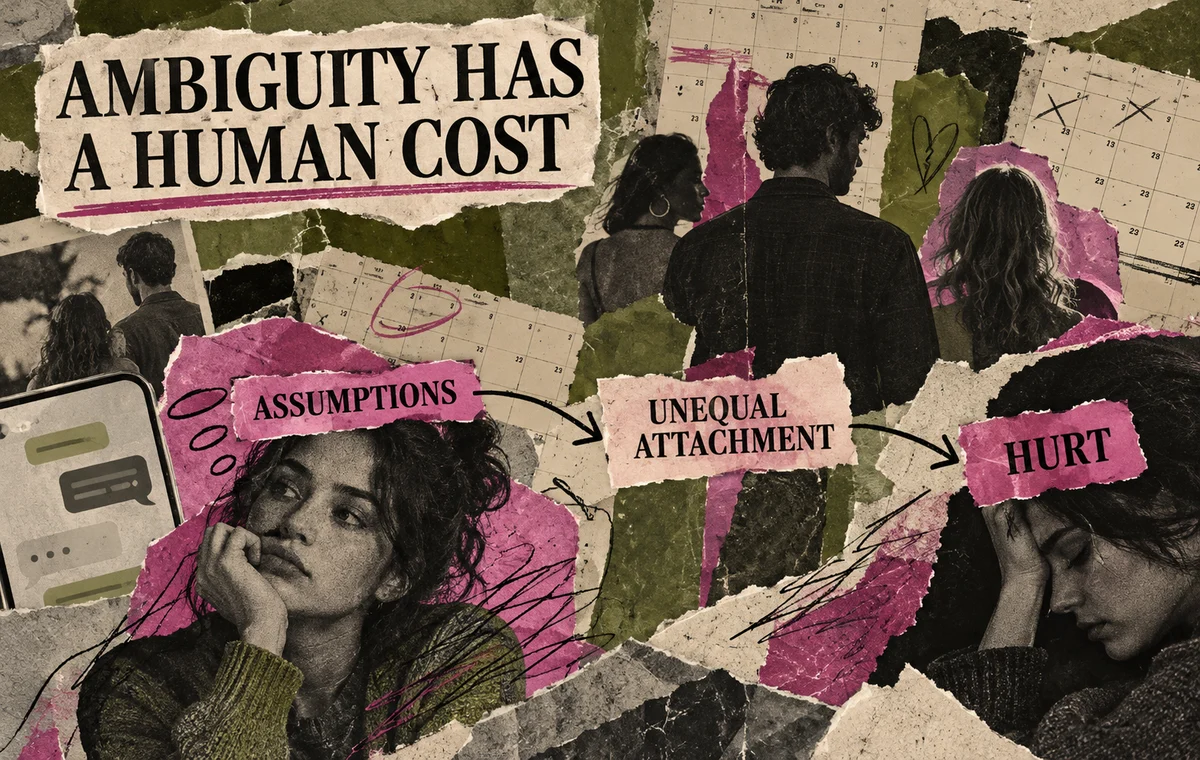
Two people rarely attach at exactly the same speed. One may assume the growing intimacy means you are moving toward exclusivity while the other still treats the connection as one option among four. If that difference stays hidden, someone is likely to feel hurt—not because dating others was forbidden, but because the emotional reality was never named.
Logistics Become Emotional Noise
Scheduling, message threads, stories, sexual-health conversations, and the fear of using the wrong name all consume attention. The result can look like “being open-minded” while actually preventing anyone from becoming known.
It Can Reward Avoidance
Keeping alternatives active can protect you from the discomfort of choosing. When a promising person disappoints you slightly, it is easier to switch attention than to have a vulnerable conversation. That makes relationships replaceable before they have a chance to become resilient.
Get Clear Before You Add Another Conversation
Sometimes the urge for more options is really uncertainty about an existing connection.
Wingman can help you think through what you want to ask, how to name your intentions, and how to be honest without being harsh.
Honesty Requires More Than Avoiding a Lie
You do not need to announce your entire dating calendar on a first coffee. You do need to avoid creating a false impression.
If someone asks whether you are seeing others, answer plainly. Before sex, discuss exclusivity assumptions, barriers, testing, and relevant risk. The CDC’s STI prevention guidance identifies having multiple partners as a factor that can increase exposure risk and recommends strategies including testing, barrier use, vaccination, and reducing the number of partners.
Honesty also means not accepting relationship-level attention while privately knowing you have no intention of choosing that person.
When to Stop Multi-Dating
It is time to narrow your focus when:
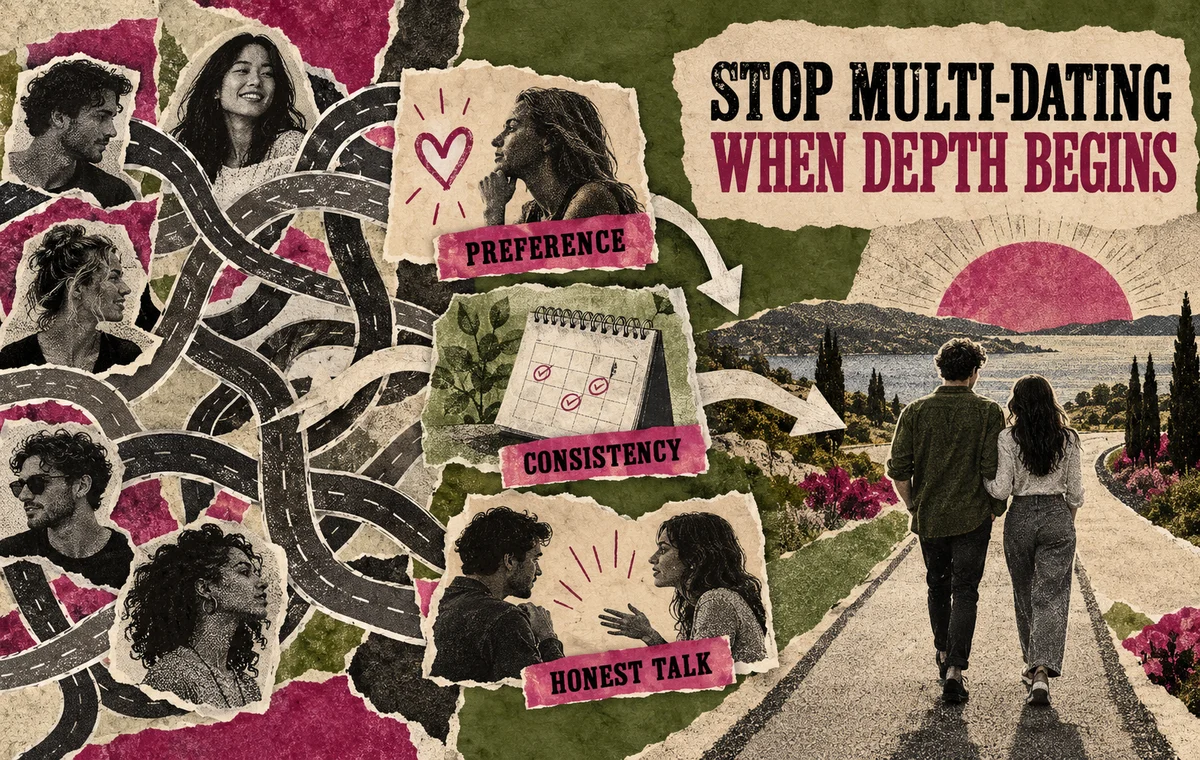
- you consistently prefer one person and compare everyone else with them;
- the connection is becoming physically or emotionally intimate;
- you want reliability that you cannot offer while splitting attention;
- scheduling begins to feel like concealment;
- someone asks for clarity;
- you are keeping backup options mainly to manage fear.
You do not have to declare a lifelong commitment. You can simply say: “I want to give this a real chance, so I’m going to stop dating other people. Would you like the same thing?”
Their answer may be yes, no, or not yet. All three are useful information.
What If You Are Not Ready to Choose?
Do not promise exclusivity. Name your position and accept that the other person may leave:
“I like seeing you, and I’m not ready to be exclusive yet. I don’t want you to assume otherwise. How does that land for you?”
That conversation can be uncomfortable, but it is kinder than benefiting from someone’s growing attachment while withholding material information. If you are unsure how to start, learn how to ask what someone wants over text.
Attract Fewer Wrong Fits and More Real Possibilities
A profile should not maximize attention at any cost. It should help compatible people recognize you.
ProfileSharp reviews which dating photos communicate trust, personality, and the kind of connection you want to build.
Frequently Asked Questions
Is dating multiple people cheating?
Not before an exclusivity agreement, unless you have implied or promised otherwise. After an agreement, dating others violates it. The ethical issue is the expectation you create, not only the label.
Do I have to tell every date I am seeing other people?
You should answer honestly if asked and discuss it before sexual-health or exclusivity decisions. You do not need to provide names or private details about other people.
How many people is too many?
If you cannot be present, remember important details, communicate honestly, or manage safer-sex decisions, the number is already too high. For many people, depth begins to suffer before the calendar looks objectively full.
Will someone get hurt?
Dating always carries emotional risk, but hidden or unequal expectations increase it. Early clarity cannot prevent disappointment; it can prevent avoidable betrayal and confusion.
Final Takeaway
Dating more than one person can be a brief way to avoid choosing too soon. It becomes counterproductive when options replace attention, ambiguity replaces honesty, or fear prevents depth. If one connection is becoming meaningful, give it the focus required to learn what it could actually become.