 Safety, Privacy & Wellbeing
When to Invite Someone Over While Dating Seriously
Learn when inviting someone home makes sense in serious dating, how to ask without pressure, and which trust and safety signals matter first.
In this article9 sections
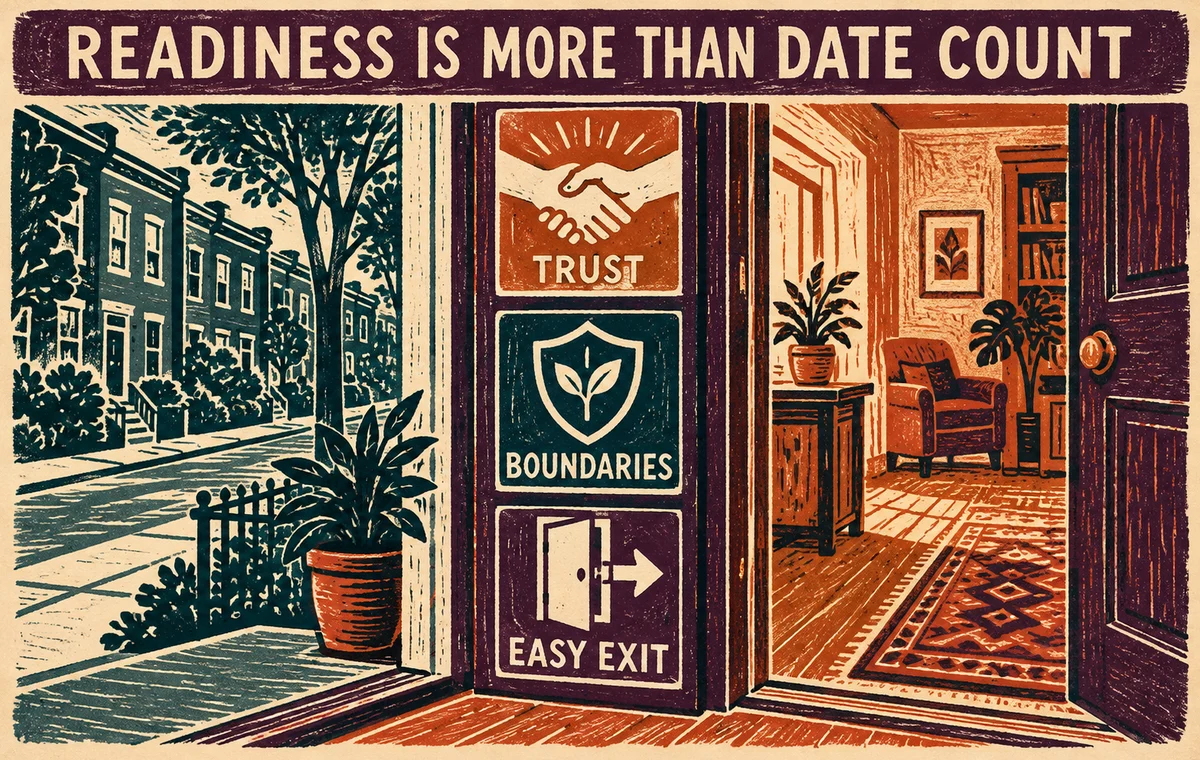
There is no correct date number for inviting someone to your place. A third date can be comfortable for one couple and far too early for another. In serious dating, the useful question is not “How many dates have we had?” It is “Have we built enough trust for a private setting to feel safe, clear, and freely chosen?”
An invitation home can mean dinner, meeting a pet, watching a film, or becoming physically intimate. Because people may interpret it differently, clarity matters more than timing folklore.
Signs the Timing May Be Right
Consider an invitation when most of these are true:
- You have met in public enough to observe consistency, not only chemistry.
- They have respected small boundaries, changes of plan, and the word “no.”
- You know each other’s full name and basic real-life context.
- Communication between dates is steady rather than manipulative or erratic.
- Both of you can talk about physical boundaries without embarrassment or pressure.
- The guest can leave independently and knows what the plan is.
These signals do not guarantee safety or compatibility. They simply tell you more than a calendar number does.
Signs You Should Wait
Wait if the other person pushes for privacy, complains about public dates, sexualizes the invitation after you set a boundary, or acts offended when you suggest your own transportation. Also wait if you feel you “owe” them access because they paid for dinner or have been patient.
Discomfort is sufficient information. You do not need a courtroom case for choosing another public date.
Talk Through the Invitation Before You Send It
A clear invitation is easier when you know what you want the evening to mean and where your boundaries are.
Wingman can help you draft a direct, natural message that keeps the plan warm without creating pressure.
How to Invite Someone Over Without Pressure
Make the activity and the freedom to decline explicit:
“Would you like to come over Saturday and make dinner together? No pressure if you would rather meet out—I’d be happy with either.”
Or:
“I’d like to show you the record collection I mentioned. Want to come by for an hour after coffee? We can also save it for another time.”
The important elements are a real plan, a clear time, and a genuine alternative. Do not use “come over” as a deliberately vague test.

An Invitation Is Not Consent to Anything Else
Agreeing to enter someone’s home is not agreeing to kiss, have sex, stay overnight, drink alcohol, or change an established boundary. Consent must remain voluntary and can change at any moment.
If you are hosting, act like a host rather than a negotiator. Offer water and food, make the bathroom easy to find, do not block transportation, and accept a changed mind immediately. If you are the guest, you can leave for any reason, including a feeling you cannot fully explain.
Keep the First Home Date Safer
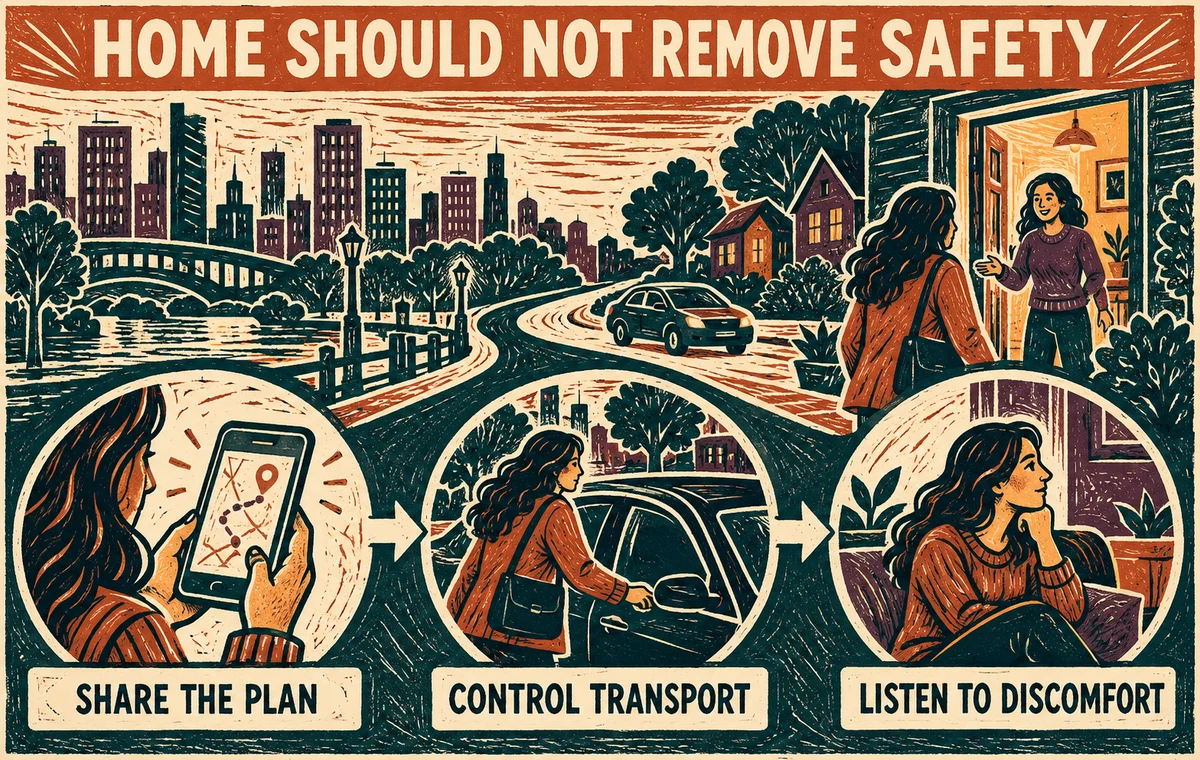
RAINN’s safer dating guidance recommends keeping a home address private until trust has been established, meeting in public for the first few dates, sharing plans with someone you trust, and controlling your transportation. Bumble’s in-person dating guidance similarly advises public early meetings, protecting your address, and telling someone where you are going.
For a first private date:
- Tell a friend the address, person’s name, and expected end time.
- Arrange your own ride or know the local transport options.
- Keep your phone charged and accessible.
- Limit alcohol or anything that makes decisions harder.
- Use a check-in plan with a friend.
- Leave if the plan changes in a way you did not agree to.
Does Serious Dating Mean You Should Invite Them Sooner?
No. Serious intentions can justify better communication, not faster access. Someone who genuinely wants a relationship should be able to tolerate a pace that protects both people’s comfort.
The opposite is also true: inviting someone home relatively early does not make the relationship casual. What matters is whether your actions and stated intentions align. If that conversation has not happened, use this guide to ask what someone wants over text.
Let Your Profile Attract People Who Respect Your Pace
A clear, grounded profile can signal seriousness before the first date and reduce mismatched expectations.
ProfileSharp reviews your dating photos for trust, approachability, and the story they tell together.
Frequently Asked Questions
Is the third date the normal time to invite someone over?
It is a popular convention, not a rule. Use observed respect, mutual comfort, and clear boundaries—not date count—as the decision criteria.
How do I decline an invitation without ending the connection?
Try: “I’m enjoying this, but I’m not ready for a home date yet. I’d like to see you at the wine bar instead.” A respectful person will hear both the boundary and the continued interest.
Should I tell them nothing physical will happen?
If that is your boundary, saying it clearly can prevent assumptions: “I’d like you to come over for dinner, and I’m not ready for sex.” You can still change any decision in either direction later, with mutual consent.
What if they react badly when I set a boundary?
Treat the reaction as meaningful information. Pressure, ridicule, bargaining, or guilt are reasons not to move the date into a private setting.
Final Takeaway
Invite someone home when trust has grown, boundaries have been respected, and both people can choose the plan without pressure. A serious relationship is not proven by how quickly a door opens. It is built by what happens when one person states a need and the other responds with care.