 From Match to Date
When to Introduce Someone You Are Dating to Friends
Learn when to introduce someone you are dating to friends, how to keep the first meeting low pressure, and how much weight to give their feedback.
In this article10 sections
Introduce someone you are dating to friends when the connection has enough consistency and context that the meeting will not feel like an audition. For many people, that is after several good dates—not after a fixed number of weeks.
The introduction should help two parts of your life meet. It should not force a new connection to prove itself in front of a panel.

Signs the Timing Is Right
Consider an introduction when:
- you have met consistently and expect to continue;
- the person has enough context about your friendships;
- both of you can handle a little social awkwardness;
- you are curious how they fit into your real life;
- the invitation feels warm rather than strategic.
You do not need exclusivity, but you should be honest about the stage. Introducing someone as “the person I’m seeing” is different from presenting them as a committed partner.
Reasons to Wait
Wait if you want friends to make the decision for you, if the person has asked for privacy, or if your group tends to interrogate newcomers. Also wait if every date still feels uncertain and the introduction would falsely imply a level of commitment you have not discussed.
Ask Before Adding Them to the Plan
Do not spring a whole friend group on someone who expected a one-on-one date. Try:
“A few friends are having dinner Friday. I’d like you to meet them, but no pressure if you’d rather keep our plan just us.”
This names the group, setting, and choice.
Send an Invitation That Feels Easy to Answer
Wingman can help you make the invitation specific and warm without making the introduction sound like a relationship test.
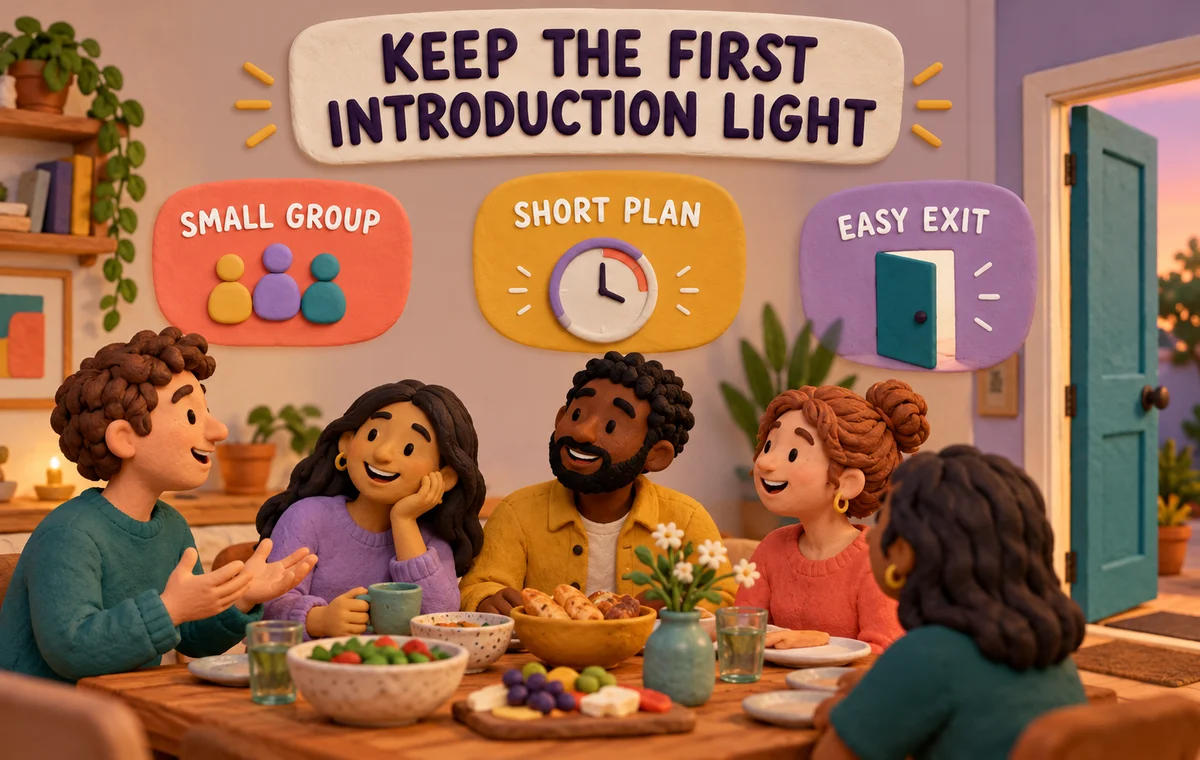
Keep the First Introduction Light
A small group, short plan, and easy exit create the best conditions. Coffee, one drink, a casual meal, or the first hour of a gathering usually works better than a wedding, vacation, or full weekend.
Tell your friends enough to welcome the person, but do not share private dating details. Tell your date who will be there and what the atmosphere is like.
During the Meeting
Make introductions with useful context: “This is Maya; she and I discovered we both love terrible mystery films.” Then include the new person rather than abandoning them to circulate alone.
Avoid inside jokes all evening, public stories about exes, or asking friends to “test” them. Check in once, not every five minutes.
What Your Friends’ Reactions Can Tell You
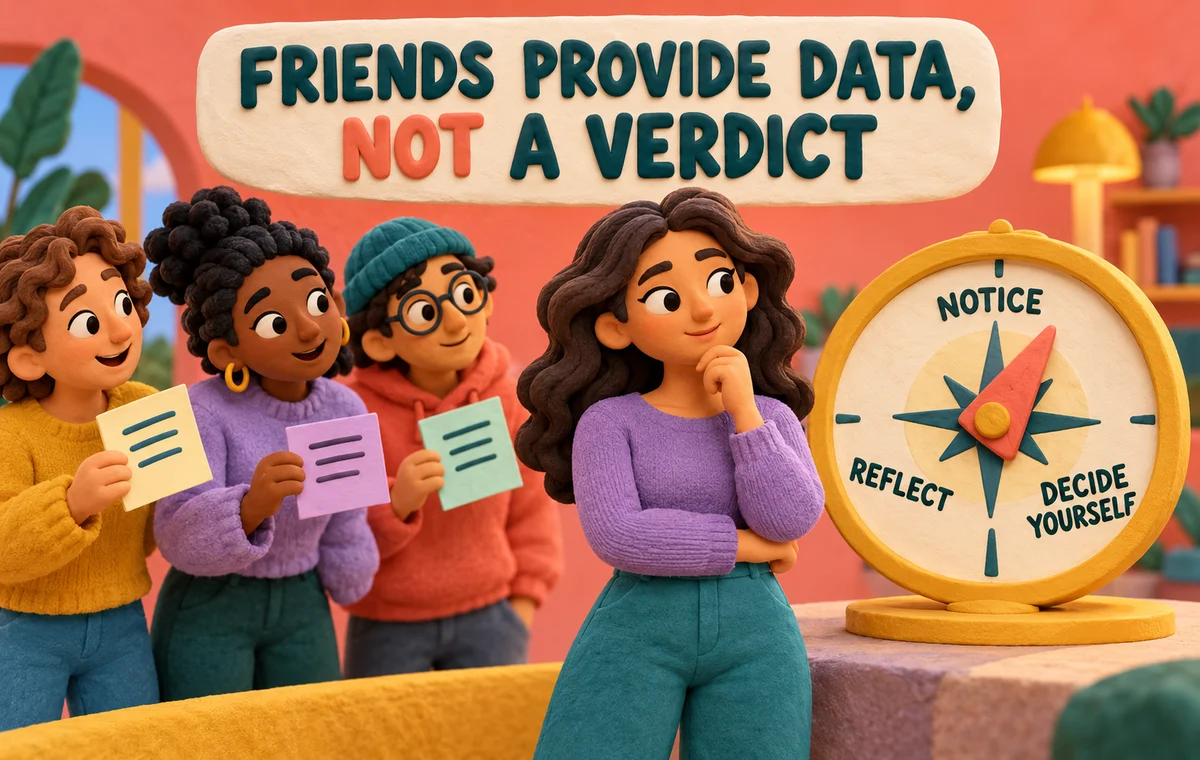
Friends may notice whether you seem relaxed, whether the person listens, and how they treat people they do not need to impress. That is useful data.
But your friends do not experience the private relationship. Their taste, protectiveness, jealousy, or social expectations can distort the verdict. Ask for observations rather than ratings:
- “What did you notice?”
- “Did I seem like myself?”
- “Was there anything specific that concerned you?”
When Feedback Deserves Extra Weight
Pay attention when several trusted friends independently notice disrespect, controlling behavior, cruelty, or a dramatic change in you. Do not dismiss specific safety concerns merely because the chemistry is strong.
For ordinary personality differences, reflect and decide for yourself. A quiet partner does not need to charm the loudest person in the room.
If you are still working out the pace, read how often to date at the beginning. If your friends’ concern is about conflicting goals, use the guide to different dating intentions.
Help the Right People Recognize You Earlier
A dating profile that reflects your actual social life and personality makes the transition from app to real life feel more coherent.
Debrief Without Turning It Into a Panel Review
Afterward, first ask the person you are dating how the gathering felt. Listen before reporting every comment your friends made. Then check in with one or two trusted friends for specific observations rather than a simple approval rating. “Did I seem relaxed?” or “Was there anything I missed?” produces better information than “Do you like them?” You are gathering perspective, not outsourcing the relationship. Give repeated concerns about disrespect or safety real weight, while allowing ordinary differences in humor, energy, or social style time to settle.
Frequently Asked Questions
Is meeting friends a relationship milestone?
It can be, but it does not automatically mean exclusivity or commitment. Explain what the introduction means to you.
Should friends meet them before family?
Often, because a casual friend gathering carries less pressure. Family timing depends on culture, distance, and personal significance.
What if my date does not want to meet my friends yet?
Ask what would make the situation more comfortable and respect the pace. A refusal may reflect social anxiety or privacy, not lack of interest.
What if my friends dislike them?
Request specific observations, look for patterns, and separate safety concerns from personal taste.
Final Takeaway
Introduce someone when the connection has consistency, the invitation is honest, and the setting allows everyone to relax. Let friends offer perspective—but keep responsibility for the relationship decision with the people actually dating.