 From Match to Date
Who Should Pay on a First Date? Modern Dating Etiquette
Learn who should pay on a first date, when splitting works, how to offer without pressure, and what the other person's response can reveal.
In this article8 sections
There is no universal rule that one gender must pay. The fairest modern default is simple: the person who proposed the date should be prepared to pay, while both people should be comfortable discussing another arrangement.
Paying can be generous. Splitting can be considerate. Taking turns can feel natural once you are seeing each other regularly. The problem begins when money becomes a test, a debt, or a way to control what happens next.
A Practical First-Date Rule
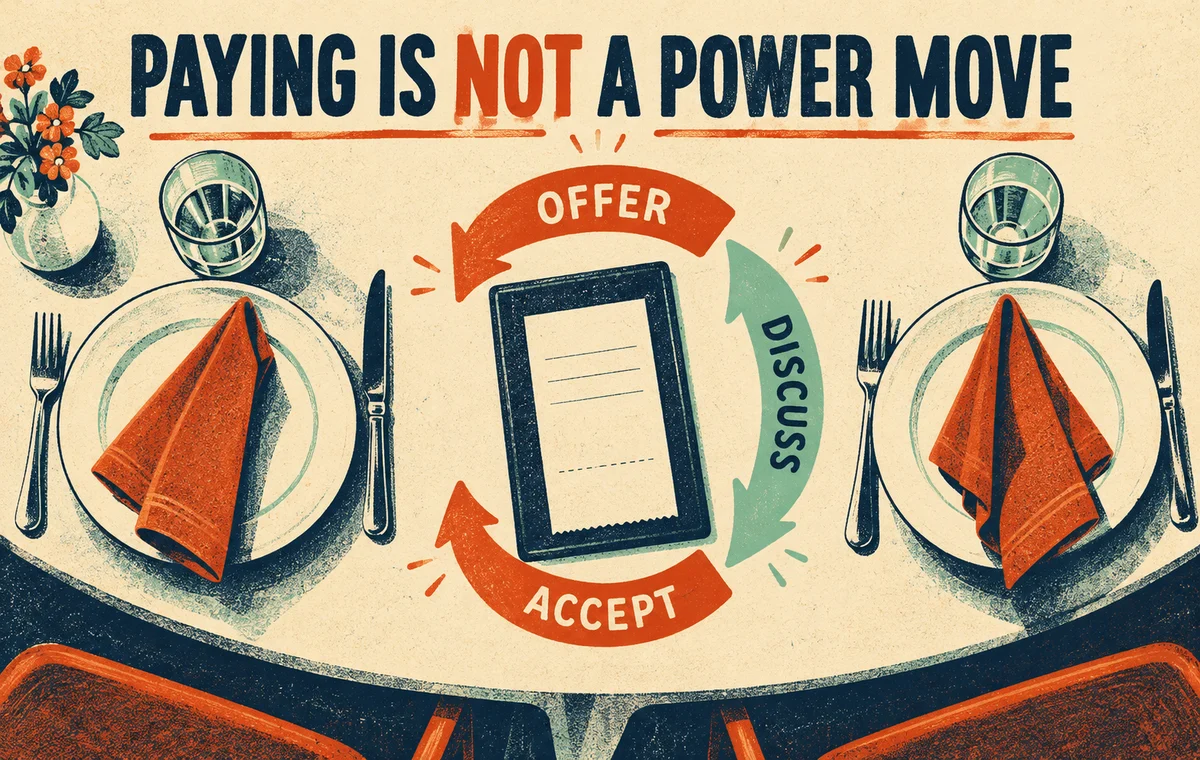
If you invited someone to a specific restaurant or activity, choose a place you can comfortably cover. When the bill arrives, offer once: “I invited you—this one is on me.”
If they prefer to split, accept that without turning the check into a negotiation. A sincere offer does not require winning.
If the invitation was mutual—“Want to grab drinks sometime?”—either person can offer, and splitting is a completely reasonable default.
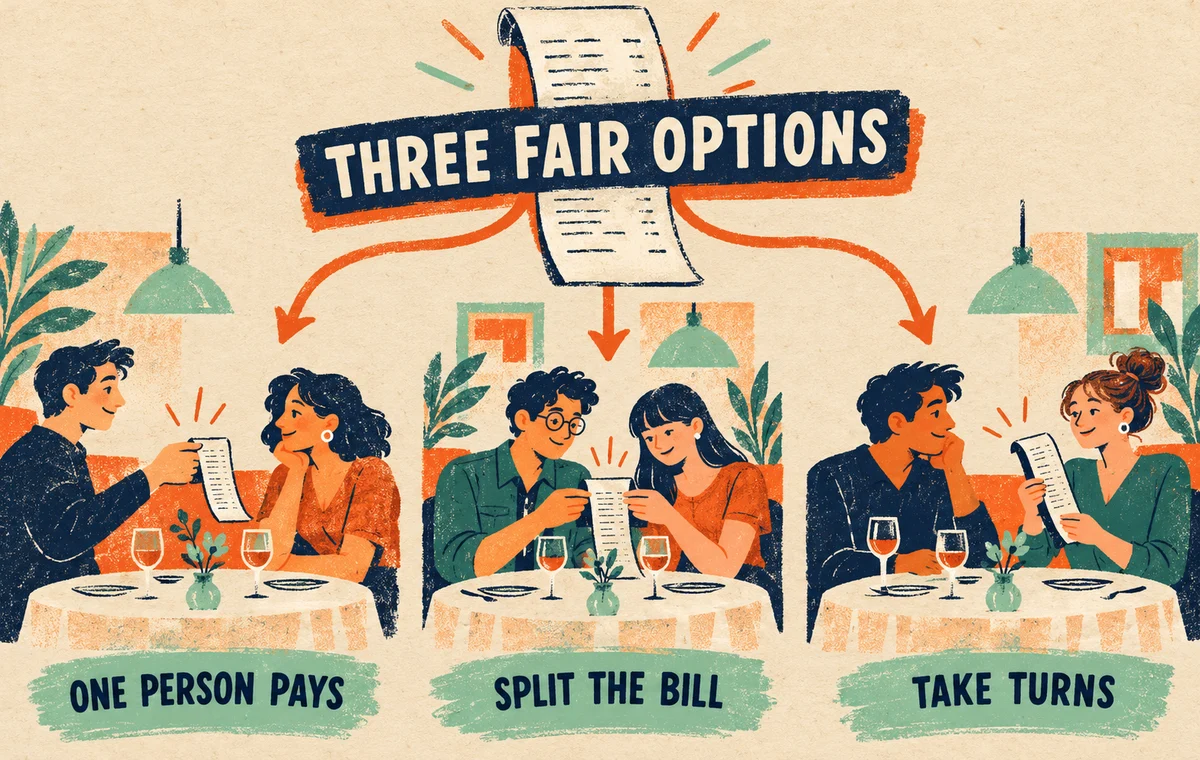
Three Fair Ways to Handle the Bill
One Person Pays
This works when one person clearly invited, chose a more expensive plan, or genuinely enjoys treating. It should not create an expectation of affection, another date, or sex.
Split the Bill
Splitting keeps the financial commitment balanced and can reduce ambiguity on an early date. It does not signal a lack of romantic interest. Some people simply prefer independence.
Take Turns
Once dates become regular, strict accounting can feel awkward. One person buys dinner, the other gets tickets or coffee next time. The goal is not identical spending; it is mutual generosity within each person’s means.
Plan the Conversation, Not a Performance
If money, timing, or expectations make a date message feel awkward, Wingman can help you phrase it clearly without sounding defensive.
What to Say When the Bill Arrives
Use one calm sentence:
- “I’d love to get this one.”
- “Want to split it?”
- “You got dinner—let me get the drinks.”
- “This place was my idea, so I’ve got it.”
Avoid pretending to reach for your wallet as a test. Avoid insisting after someone has clearly declined. And never joke that payment buys access to their time or body.
When the Date Is Expensive
The person suggesting an expensive plan should name the cost or offer an affordable alternative before the date. A surprise tasting menu, premium ticket, or long ride can put the other person in an uncomfortable position.
Try: “The tickets are a little pricey and this was my idea, so I’m happy to cover them. We can also do coffee if that feels better.”
That gives the other person a real choice without embarrassment.
Read the Response, Not the Receipt
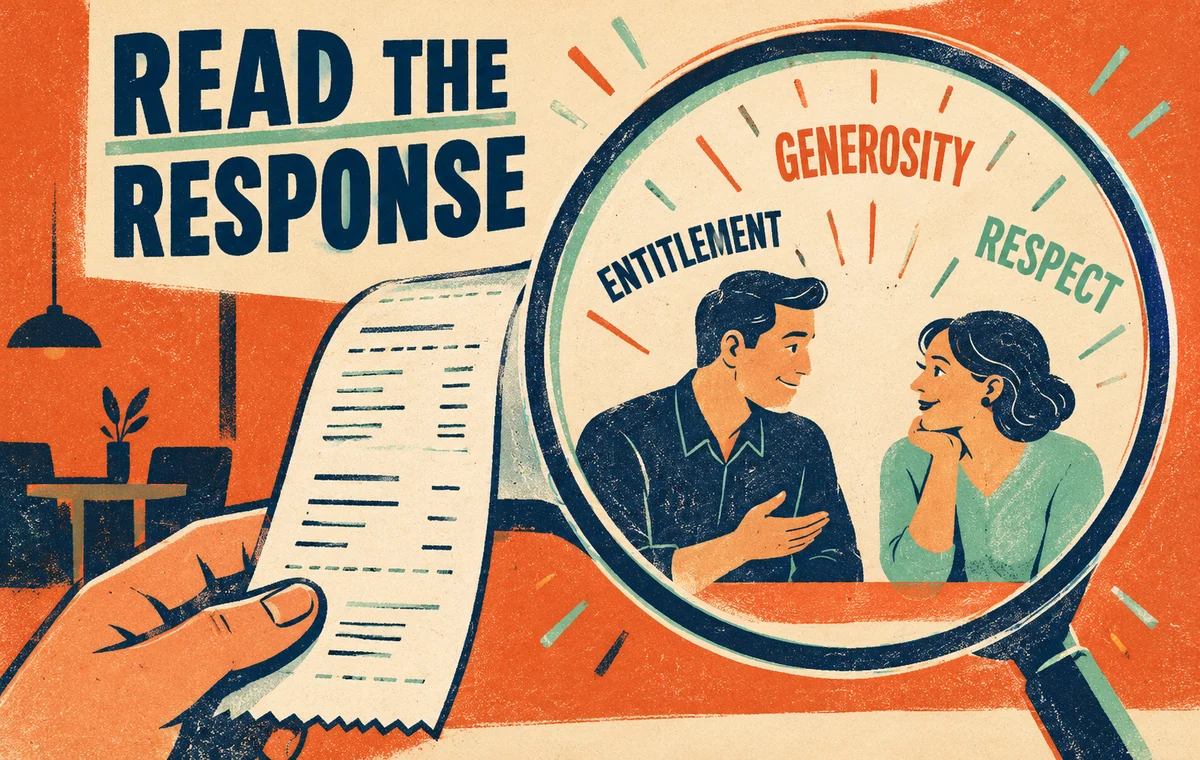
The bill reveals more through behavior than through who pays. Notice whether the other person:
- offers sincerely or expresses appreciation;
- respects a request to split;
- adjusts the plan to both budgets;
- becomes entitled, insulting, or transactional;
- treats generosity as leverage.
One bill does not define a person. A hostile response to a reasonable boundary is more meaningful.
Payment Does Not Create Obligation
Covering a date is a gift, not a contract. The other person does not owe a kiss, a ride home together, a second date, or a particular message afterward.
That principle also protects the person who paid. Generosity should be offered only when you can accept any romantic outcome.
For the rest of the evening, these first-date rules matter more than the bill. Afterward, use a clear first-date follow-up text rather than interpreting payment as proof of interest.
Make the First Impression Before the Check Arrives
Payment etiquette cannot rescue a profile that creates the wrong expectations. ProfileSharp shows which photos communicate warmth, trust, and genuine effort.
Frequently Asked Questions
Should a man always pay on the first date?
No. Some couples prefer that tradition, but it should be a mutual preference rather than an automatic obligation based on gender.
Does splitting the bill mean there was no chemistry?
No. People split for independence, fairness, budget, or habit. Judge interest by the full interaction and whether they want to meet again.
What if I cannot afford the place they chose?
Say so before the date: “That is outside my budget, but I’d still like to meet. Could we try this cafe instead?” A compatible person will value the clarity.
Should I offer again if they refuse?
One warm confirmation is enough. Repeated insistence can turn generosity into pressure.
Final Takeaway
The best first-date payment rule is not “always pay” or “always split.” Offer clearly, discuss briefly, and respect the answer. The real etiquette is ensuring that neither money nor tradition removes the other person’s freedom.