 Profile Photos
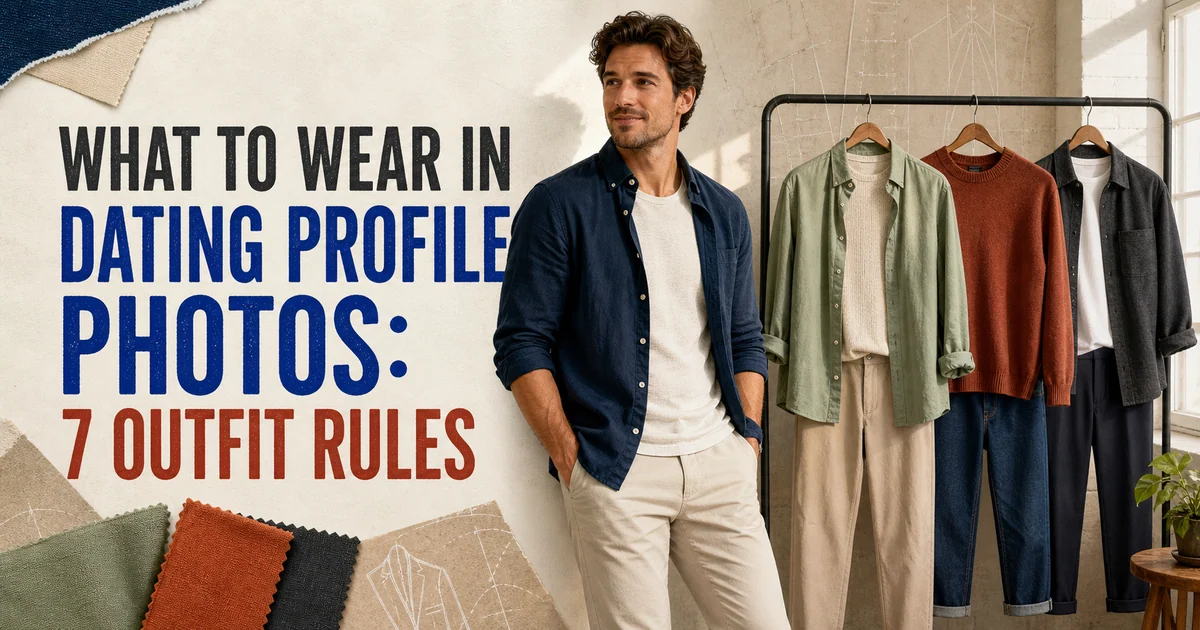
What to Wear in Dating Profile Photos: 7 Outfit Rules
Choose dating profile outfits that fit well, photograph clearly, show range, and feel authentic across first photos, activity shots, and dates.
In this article11 sections
- Rule 1: Fit Matters More Than Brand
- Rule 2: Create Contrast With the Background
- Rule 3: Dress One Level Better Than the Setting Requires
- Rule 4: Show Range Across the Lineup
- Rule 5: Let the Outfit Prove the Context
- Rule 6: Use Color to Frame Your Face
- Rule 7: Remove Distracting Wear and Clutter
- What to Wear in Your First Dating Profile Photo
- You Do Not Need to Buy a New Wardrobe
- The Five-Minute Outfit Audit
- FAQ
The best dating profile outfit does not make someone admire the outfit. It makes you look clear, current, comfortable, and easy to imagine meeting.
That is why “wear expensive clothes” is bad advice. A designer jacket that fits poorly, fights the background, or feels nothing like your real life can weaken a photo. A simple shirt that fits, frames your face, and matches the setting can do much more.
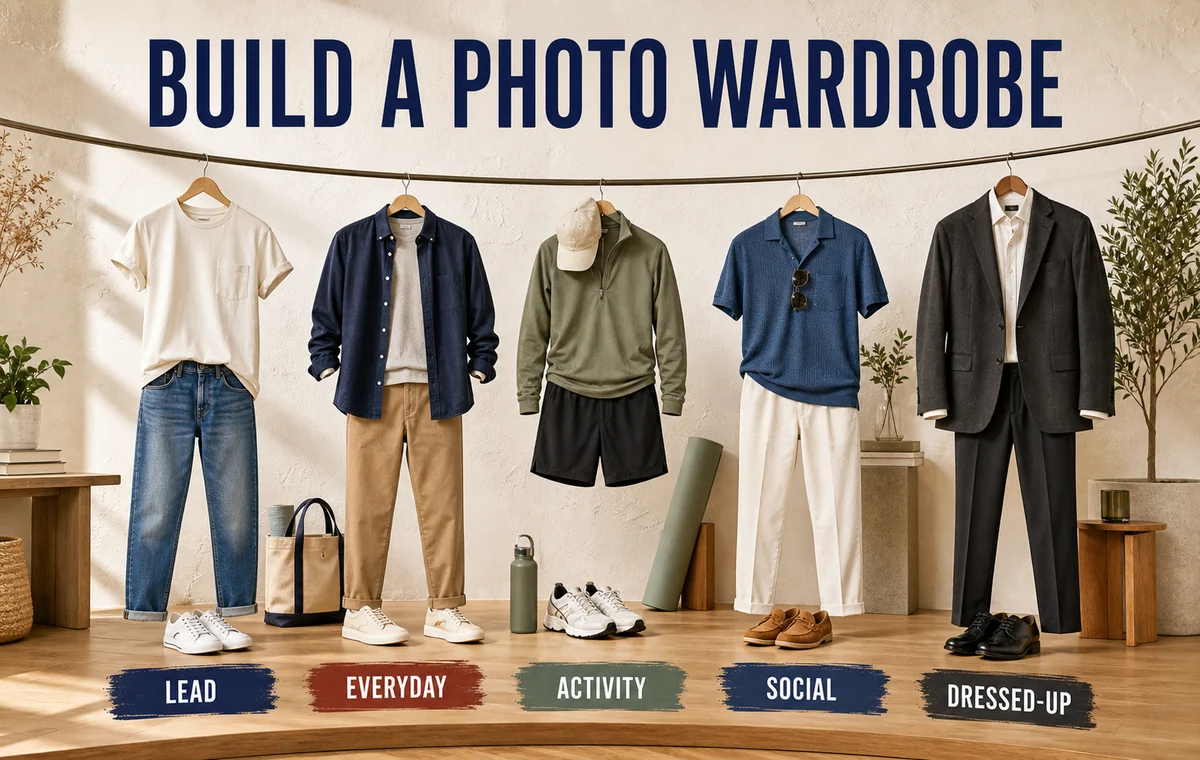
Use clothing to support the message of each photo: approachable in the lead image, believable in an activity shot, socially at ease in a group setting, and capable of making an effort in a dressed-up photo.
Rule 1: Fit Matters More Than Brand
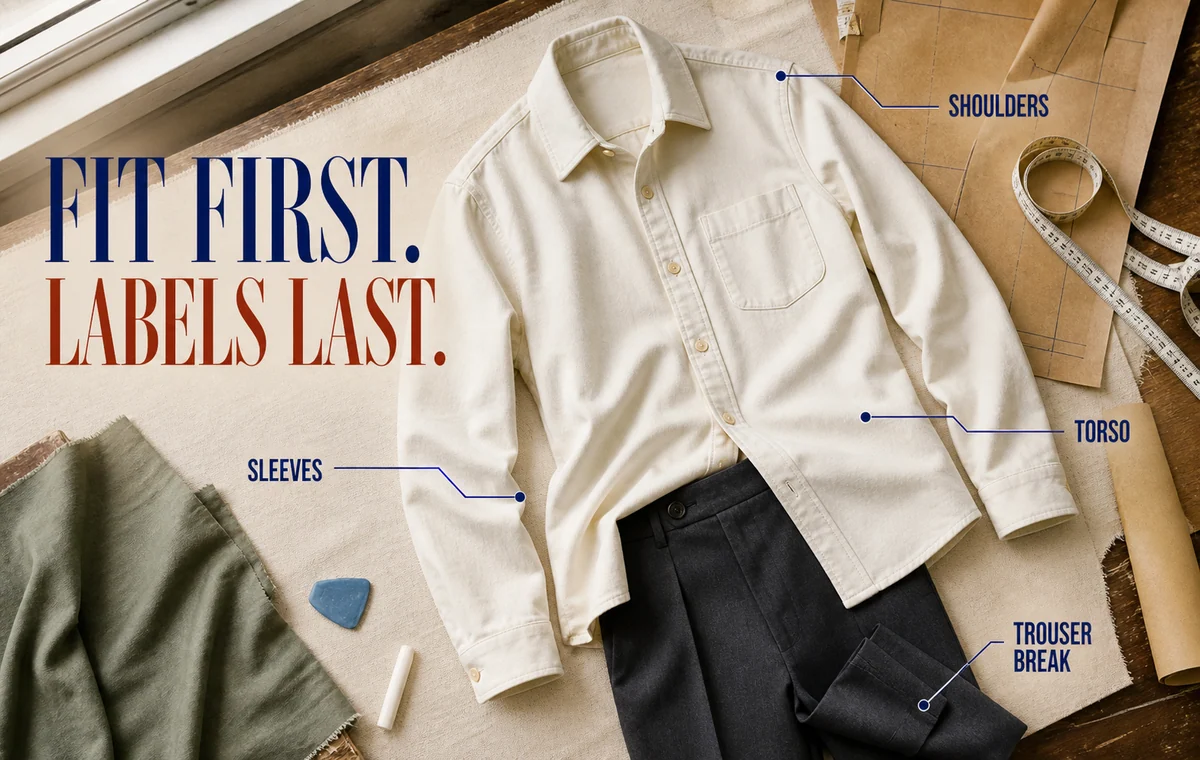
People read silhouette before they read labels. Clothing should follow your shape without pulling, collapsing, or hiding it.
Check these areas:
- Shoulder seam: It should sit near the edge of your shoulder, not halfway down your arm.
- Sleeve length: Long sleeves should end around the wrist; short sleeves should not flare widely.
- Torso: Fabric should fall cleanly without stretching across buttons or forming a large box.
- Trouser break: Avoid heavy bunching around the ankle in a full-body photo.
- Collar: It should lie flat and frame the neck rather than curl or gape.
You do not need a tailored wardrobe. You need one or two outfits that fit your current body and look intentional from the camera's distance.
Rule 2: Create Contrast With the Background
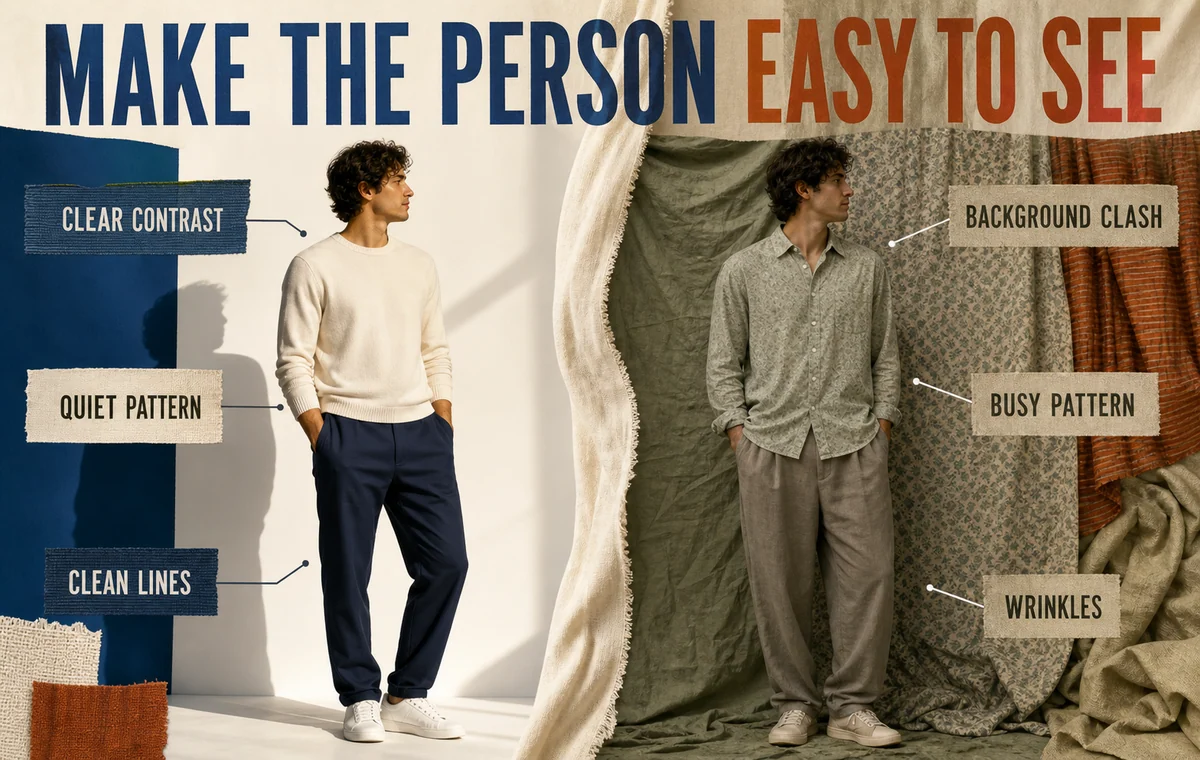
The camera needs to separate you from the setting. If your clothes and background share the same tone, your body can disappear into the frame.
Simple combinations work:
- light shirt against a darker wall or shaded street;
- dark jacket against a bright outdoor background;
- warm earth tones against cool concrete or blue sky;
- one saturated layer against a neutral environment.
Avoid guessing from the mirror. Take a quick test photo in the actual location and view it at thumbnail size. If your face and upper body are still the first things you notice, the contrast works.
Tiny checks, narrow stripes, and high-frequency patterns can create distracting visual effects on phone cameras. Large, quiet patterns usually photograph more cleanly. Bright neon can also reflect color into the skin, so use it only when it is genuinely part of your style and the light is controlled.
Rule 3: Dress One Level Better Than the Setting Requires
The goal is not formal clothing everywhere. It is visible care without looking costumed.
Try this translation:
| Setting | Too casual or careless | Better photo version |
|---|---|---|
| Coffee shop | Old gym shirt | Clean knit, overshirt, or fitted tee with structure |
| Park or city walk | Wrinkled hoodie | Simple jacket, clean sneakers, coordinated layers |
| Hiking or sport | Random old gear | Real activity clothing that fits and looks maintained |
| Dinner or event | Office uniform with badge | Open-collar shirt, textured jacket, or smart casual layer |
| Beach or pool | Posed bathroom-style flex | Natural swimwear in the actual setting |
Dress for the life shown in the photo, then refine it slightly for the camera.
See What the Outfit Is Signaling in the Full Lineup
ProfileSharp reviews more than attractiveness. It looks at context, approachability, authenticity, and whether your photos tell one believable story.
Rule 4: Show Range Across the Lineup
Six photos in six black T-shirts can make a varied life look visually repetitive. Six unrelated aesthetics can make the profile feel like six different people.
Aim for controlled range:
- one simple, face-framing lead outfit;
- one casual everyday look;
- one real activity outfit;
- one social or evening look;
- one full-body outfit with a clean silhouette;
- one optional dressed-up look.
Vary layers, color, and level of formality while keeping your actual style recognizable. You are showing dimensions of one person, not auditioning different identities.
Our guide to the best dating profile photo types for men explains what each slot should contribute. Use clothing to make those roles clearer, not to replace them.
Rule 5: Let the Outfit Prove the Context
The strongest activity photos contain details that make the situation believable. If you are climbing, cooking, cycling, or attending a wedding, wear what a person actually wears there.
Context solves several common problems:
- Sportswear at a real activity looks active; sportswear in a bathroom mirror can look performative.
- A suit at an event looks socially grounded; a suit against a blank wall can look like a work headshot.
- Swimwear at a beach looks normal; the same amount of skin in a bedroom changes the signal.
- Workwear during a hands-on hobby looks authentic; a costume worn only for a photo feels staged.
This is the same reason a shirtless dating app photo can help in one setting and hurt in another. Clothing is not interpreted alone. The environment explains it.
Rule 6: Use Color to Frame Your Face
You do not need a universal “most attractive” color. Choose a color that does three jobs:
- separates you from the background;
- does not cast an odd tone onto your skin;
- keeps attention near your face.
Mid-tone blue, forest green, burgundy, rust, cream, charcoal, and denim are often easy to photograph because they provide color without overpowering the frame. But the right choice depends on your skin, hair, light, and setting.
For the first photo, test two or three tops in the same location. Keep the camera, crop, expression, and light stable. Then compare the images at the size they will appear in the app. This is a clean use of the process in our dating profile A/B test guide.
Rule 7: Remove Distracting Wear and Clutter
“Authentic” does not mean careless. Phone cameras make small distractions surprisingly visible.
Before the photo, check:
- wrinkles around the chest and collar;
- lint, stains, pet hair, or faded patches;
- stretched necklines;
- full pockets changing the silhouette;
- visible work badges, name tags, or private information;
- sunglasses hiding your eyes in the lead photo;
- a hat casting a heavy shadow over your face;
- shoes that look unrelated to the rest of the outfit.
The fix may be five minutes with a steamer, lint roller, and empty pockets. Do not let a small preventable detail become the main evidence of effort.
What to Wear in Your First Dating Profile Photo
The lead photo should be visually simple because it has the least time to communicate.
Use:
- a solid or quiet-patterned top;
- a neckline that frames the face;
- a color that separates from the background;
- clean, current clothing that fits the shoulders;
- minimal accessories;
- no sunglasses and no low hat brim.
The frame usually shows only part of the outfit, so put effort where the camera can see it: collar, shoulders, upper chest, grooming, and contrast. A loud belt or expensive shoes will not rescue an unclear face.
Read how to choose a strong main Tinder photo for the rest of the crop, expression, and lighting decisions.
You Do Not Need to Buy a New Wardrobe
Start with what you own. Build three reliable combinations and photograph them in different contexts:
- Lead look: fitted solid top plus optional simple layer.
- Everyday look: clean casual outfit you would genuinely wear on a date.
- Elevated look: one step smarter, suitable for dinner, an event, or a social setting.
Borrow a jacket, replace one worn basic, or have trousers hemmed before buying several new outfits. The biggest improvement often comes from fit, preparation, and better light rather than more clothes.
Find the Weakest Photo Before Replacing Everything
A profile review can show whether the problem is the outfit, the setting, the crop, or the role the photo plays in your lineup, so you replace the right thing first.
The Five-Minute Outfit Audit
Review each profile photo at thumbnail size and ask:
- Does the clothing fit my current body?
- Can I separate from the background immediately?
- Does the outfit make sense in the setting?
- Do my photos show more than one level of formality?
- Is any pattern, logo, wrinkle, badge, or accessory competing with my face?
- Would I actually wear this to the kind of date the profile suggests?
- Do all the photos still look like the same person in the same stage of life?
Keep the outfits that make the photo easier to understand. Replace the ones that create friction, even if the clothes looked good in person.
FAQ
What color should I wear in a dating profile photo?
Choose a color that contrasts with the background and keeps attention on your face. Mid-tone, moderately saturated colors are often easier to photograph than neon, pure white in harsh sun, or black in deep shade, but test in the actual light.
Should I wear a suit in a dating profile photo?
Use a suit or smart jacket if it appears in a real event or social context and reflects your life. Avoid making the whole profile look like a professional networking page.
Are black shirts bad for dating app photos?
No. A black shirt can look clean and sharp, especially against a lighter background. It becomes a problem when every photo uses the same dark outfit or the shirt disappears into shadow.
Can I wear sunglasses or a hat?
They can appear in a later outdoor photo when the setting calls for them. Keep them out of the first photo so your eyes and face are immediately visible.
How many outfits should a dating profile show?
Aim for at least three visibly different looks across the lineup: simple lead, everyday or activity, and elevated social. More variety is useful when it still feels like your real wardrobe.
Should I use logos or designer clothes to look successful?
No. Fit, condition, context, and personal style communicate more than a visible label. Large logos can distract from your face and make the outfit the subject of the photo.