 Safety, Privacy & Wellbeing
Dating Profile for Single Parents: Photos, Bio & Safety
Build a single-parent dating profile that shows warmth and availability without exposing your children. Get photo, bio, schedule, and safety tips.
In this article13 sections
- Mention Parenthood, Protect the Details
- The Three-Part Single-Parent Profile
- Should You Say You Have Children?
- The Best Dating Profile Photos for Single Parents
- A Bio Formula That Balances Parenting and Personality
- Describe Availability Without Publishing a Calendar
- Use a Disclosure Ladder
- Prompts That Show a Full Person
- When Should a Match Meet Your Children?
- Match Quality Matters More Than Broad Approval
- The Single-Parent Profile Audit
- FAQ
- References
A single-parent dating profile has to communicate two truths at once:
You are a parent with real responsibilities, and you are also an adult with personality, attraction, interests, and room for a relationship.
Profiles often show only one side. Some hide parenthood until after matching because they fear losing interest. Others make every photo and sentence about the children, leaving a match unable to see the person they would actually date.
The strongest profile is clear without being exposed. It shows warmth and realistic availability while keeping children's identities and routines private.
Mention Parenthood, Protect the Details
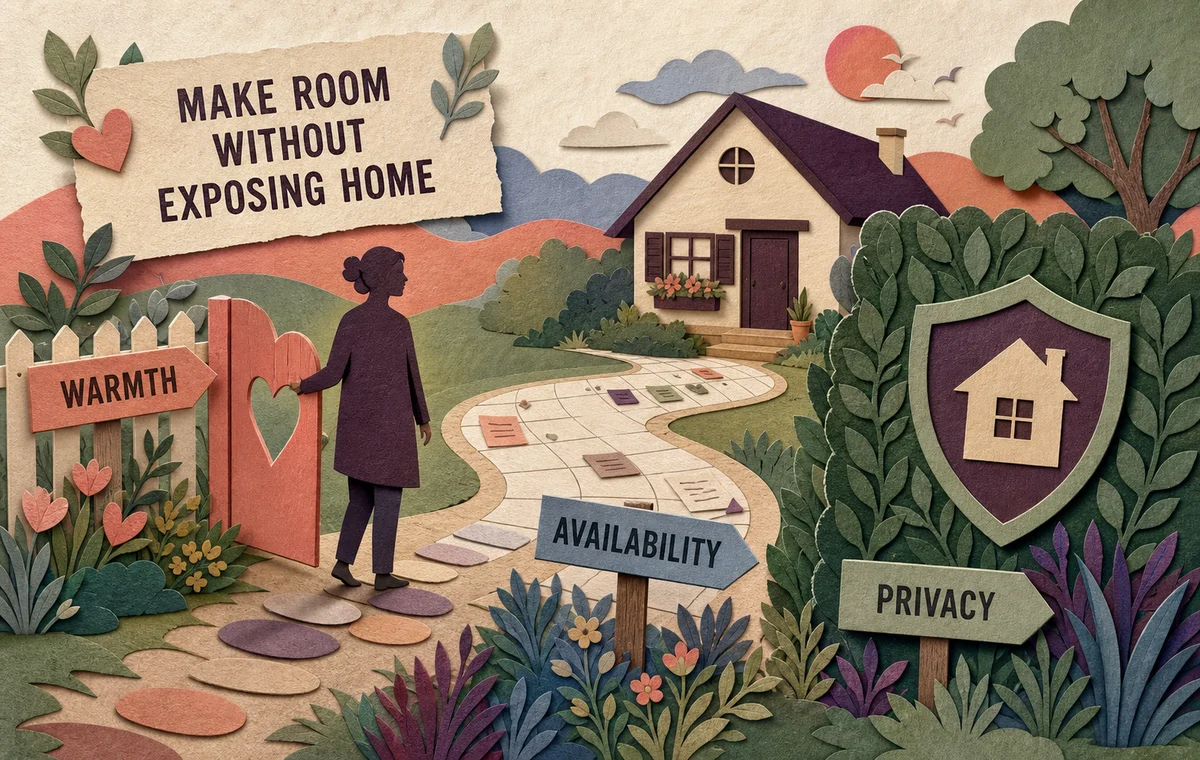
Being a parent is relevant compatibility information. Your child's face, name, school, medical history, custody arrangement, and predictable locations are not public-profile material.
The American Academy of Pediatrics' parenting site recommends asking why information about a child is being shared and whether the child could be embarrassed by it now or later. Its guidance on "sharenting" emphasizes that the information belongs to the child, not only the adult posting it.
A dating profile is an especially public, low-context place. Use a simple rule:
Share your role. Protect their identity.
The Three-Part Single-Parent Profile
| Part | What to communicate | What to keep private |
|---|---|---|
| Parenthood | "I am a parent" and a broad sense of availability | Names, faces, schools, uniforms, custody documents |
| Personhood | Interests, values, humor, friendships, adult life | Home address, workplace details, regular child locations |
| Relationship capacity | The pace and type of connection you can offer | Conflict with an ex, legal disputes, private family history |
Should You Say You Have Children?
Yes. Use the app's family field accurately if one exists, and add one calm line when parenthood affects schedule or relationship goals.
Hiding children can create a trust problem later. Oversharing can create a privacy problem now. The middle path is simple disclosure without identifying detail.
Good examples:
- "Dad of two with a steady co-parenting rhythm."
- "Single mom, full life, and intentional about making time for the right relationship."
- "Parent first, but not parent only. Looking for a warm, grounded partnership."
- "My schedule has structure, and I can make real plans."
Avoid:
- "My kids will always come before you."
- "No drama — my ex already provides enough."
- "You must love my children immediately."
- A detailed custody calendar
- Complaints about child support or co-parenting
Boundaries are necessary. They sound more welcoming when they explain how a relationship can work rather than warning a stranger where they rank.
The Best Dating Profile Photos for Single Parents
1. Start With You Alone
Your first photo should show your face clearly and make you easy to recognize. Do not lead with a family portrait, a child cropped out of the frame, or a photo where a small face has been covered with a sticker.
The first impression should answer "Who am I considering dating?" not "Which person owns this account?"
2. Show an Adult Life
Include a full-body photo, a hobby, a social setting, or a familiar place you enjoy. Parenting may shape the schedule, but it should not erase the adult someone would meet.
Useful scenes include:
- Cooking for friends
- A weekend walk or sport
- A concert, market, or museum
- A small dinner or celebration
- A creative project
- A relaxed travel moment without location-sensitive details
3. Signal Care Without Showing a Child
You do not need a child in the image to look caring or family-oriented. Warm expression, patience in an activity, community involvement, a home-cooked meal, or time with a pet can communicate tenderness without using a child's identity as profile content.
4. Check the Background
Before uploading, zoom in. Remove images that reveal:
- School names or uniforms
- Street numbers or house details
- Children's artwork with full names
- Work badges or schedules
- Sports-team rosters
- Family calendars
- License plates
- Screens containing messages or contact names
For a full audit, use Dating App Privacy: 9 Things to Hide Before Matching.
5. Use Current Photos
Single parents often have fewer recent solo photos because the camera roll centers on children. Ask a friend to take several simple portraits during a normal outing. A current, believable photo is more useful than a polished image from before parenthood or a previous relationship.
Make the Adult Behind the Schedule Visible
ProfileSharp can help check whether your photos show a current, warm, varied adult life while avoiding confusing crops and unnecessary family exposure.
A Bio Formula That Balances Parenting and Personality
Use:
Parenthood context + current personality + realistic invitation
Single Dad Bio
"Dad of two with a predictable co-parenting schedule. I cook a serious breakfast, cycle before work, and never skip the museum gift shop. Looking for someone kind and playful who prefers real plans to endless texting."
Single Mom Bio
"Single mom, architect, and enthusiastic finder of quiet restaurants. My week has structure, but I make intentional space for dating. Interested in a grounded relationship with someone who communicates clearly and laughs easily."
Full-Custody Parent Bio
"Full-time parent with a close support system and a life I am proud of. Free time is planned rather than spontaneous, so I value people who follow through. Coffee, a walk, and a good question is a strong start."
Widowed Parent Bio
"Dad, teacher, and amateur gardener. Life has changed me, but it has not closed me. I am dating thoughtfully and would like to meet someone warm, patient, and interested in building something real at a steady pace."
The bio should not promise access to your family. It should make your adult life and relationship capacity clear.
If separation or divorce is the larger context, read Dating Profile After Divorce: Photos, Bio & Boundaries.

Describe Availability Without Publishing a Calendar
Someone needs to know whether meeting is realistically possible. They do not need custody exchange times, school pickup locations, or the nights your home is empty.
Use broad language:
- "My weeks are structured, so I appreciate planning ahead."
- "I have a consistent co-parenting rhythm and room for a relationship."
- "Spontaneous is fun when possible; reliable plans are even better."
- "I am usually available for one or two intentional evenings each week."
Do not post exact recurring schedules publicly. Share practical availability after matching, and deeper family logistics only after trust develops.
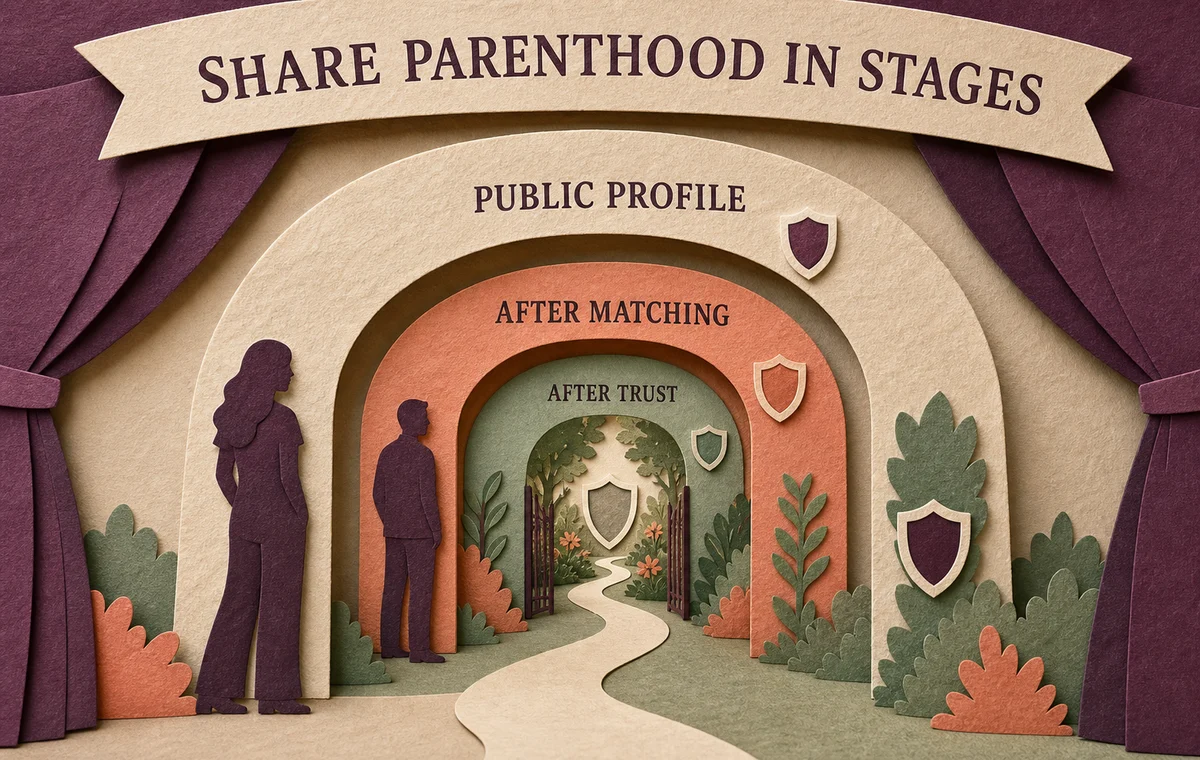
Use a Disclosure Ladder
Public Profile
Share that you are a parent, the broad relationship goal, and a general sense of schedule. Keep children unidentifiable.
After Matching
Discuss broad custody rhythm, the pace you can offer, and whether your schedules could realistically align. You still do not need to share schools, home locations, or private conflict.
After Trust Develops
Talk about family history, co-parenting dynamics, and possible future introductions when the relationship has earned that context.
This protects children without treating parenthood as a secret.
Prompts That Show a Full Person
Choose prompts that reveal adult personality and offer an easy reply.
Prompt: "My simple pleasure..."
Answer: "Coffee that stays hot long enough to finish and a walk with no errand attached."
Prompt: "Together we could..."
Answer: "Plan one excellent low-key dinner and keep a running list of places worth returning to."
Prompt: "I appreciate when..."
Answer: "Someone communicates clearly, respects a full calendar, and still knows how to be playful."
Avoid using all prompts to discuss parenting. A match is evaluating a partner, not applying for a family role.
When Should a Match Meet Your Children?
A profile cannot decide that timeline. The important point is that matching with you does not create access to your children.
Keep early dates separate from parenting spaces. Do not invite a new match to your home because childcare makes it convenient. Meet in public, tell a trusted person where you are going, and arrange transportation you control.
The Federal Trade Commission warns that romance scammers use fake profiles to build trust and ask for money. Never send money or gifts to an online love interest you have not met. Also be cautious with anyone who pushes rapidly for family details, access to your home, or emotional commitment while avoiding normal verification and public meetings.
Match Quality Matters More Than Broad Approval
Clear parenthood disclosure may reduce interest from people who do not want to date a parent. That is useful filtering, not a profile failure.
The goal is not maximum appeal. It is a profile that attracts people compatible with your actual life, pace, and responsibilities. The framework in How to Get Better Matches on Dating Apps, Not Just More can help you measure the right outcome.
Build One Honest Story
A strong single-parent profile connects current photos, a specific adult life, clear intentions, and realistic availability — without turning private family information into marketing material.
The Single-Parent Profile Audit
- Is my first photo a clear, current image of me alone?
- Have I stated that I am a parent accurately?
- Are children absent or unidentifiable in every image?
- Have I removed school, location, schedule, and work details?
- Does the lineup show an adult life beyond parenting?
- Does my bio include personality, not only logistics?
- Is my availability understandable without an exact calendar?
- Do my prompts invite conversation?
- Are my relationship intentions realistic?
- Would a suitable match see both warmth and healthy boundaries?
FAQ
Should I put that I have kids on my dating profile?
Yes. Use the family field accurately and add a brief line if it helps explain your availability. Do not include identifying details about your children.
Should I use photos with my children?
It is safer not to. Mention parenthood in text and use photos that show your own appearance, interests, friendships, and warmth without exposing a child's identity.
How do I say my children come first without sounding unavailable?
Explain the positive structure: "Parenting is a major part of my life, and I make intentional time for dating." This shows priority and capacity together.
What should a single parent write in a dating bio?
Include one brief parenting context, two or three specific adult details, and a realistic invitation or relationship goal. Avoid custody disputes, warnings, and exact schedules.
When should I tell a match about my custody schedule?
Share broad availability in the profile or early chat. Discuss detailed logistics only after matching and when they are relevant to planning, while keeping locations and children's information private.
Is dating as a single parent a disadvantage?
It narrows the compatible audience, but that is not automatically a disadvantage. Clear disclosure helps filter for people whose goals and lifestyle can fit yours.