 Safety, Privacy & Wellbeing
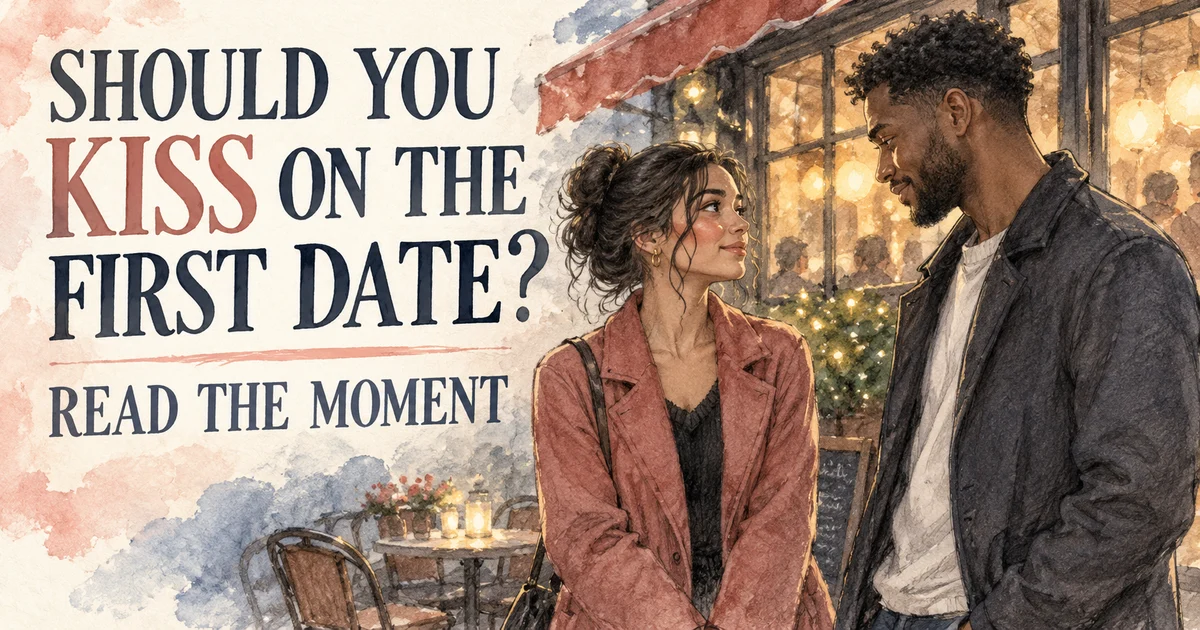
Should You Kiss on the First Date? Read the Moment
A first-date kiss should come from mutual enthusiasm, not a rule. Learn how to read the moment, ask naturally, and handle any answer with respect.
In this article11 sections
You should kiss on the first date only when both people appear genuinely interested and consent is clear. A first-date kiss is not required, and skipping it does not mean the date failed.
The useful question is not “Is this the correct date number?” It is “Does this moment feel mutual, comfortable, and easy to pause?”
Chemistry Is Not Consent
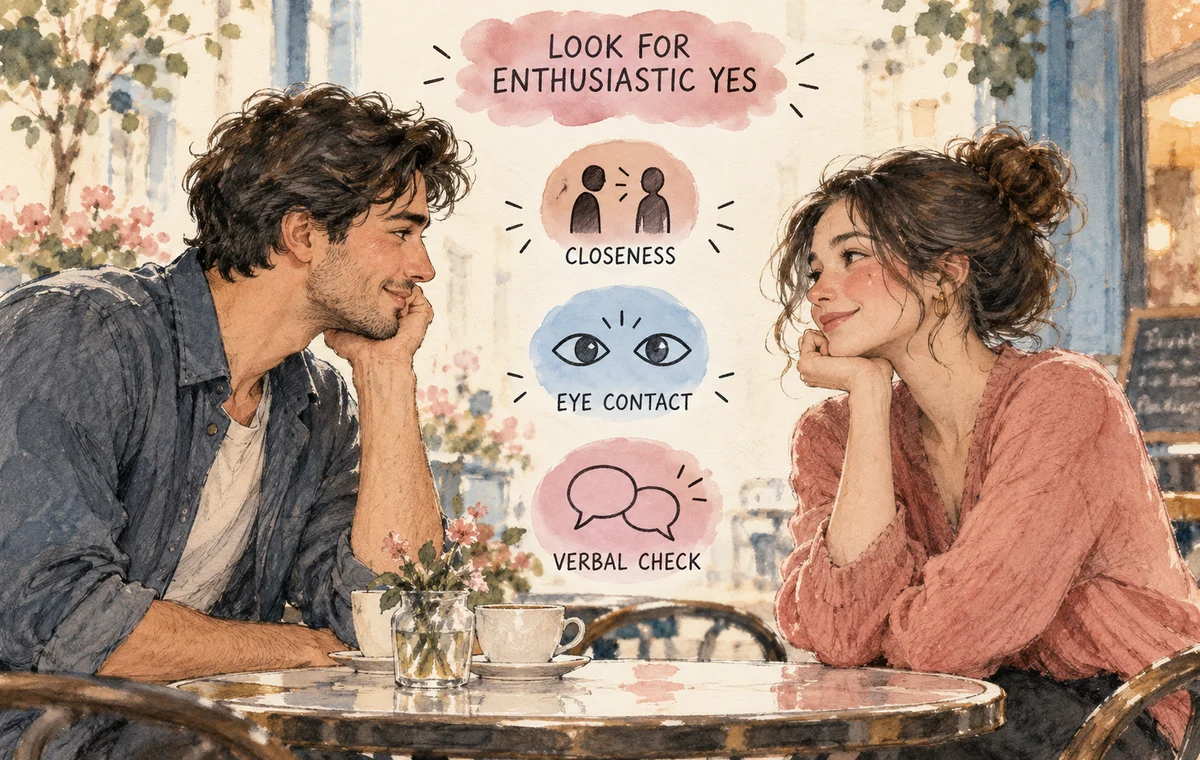
Laughing, staying late, touching an arm, or agreeing to another drink can show comfort. None guarantees that someone wants to kiss.
RAINN’s consent guidance explains that consent should be clear, voluntary, and ongoing. A person can change their mind, and uncertainty or silence is not a yes.
Body language can help you notice openness, but it should not carry the whole decision.
Signs the Moment May Be Mutual
Look for several signals together:
- they stay close rather than repeatedly creating distance;
- eye contact lingers comfortably;
- touch has already been reciprocal;
- the goodbye slows instead of feeling rushed;
- their words clearly express attraction or interest.
These are reasons to check, not permission to assume.
Asking Can Feel Confident
Asking does not have to sound clinical. Try:
- “I’d really like to kiss you. Would that feel good?”
- “Can I kiss you?”
- “I’m having a great time, and I want to kiss you.”
Say it calmly and leave space for an answer. A warm yes is different from hesitation, nervous laughter, freezing, or “I guess.”

Find Words That Still Sound Like You
Wingman can help you communicate attraction directly without turning the moment into pressure or a rehearsed line.
What to Do With “Not Yet”
Respond simply: “Of course” or “No problem—I had a lovely time.” Do not ask for a justification, bargain, withdraw affection, or act embarrassed on their behalf.
Respecting a boundary can increase trust. Punishing it tells the other person the question was not genuine.
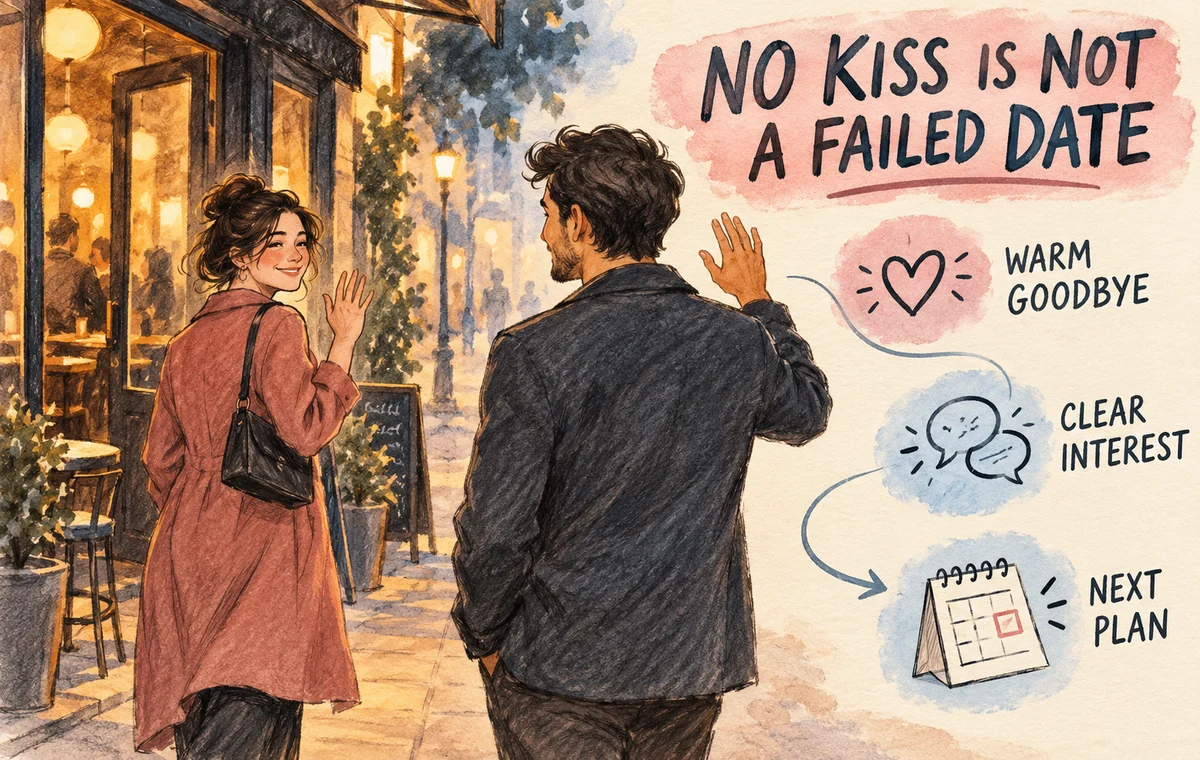
No Kiss Does Not Mean No Interest
Some people move slowly, dislike public affection, need stronger trust, or simply did not feel ready in that moment. If you want another date, say so clearly:
“I had a great time. I’d like to see you again.”
That message gives the connection direction without using physical escalation as a test.
When You Should Definitely Wait
Do not initiate a kiss when either person is significantly intoxicated, when the other person is cornered or dependent on you for transport, after they have pulled away, or because you paid for the date.
Wait when you are trying to prove confidence, avoid rejection, or follow a dating rule. Those motivations center performance instead of connection.
If the Kiss Happens
Keep the first kiss responsive rather than performative. Pause if the other person becomes still, turns away, or stops reciprocating. Consent remains relevant after the first yes.
The same care applies if the date moves somewhere private. Read when to invite someone home before treating privacy as automatic escalation.
For the larger date, use these first-date rules for comfort and connection.
Let Your Profile Set an Honest First Impression
A clear, current photo lineup helps the person meeting you feel that the profile and real-life experience match.
A Better Goal Than “Getting the Kiss”
Go into the date trying to create enough safety and connection that either answer can be honest. That changes your attention: you notice whether conversation feels reciprocal, whether physical distance closes naturally, and whether both people can set boundaries without the mood collapsing. Near the end, slow down instead of treating the goodbye like a deadline. If you want to kiss, ask or make your intention clear enough that the other person has real room to choose. A confident pause is better than a rushed assumption. The best outcome is not a kiss at any cost; it is leaving the moment with trust intact and mutual interest understood.
Frequently Asked Questions
Who should initiate a first-date kiss?
Either person can initiate. What matters is making room for a real answer and responding respectfully.
Is asking to kiss awkward?
It can feel vulnerable, but directness often reduces ambiguity. Use natural language rather than a formal script.
What if I misread the body language?
Stop immediately, apologize briefly, and reset the space. Do not argue that the signals seemed positive.
Does a kiss mean there will be a second date?
No. A kiss reflects consent in that moment, not a promise about the future.
Final Takeaway
A first-date kiss is good when it is mutual, not when it happens on schedule. Notice the moment, ask when unsure, welcome any answer, and remember that a respectful goodbye can carry more attraction than a pressured kiss.