 App Guides & Trends
Hinge Match Note: What to Write Before the First Chat
Learn how Hinge Match Note works, what to share in 255 characters, which details belong elsewhere, and how to write clearly without oversharing.
In this article8 sections
A Hinge Match Note sits in an unusual part of the dating flow. It is not a public prompt that everyone sees, and it is not a private message sent during a conversation. It appears after two people like each other but before the match fully opens for chat.
That makes it useful for one narrow job: sharing a piece of context that genuinely affects compatibility or helps the right match understand how to proceed.
According to Hinge’s Match Note guide, the field allows up to 255 characters. If you mark it as visible, matches must view it and either acknowledge it to continue or unmatch. Existing matches should not see a note added after that match was made.
The feature is powerful because it creates clarity. It is risky because a vague warning, defensive demand, or compressed life story can create friction before either person has spoken.
What a Match Note Is—and Is Not
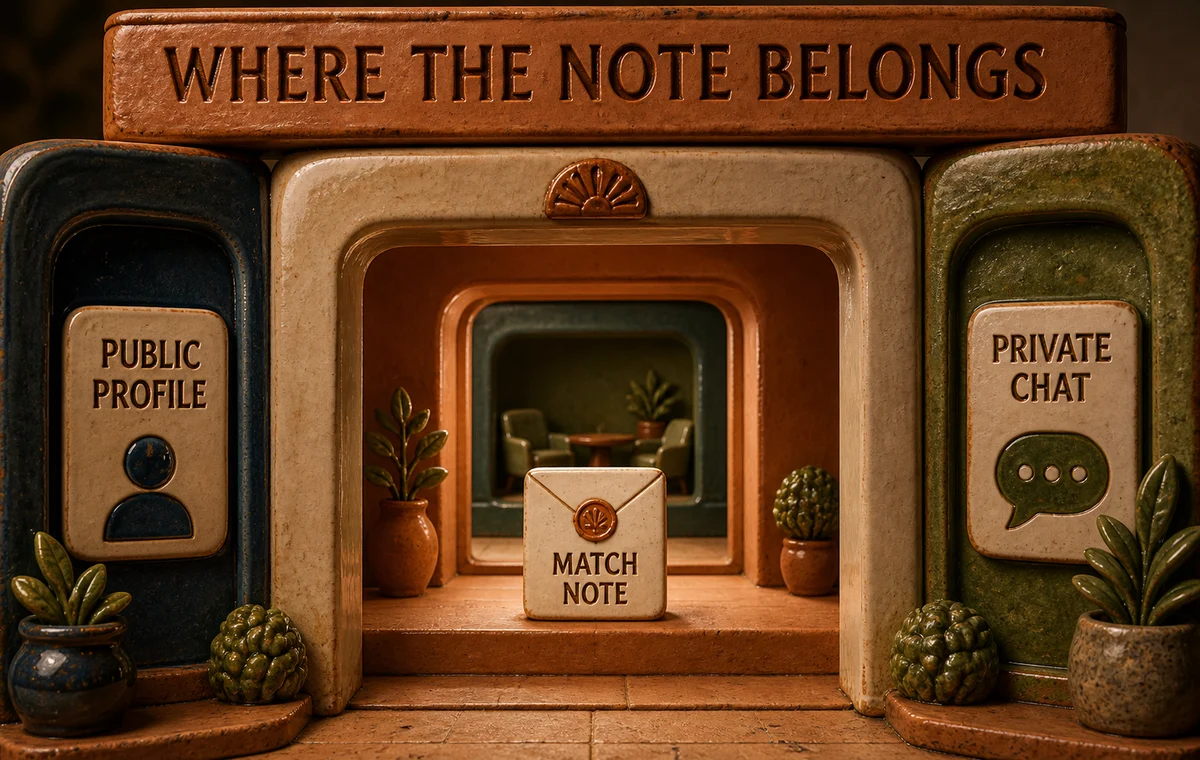
Use a Match Note for information that is:
- important enough to affect whether someone wants to continue;
- difficult to fit naturally into your public prompts;
- relevant before the first conversation develops;
- possible to state calmly and without demanding agreement.
Do not use it as:
- a second bio;
- a list of grievances about dating apps;
- a test the other person must pass;
- a place to explain sensitive history in full;
- a substitute for a conversation that needs nuance.
The note should improve informed choice. It should not punish strangers for the behavior of previous matches.
Decide Whether the Detail Belongs Here
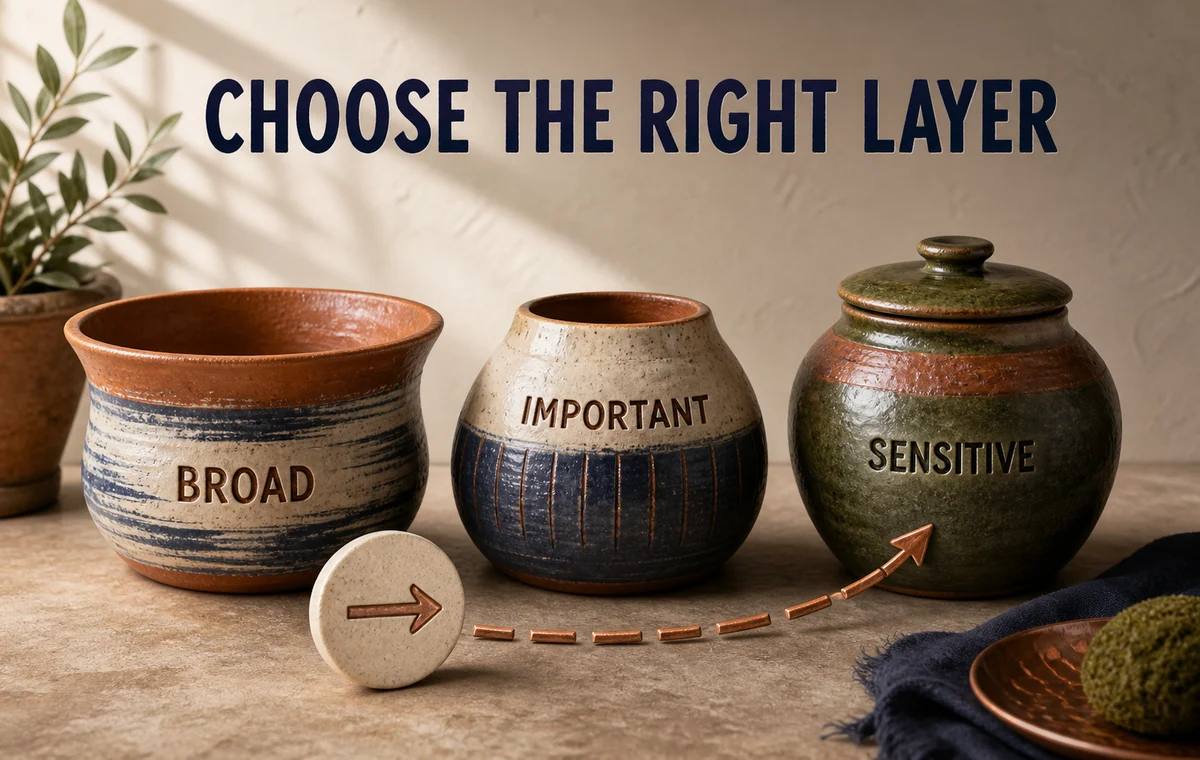
Before writing, place the information in one of three layers.
| Layer | Best for | Examples |
|---|---|---|
| Public profile | Broad identity and attraction | interests, humor, lifestyle, dating intention |
| Match Note | Important compatibility context | schedule reality, relationship structure, firm practical boundary |
| Private conversation | Sensitive or nuanced detail | personal history, health context, family specifics, conflict-prone topics |
This prevents two common mistakes: hiding a genuine dealbreaker until someone is invested, or disclosing something private before trust exists.
For privacy, never include an address, workplace schedule, children’s identifying details, financial information, or anything that would create a safety risk. The dating app privacy checklist is a useful second pass.
The Clear Match Note Formula
The strongest notes have three parts:
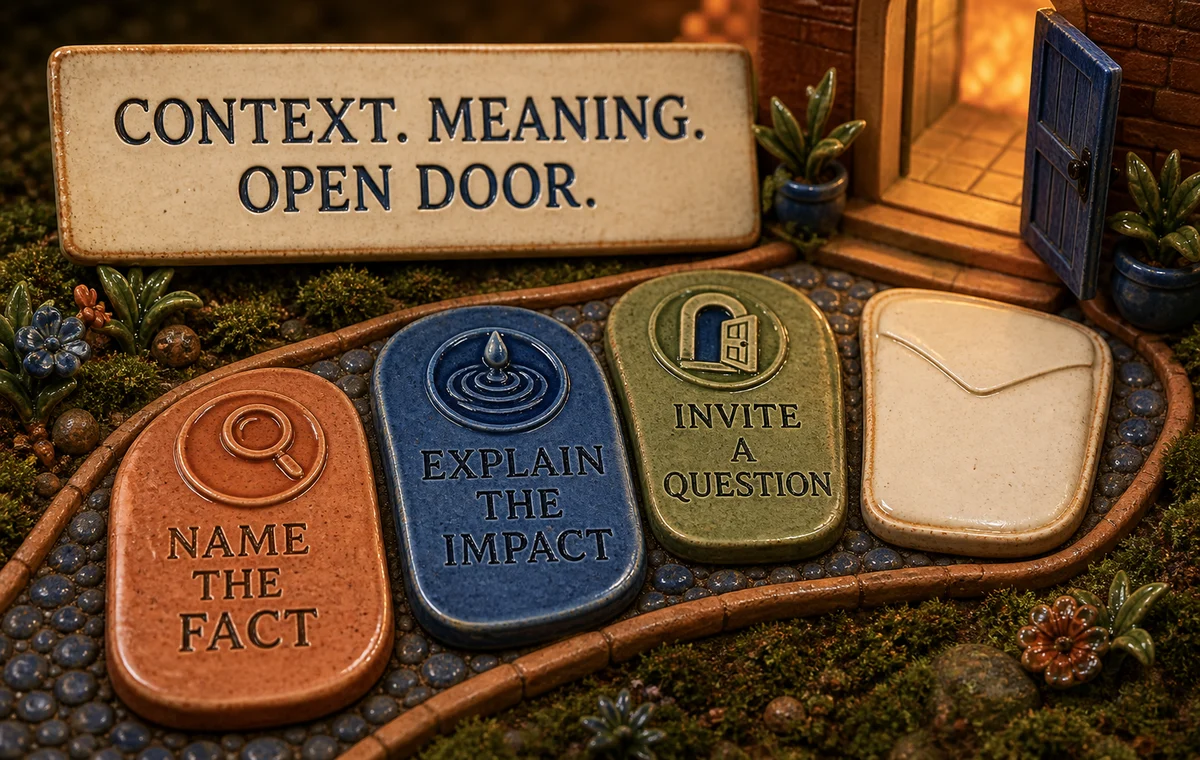
Context + practical meaning + open door
Context
Name the fact without a dramatic preamble. “I co-parent,” “I work some nights,” or “I’m looking for a long-term relationship” is clearer than “I need to be honest because people always misunderstand me.”
Practical meaning
Explain how the fact affects dating. A schedule matters because availability looks different. A relationship intention matters because casual and long-term expectations differ.
Open door
Leave room for a respectful question. The note is a filter, but it should still sound like it was written by someone willing to have a human conversation.
Make Sure the Note Matches the Profile Around It
A calm note can still feel confusing if your photos and prompts signal something different. ProfileSharp can identify those contradictions before a match has to interpret them.
Match Note Examples You Can Adapt
These are structures, not scripts to copy word for word.
Schedule context
“I work rotating hospital shifts, so my free evenings change week to week. I still make time for dates and I’m happy to plan ahead.”
Why it works: it explains availability without apologizing or making the match solve the schedule immediately.
Parenting context
“I co-parent and keep my child off dating profiles. My schedule is planned, my interest in a relationship is real, and I’m glad to answer respectful questions.”
Why it works: it protects privacy while stating the practical reality. For a fuller profile strategy, see the single-parent dating profile guide.
Relationship intention
“I’m dating with a long-term relationship in mind. I like taking things at a normal pace, but I’m not looking for something purely casual.”
Why it works: it distinguishes direction from urgency. The dating intentions guide can help align the rest of the profile.
Location or mobility context
“I split my time between two cities for work and will be based here most weekdays. Happy to clarify what that looks like if we connect.”
Why it works: it explains a logistical issue that could otherwise look inconsistent.
Five Match Note Mistakes
1. Writing a threat
“Do not match with me if…” can be clear, but a whole note built from warnings creates a hostile first impression. State what is true for you rather than imagining the worst version of the reader.
2. Overexplaining
The 255-character maximum is a boundary, not a challenge to fill every space. One fact and its practical effect are enough.
3. Being cryptic
“There is something you should know” creates anxiety without informed choice. If the detail is appropriate for the note, name it. If it is too private to name, save it for conversation.
4. Repeating your profile
If your public dating intention already says “long-term relationship,” the Match Note should add context, not repeat the label.
5. Asking for reassurance
Avoid making a new match promise acceptance before they understand the situation. Give information and let both people decide.
Edit for Tone, Not Just Length
After drafting, remove:
- defensive setup such as “apparently I have to say this”;
- absolute claims such as “everyone” or “nobody”;
- unnecessary labels that invite stereotypes;
- details that identify another person;
- questions that pressure the match to answer immediately.
Then read the note beside your prompts. Hinge’s public prompts are still where personality and attraction should live. The Match Note should carry necessary context, not all your charm.
Fix the Mixed Signal Before Adding More Explanation
If your note keeps growing, the problem may be elsewhere in the profile. A focused review can show whether your photos, prompts, and intention already tell one coherent story.
Frequently Asked Questions
When does a Hinge Match Note appear?
Hinge says it appears after both people have liked each other. The recipient views it before the match is complete and can acknowledge it or unmatch.
How long can a Match Note be?
The current official limit is 255 characters.
Can existing matches see a new Match Note?
Hinge says existing matches should not see notes added after the match was made.
Should I put a medical condition in my Match Note?
Only you can decide what and when to disclose. Consider whether the information materially affects early dating, whether you can state it safely, and whether a private conversation would provide better context. Do not include identifying or emergency information.
Is a Match Note the same as a Hinge prompt?
No. Prompts are part of the public profile. A visible Match Note appears to matches at the transition into conversation.
What if the feature is missing?
Features can vary by market, account, and rollout. Update the app and check the profile editor. If Match Note is unavailable, place broad compatibility information in your dating intention or a suitable prompt, and save private context for conversation.